


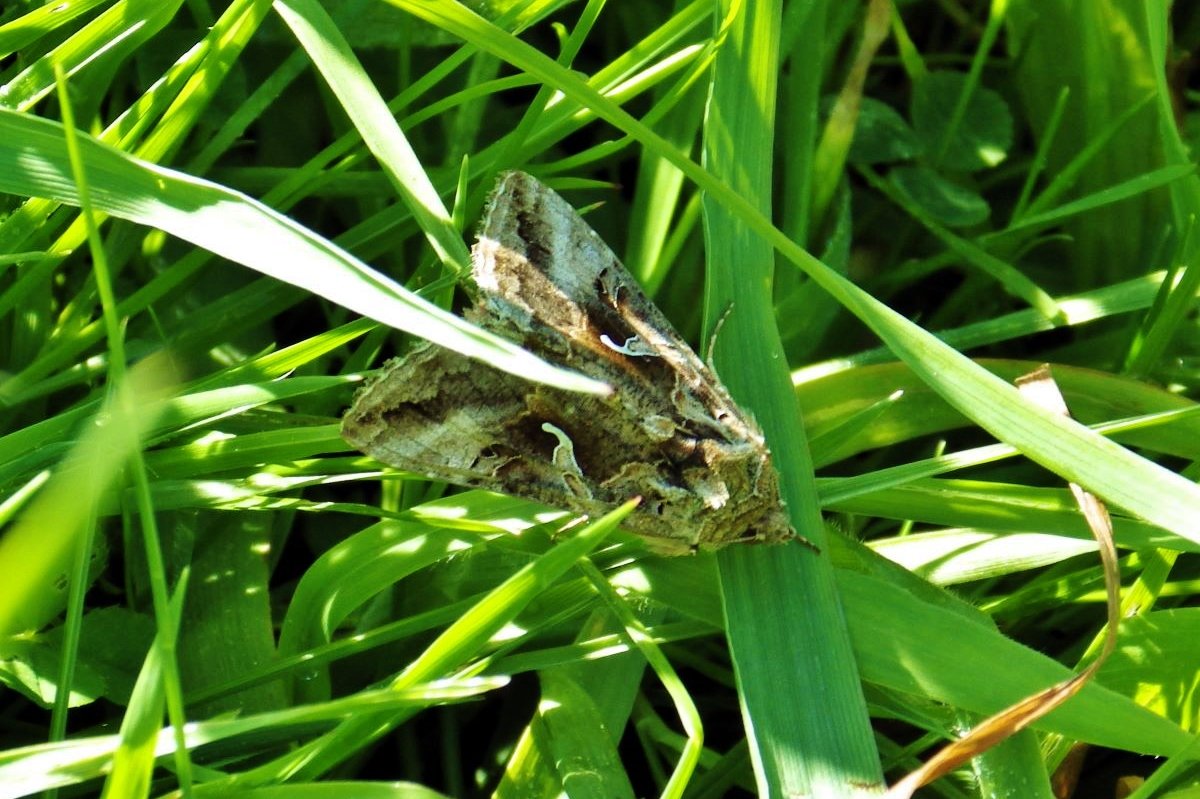
I stride across the lawn, picking up my feet rather like a heron wading through a reedbed, only lacking its grace. With almost every movement of my legs, I send a moth or butterfly whirling up from the grass, passing by the ladybirds that prowl through the canopy of this miniature jungle. Bumblebees alight upon pink clover in full bloom, and on the last of the comfrey flowers. The oxeye daisies are just beginning to emerge, drawing in pollinators of all stripes.
I have to watch my step, because there are snails everywhere, making their last heaving journeys to shelter before the heat of the day forces them to hunker down in their shells. Just beside one of the ant nests I spot a small tunnel through the grass that suggests a regular rodent trail, and marvel at how the garden has transformed so quickly into such a labyrinthine 3-dimensional habitat. Oh well. That’s another year of No Mow May done with – time now to blitz it all back to a bowling green.
No Mow May – a pleasant idea that is sadly flawed
No Mow May is a campaign begun in 2019 by the plant conservation charity Plantlife, seeking to encourage people to leave the lawns in their gardens or workplaces unmown during May to benefit biodiversity. It’s a pleasant idea, and momentum around it has been growing since it began. But from the first time I heard of No Mow May and the rationale behind it, I found myself wondering, why just May? Why leave your garden unmown for a month to encourage wildlife, if you’re only going to destroy it again come June?
It is argued that No Mow May allows flowering plants to bloom and provide a food source for pollinating insects. But many common flowers have yet to emerge by May, and those that have are unlikely to produce seed until later in the summer or autumn. As such, if you’re only allowing your lawn to grow during May, you’re precluding many plants from colonising your garden and preventing them from completing their lifecycle. Such a narrow period of opportunity for growth means you’re probably limiting the benefits through restricting the diversity of plants present.
Many insects that would benefit from an unmown lawn also require this habitat for longer than just the month of May. Of course, bees and adult butterflies will utilise the flowers that get chance to bloom, but many moths and butterflies aren’t on the wing until the height of summer, including many species whose larvae feed on grasses, that would be drawn to your unmown lawn to lay their eggs.
Similarly, the grasshoppers likely to use your garden are in their nymphal stages in April and May, not moulting into adults until June or July. As such, giving them a good start in May only to subsequently run the mower over their habitat, just when they’re munching away to fuel their development to adulthood, seems rather callous.

Why only a month with no mowing?
So why do conservation groups pick out only May as the month to stop mowing if that’s ultimately not of much use to wildlife?
The generous interpretation would be that they hope people will carry the spirit of No Mow May further into the summer, and that after getting used to a rugged lawn for a few weeks, people feel more comfortable letting it go wild for longer. This is the ‘stepping stone’ logic behind campaigns like Veganuary, which challenges people to try out veganism for the month of January – a manageable period to begin with – after which a sizable proportion of participants decide to stick with it, or at least to reduce their consumption of animal products. This seems to be what Plantlife is hoping for, with most of its registered No Mow May participants committing to mowing less frequently afterwards. But there’s no data thus far on whether these commitments translate into practice, or any resulting biodiversity benefit.
A more cynical interpretation might be that our large mainstream environmental non-governmental organisations are just spineless and unambitious, more concerned with preserving a cosy, uncontroversial public image than leveraging substantial change. But by proposing feeble half-measures upfront, such organisations virtually guarantee that any progress will be glacial at best.
No Mow Summers
Plantlife has no need to be cautious or compromising when it offers advice about gardening with greater consideration for nature; in this instance, it’s not asking for sweeping policy changes against the interest of powerful industries but merely for individual gardeners to change their practices. As most people who register for No Mow May on the Plantlife website express willingness to continue it for longer, why not ask them to do so in the first place?
Unless extended throughout the summer, No Mow May merely offers people a way to feel like they’ve done their brief bit for nature, but leaves them free to carry on as normal without giving it another thought. As such, it could even be seen as counterproductive. Perhaps next year, the #NoMowMay hashtags should be dumped on the compost heap, and we should commit to the era of the No Mow Summer.
Why do we mourn a single tree… and forget a forest?

CLICK HERE TO DONATE TO OUR CROWDFUNDER
HELP US BECOME STRONGER SO THAT WE CAN CONTINUE TO DELIVER POWERFUL CITIZEN JOURNALISM!





