


Last week’s heat carried a faint sense of dislocation. The 34 degrees we experienced in May was regarded as a freak one-off, a nice start to the summer.
The temperatures we have seen this last week have however raised questions even from the normal disbelievers – is this what climate change means?
Britain was not built, emotionally or physically, for 34 degrees in any month, let alone May, and beneath the usual jokes about sunscreen and garden hoses sits a quieter unease.
This is air that arrived too early, settled too long and leaves people faintly disoriented, as though our country itself has slipped a few hundred miles south overnight.
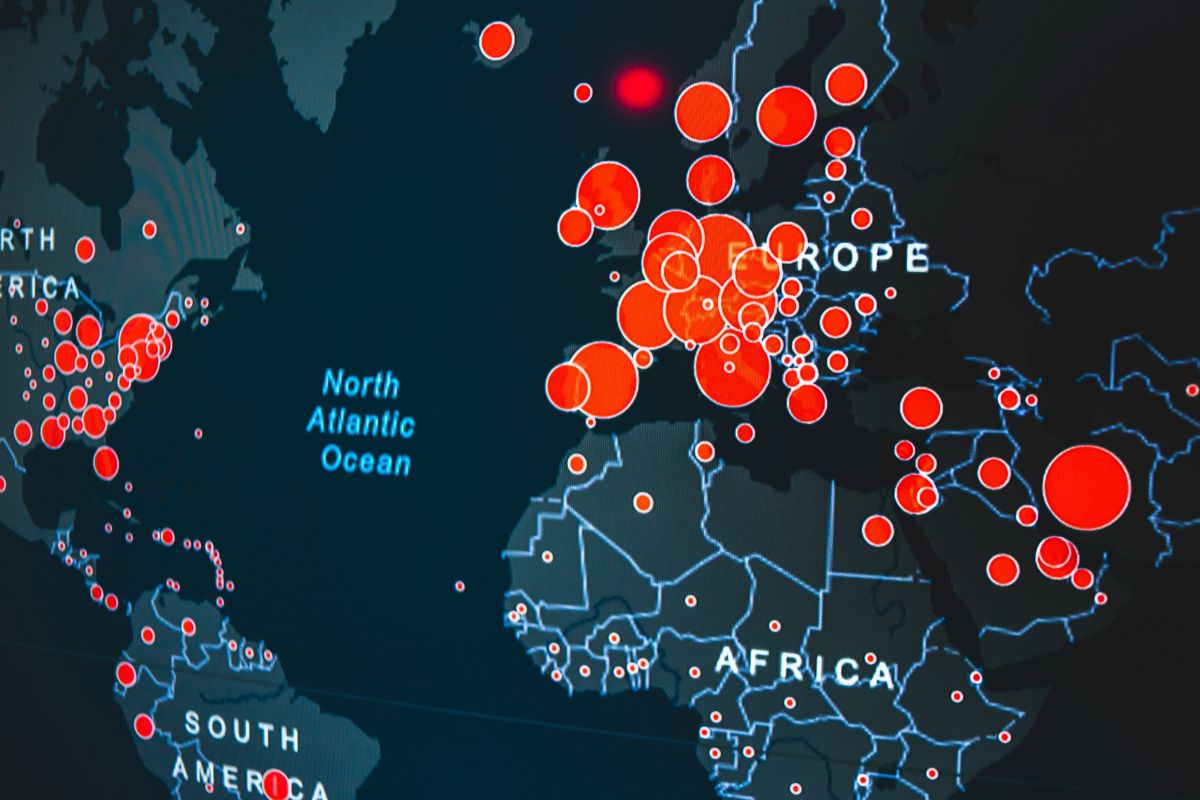
Last week parts of the UK exceeded 34 degrees. Even a decade ago that would have sounded improbable. Now it barely survives a news cycle before being replaced by the next record, the next warning, the next satellite image of orange and red spreading across Europe.
Yet Britain is not where the real danger lies. Our discomfort is only the mild outer edge of something much larger already unfolding across the world.
In India this spring temperatures reportedly climbed towards 50 degrees in several regions, while parts of Pakistan and the Gulf experienced heat levels so extreme that scientists increasingly discuss them not simply as uncomfortable, but potentially incompatible with ordinary human life outdoors. The phrase often used is “wet-bulb temperature”, which sounds technical and obscure until you understand what it means.
Wet-bulb temperature
Wet-bulb temperature is essentially a measure of heat-stress conditions. Human beings survive heat largely by sweating. Sweat evaporates, cooling the body. But when heat combines with very high humidity, sweat no longer evaporates effectively. The body loses its ability to cool itself. Internal temperature rises. Organs begin to fail. Death can follow within hours, particularly among the elderly, young children, outdoor labourers and those without access to air-conditioning.
For years scientists believed the upper limit of human survivability sat around a wet-bulb temperature of 35 degrees. More recent studies suggest dangerous stress may occur considerably earlier for many people. In other words, parts of the world may become hazardous before they become technically uninhabitable. That distinction matters.
Climate change is often imagined in cinematic terms: drowned cities, scorched deserts and dramatic collapse. Reality is likely to be slower, quieter and perhaps more unsettling than that. Places do not suddenly become impossible to live in.
They become progressively harder to live in.
Crops fail more often. Electricity grids strain under air-conditioning demand. Water shortages worsen. Outdoor work becomes dangerous for longer periods of the year. Schools close during heatwaves. Insurance costs rise. Hospitals struggle. Wealthier residents quietly move first, leaving poorer populations trapped in worsening conditions. This is already happening in parts of the world now.
The uncomfortable truth is that climate migration may become one of the defining political realities of the next twenty years. Not because hundreds of millions of people will suddenly flood across borders overnight, but because the map of human comfort and economic viability is beginning, slowly, to shift.
Initially most migration will probably be internal. People moving from rural areas into cooler cities, from overheated regions towards coastlines or higher ground. But over time, international pressures will inevitably increase, particularly from regions around the equator and subtropics where heat exposure is projected to intensify most severely.
The migration debate is going to heat up too

And here Britain enters the story in a curious way. Historically we have thought of ourselves as meteorologically dull: grey skies, damp summers and mild winters. Yet in a warming world, northern Europe may become comparatively more liveable than large parts of the tropics. Not untouched. Not comfortable. But safer.
That possibility sits awkwardly beside Britain’s already volatile immigration debate. We currently argue about migration as though it exists entirely within politics and policy: something governments can simply tighten or loosen according to ideology. Climate change complicates that assumption profoundly.
Because migration driven by environmental pressure is different from migration driven primarily by economics or conflict. It is harder to deter people from leaving places where daily life is becoming physically dangerous.
None of this means Britain will suddenly face apocalyptic waves of refugees within a decade. Serious discussion requires calmness as much as urgency. Climate models are projections, not certainties, and human beings are remarkably adaptive. Technology, infrastructure, urban redesign and agricultural innovation may soften some of the worst outcomes. Wealthy nations will cope far better than poorer ones. Air conditioning alone changes survivability dramatically.
Nonetheless, adaptation depends upon money, energy and political stability and many of the regions most vulnerable to extreme heat possess the fewest resources to respond.
Did we think human systems had outgrown nature?
The timeline matters too. Over the next five years Britain will probably experience what we already see beginning now: hotter summers, earlier heatwaves and increasing pressure on infrastructure never designed for sustained heat. By the 2030s, dangerous heat events across South Asia, the Middle East and parts of Africa are likely to become more frequent and politically destabilising. By the 2040s climate migration may move from being a specialist concern discussed in policy papers to an ordinary feature of global politics.
Perhaps the strangest aspect of all this is psychological. For most of modern history we behaved as though geography no longer mattered. Technology insulated us from climate. We built glass towers in deserts and sprawling cities in flood plains. We assumed human systems had outgrown nature.
Climate change is reminding us that civilisation still rests upon very old foundations: water, temperature, food and the limits of the human body.
The future may not arrive as a single catastrophe. It may come instead as a long series of summers that grow gradually harder to endure, until millions of people begin quietly searching for somewhere cooler, safer and more stable to raise their children.
And countries like Britain may discover that the climate crisis is not only about weather, but about movement – the slow rearranging of where human beings can comfortably live on Earth.

CLICK HERE TO DONATE TO OUR CROWDFUNDER
HELP US BECOME STRONGER SO THAT WE CAN CONTINUE TO DELIVER POWERFUL CITIZEN JOURNALISM!



