


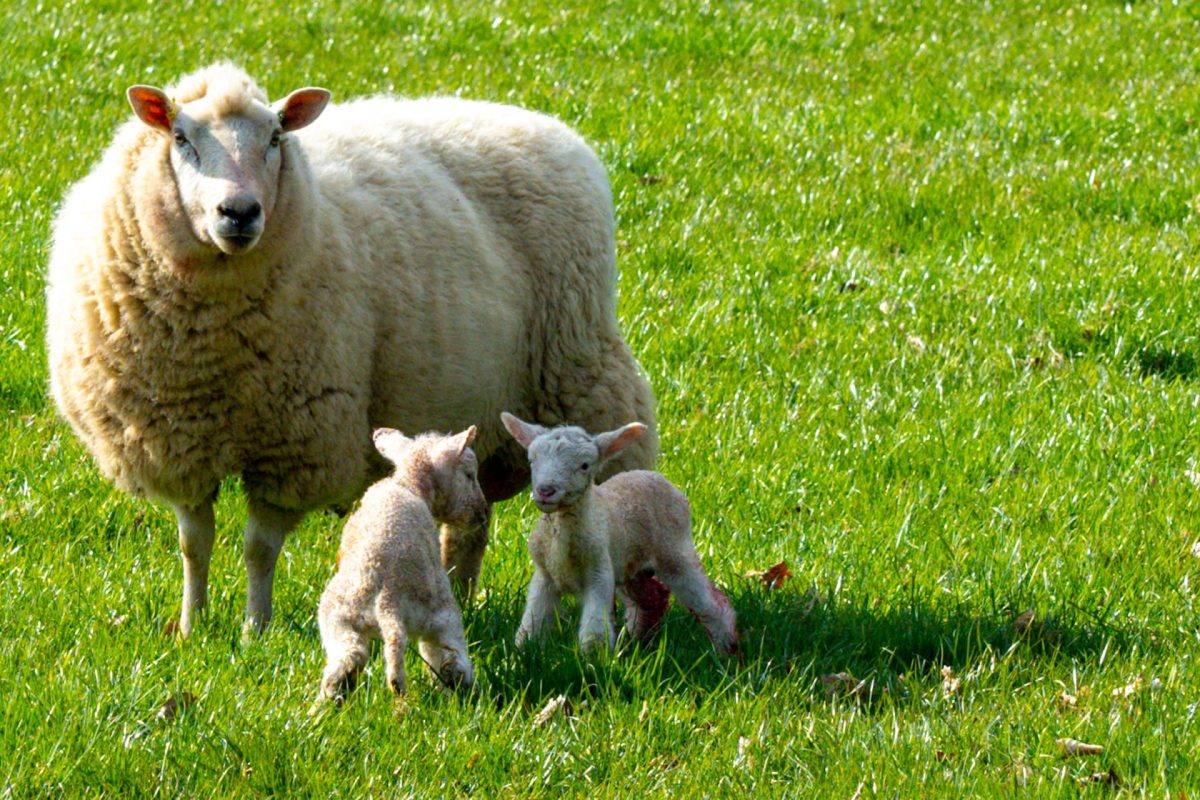
Easter has arrived and all the signs of spring along with it – daffodils and primroses by the roadside, blossom breaking out on blackthorn and wild cherry trees, and that staple image on many a greetings card, new-born lambs gambolling in green fields.
Many of us are touched by the sight as we drive past fields of ewes with their young lambs, but how much do we actually know about the process of breeding and rearing sheep? We may have followed @herdyshepherd1 on twitter or perhaps listened to David Archer complaining about the late nights and stress of lambing on The Archers – but that’s probably as far as it goes.
Agriculture is now such a minority industry in the UK that most people rarely come into contact with farmers or have an understanding of how their food is produced. The South of England Agricultural Society (SEAS) is doing its bit to broaden knowledge of farming and animal husbandry amongst the younger population in Surrey and Sussex through their ‘Loan a Lamb’ scheme, introduced two years ago at this time of year and already proving a roaring success.
How lamb loans started
Alan Smith, a trustee of the charity, and a member of SEAS’s education committee, explained to Sussex Bylines how the idea first came about. He had heard about the Royal Norfolk Agricultural Association’s ‘Learn about Livestock’ scheme for local schools and was keen to recreate the idea in Sussex.
Delayed by lockdown, the Loan a Lamb scheme was eventually launched in 2022 in partnership with LEAF, (a sustainable farming charity), with five schools across Sussex participating. It involved school staff and children caring for a ewe and her lamb for five days, providing hands-on experience. The schools were loaned a hutch and supplied with all the tools and information needed to care for the animals, made possible through the cooperation of local sheep farmers.

Sussex the ideal county
Smith describes the level of organisation and forethought needed to run the scheme. For a start, careful consideration had to be given to the breed and temperament of the sheep. Sussex, being the birthplace of the Southdown breed, was of course the ideal county to provide the right animals. The lambs need to be at least three weeks old, strong and robust enough to cope with the risk of an occasional prowling fox. Smith also pointed out some potential problems of mixing sheep with excited young children:
“We also chose from smaller herds as the sheep were likely to be calmer when away from the flock – and even better if they had been shown, as they would have experienced the crowds and noise of a large venue. A group of small, excited children can be alarming to a timid sheep, and the last thing that we wanted was the ewe jumping out of her enclosure.”
Not only do the organisers have to find farmers willing to supply a ewe and her lamb, but they also have to arrange for the training of teachers ahead of the animals arriving at their school. Teachers need to learn about sheep care, biosecurity, health and safety, and emergency procedures.
In spite of the extra work involved, those who took part in 2022 are enthusiastic supporters, and some are involved in training colleagues taking part in this year’s scheme.

Children love the lambs
Yvonne Swinson, a teacher at Milton Mount Primary School, Crawley, said: “The Loan a Lamb initiative was a wonderful opportunity for everyone at our school. Many of our children live in flats and don’t have gardens, and lots of them don’t have pets, so they’ve never had the responsibility of getting up, coming out and feeding an animal. They absolutely loved it.”
She described how the school built the project into every aspect of the curriculum, from poetry-writing to problem-solving in maths, wearing a woollen jumper, hat or scarf for a ‘wear wool Friday’ event and even practising their shepherding skills in PE! They are participating in the scheme again this year and have obviously built a strong relationship with ‘their’ farmer.
Farm education crucial
Smith is a passionate advocate of the importance of educating children about food and farming. “It’s crucial to get children involved in agriculture at a young age”, he says.
“The Loan a Lamb scheme provides a unique opportunity for school children to learn about the importance of farming in producing our food and other products we use in our day-to-day life. We are proud of this initiative and to be making a positive impact within our local communities.”
He also makes the point that close contact between schools, farmers and SEAS helps to dispel some of the misinformation online to which both children and teachers can fall victim. He heard of one teacher telling their class that sheep ‘breathe through their feet’, having apparently come across this extraordinary piece of information online. (Sheep do have scent glands in their feet).

More ‘Loan a Lambs’ next year
Many primary schools across Sussex are catching on to the success of the scheme. In 2022, five participated in the scheme; this year the number has grown to eleven, and there is already a waiting list for 2024. Judging from the joyous looks on the faces of the children as they feed and care for their woolly charges, the future success of the scheme looks absolutely assured.

CLICK HERE TO DONATE TO OUR CROWDFUNDER
HELP US BECOME STRONGER SO THAT WE CAN CONTINUE TO DELIVER POWERFUL CITIZEN JOURNALISM!






