


Christopher Morris, University of Portsmouth
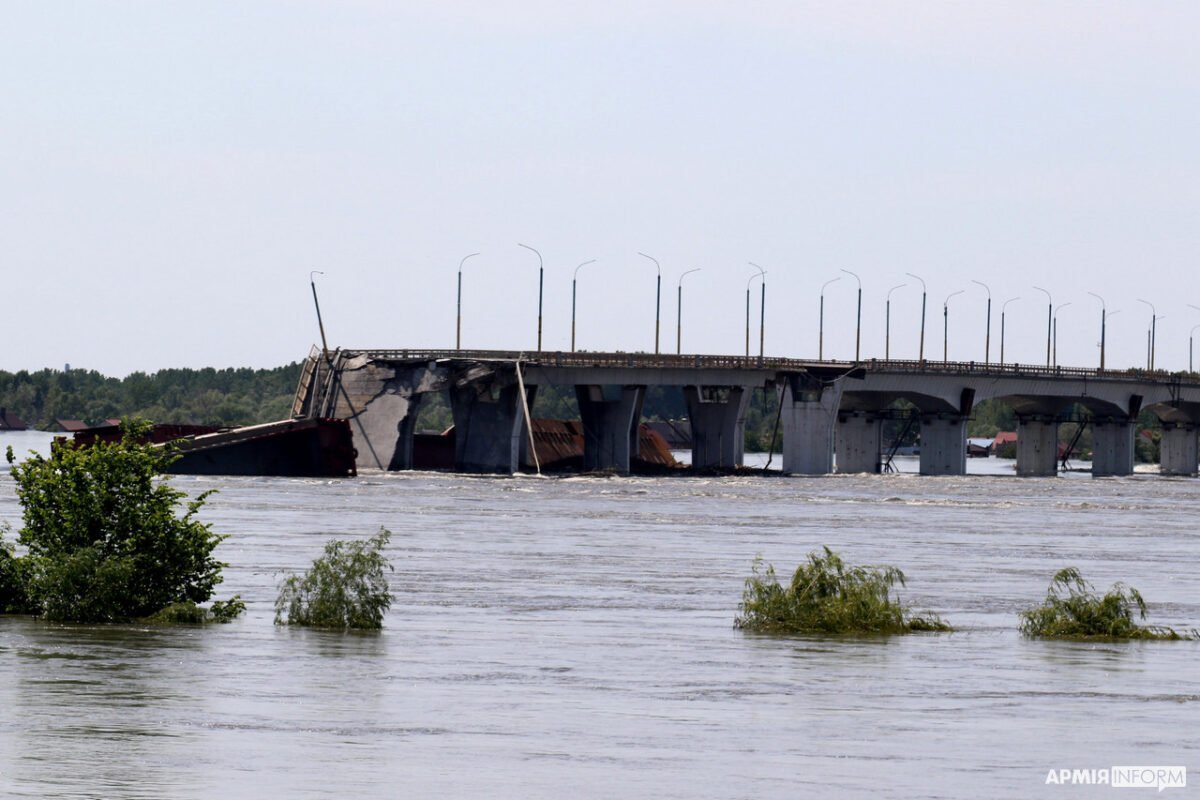
The humanitarian and ecological challenges caused by the breaching of the Nova Kakhovka dam present massive challenges for Ukraine, as it launches its long-awaited offensive. Mounting operations to assist and evacuate civilians from affected areas will deplete manpower and resources when the conflict is at a critical juncture.
This is to Russia’s advantage. While Ukraine has already deployed an emergency response, there is little indication that Russia has either the capacity or inclination to assist in the humanitarian effort.
Thousands are expected to have to leave their homes as waters flood dozens of villages. Ukrainian president Volodymyr Zelensky has already called on the international community to offer immediate aid.
Kyiv and Moscow have both accused each other of bombing people being evacuated.
The circumstances surrounding the destruction of the dam on the Dnipro River remain difficult to determine. But the incident is being discussed as a possible war crime and an act of terror, with Russia indicated as the likely perpetrator.
While it will be some time before all the details are clear, the event is certainly going to influence events on the battlefield.
An attack of this nature can form part of a military strategy. After all, the destruction of Irpin dam in February 2022 played an important role in checking Russian advances earlier in the conflict.
In this case, however, the relatively modest military benefit in no way justifies the massive and far-reaching destruction unleashed by the floodwaters.
The rising water levels caused by the damage will, of course, have some implications for the campaign. Downstream any crossing of the river will become difficult for the foreseeable future, with the surging waters damaging any remaining infrastructure.
The flooded ground may struggle to bear the weight of tanks and artillery as well, limiting the potential routes south for an attacking force. The scale of the disaster introduces many human factors to the battlefield, with displaced civilians further complicating any operations in the region.
The result is that a significant portion of the frontline is now difficult to access, leaving Russia with less space to actively defend.
While these are significant considerations and will complicate the nature of the battlefield from the Ukrainian perspective, the fundamental balance of power in the region remains unchanged. Ukrainian forces have demonstrated their adaptability from the outset in this conflict, and this will serve them well in the next phases.
Having taken the time to integrate the training and equipment received from western partners, the forces compromising the Ukrainian counteroffensive will be able to effectively adapt to events of this nature.
Current operations show that Ukrainian land forces are effectively probing for Russian weaknesses in the south and east. These smaller advances – so called shaping operations – which provide intelligence and fix Russian forces in place, are taking place across a wide front.
Ukrainian leadership remain quiet on specifics, but when its more heavily equipped brigades do move forward, they will benefit from these earlier efforts to shape the battlefield in their favour.
Russian troops overstretched
The Nova Kakhovka dam’s breach will do nothing to improve the status of Russian forces. While in the short term, there is now perhaps less frontline to defend, their troops are still overstretched.
The fractured Russian leadership will struggle to effectively respond to any setbacks, and the equipment and human resources they currently have available remain of poor quality. If Nova Kakhovka was an attempt to replicate earlier events, in which Ukraine submerged the Irpin floodplain to interfere with the Russian advance to Kyiv, then it has not been successful.
If it was the eve of a Russian offensive, an event of this nature might have been disastrous for them, with their rigid command structures and traumatised land forces incapable of adapting on the fly. This is not Russia’s moment, however.
For the Ukrainian side, this is a setback that can be overcome. As well as growing disparities in training and equipment, the incident highlights the profound difference in the mindset and ability to adapt between the respective sides.
Unfortunately, we may see more attacks on Ukrainian infrastructure as the offensive presses on. The Russian state clearly prefers to break what it cannot control.
While attacks on civilian infrastructure may have little impact on how the conflict plays out, the Russian strategy is now about inflicting pain on the Ukrainian side by any available means. This could indicate that Moscow no longer views these areas as future Russian assets that can be assimilated relatively intact, but instead as areas it can devastate to harm the interests of the rightful owner.
Christopher Morris, Teaching Fellow, School of Strategy, Marketing and Innovation, University of Portsmouth
This article is republished from The Conversation under a Creative Commons license. Read the original article.




