


Sadly, we are becoming accustomed to hearing about catastrophic weather events around the world and seeing images on our television screens of the devastation caused by tropical cyclones, historic heat, wildfires, storms and flooding. But the natural disaster that took place in Lewes in December 1836 remains unique in our island’s history and, quite frankly, continues to shock.
It is shocking because avalanches are not the sort of hazard you expect in Britain; shocking because the deadliest-ever avalanche on our shores occurred in the county town of Lewes. And shocking because of the scale of the tragedy and, of course, its timing.
As the contemporary writer W. Thomson noted, among the ruined cottages were found “pieces of cake and plum pudding, intermingled with holly and other evergreens…bitter memorials of the festivity of Christmas”.
Heavy snow hit the South Downs
The winter of 1836-37 had seen the whole country experience appalling weather with freezing temperatures, heavy snow and gale force winds. On Christmas Eve, a huge snowstorm hit the South Downs and Lewes was engulfed, with reports of snowdrifts over ten feet high in some areas of the town.
Strong winds at the same time created blizzard conditions which piled the snow against the steep hillside that rises nearly 500 feet to the top of Cliffe Hill. By the night of 25 December, the north-easterly blizzards had built up a deep bank of snow on the sheer edge of the cliff.
It soon became evident that this overhanging mass of snow posed a real threat to a terrace of workers cottages located in Boulder Row, on South Street at the foot of Cliffe Hill. The residents of these “poor houses”, as they were termed at the time, were advised to evacuate, but many decided to ignore the warning.
By Boxing Day, the situation was even more precarious for the residents of Boulder Row. They saw snow come crashing down and completely destroy a nearby timber yard, sweeping it into the River Ouse, but still some chose to stay put. They knew that the only option available to them, if they left their homes, was the workhouse and nobody volunteered to go there unless desperate.
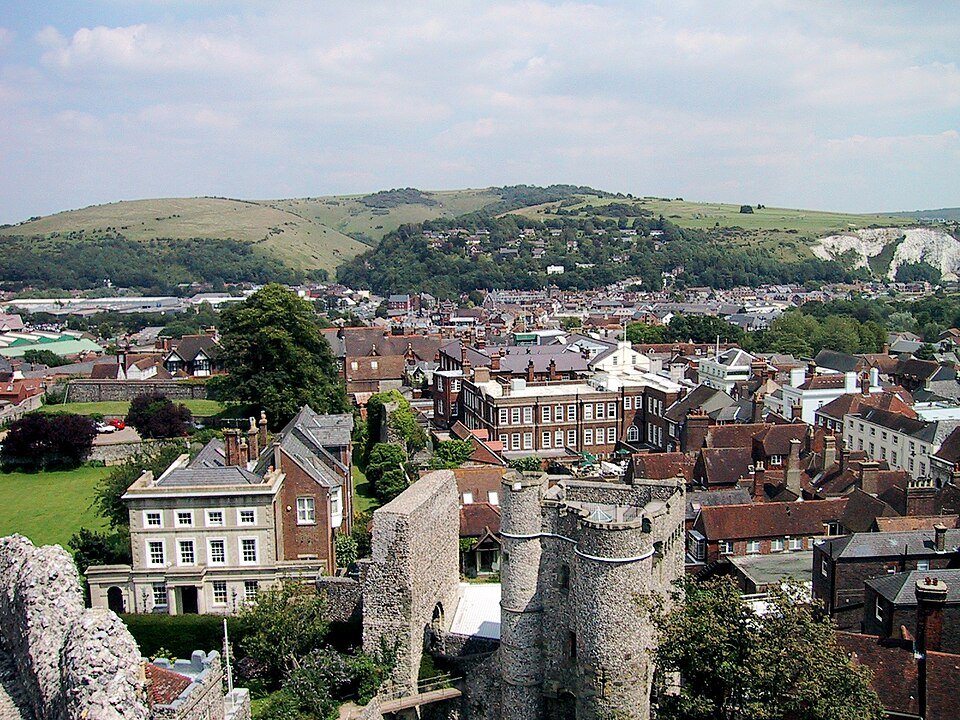
About 40 people slept in the cottages on the night of 26 December, and had the avalanche occurred a few hours earlier probably few would have escaped, but the night passed safely.
Early next morning the winter sunshine and, no doubt, curiosity about the ominous cracks that were now visible in the highest banks of snow enticed some of them outside. This, plus the last-ditch efforts of a local man, called Robert Hyam, who went along Boulder Row house by house making yet another appeal for the inhabitants to leave, saved many lives.
The rescue operation
Then it happened. At 10.15am on the 27 December 1836, an avalanche of snow slid down the hillside onto Boulder Row’s seven cottages. The snow first crashed into the back yards and when it hit the houses from the rear they were hurled upwards as if there had been an explosion beneath them. Even as the debris settled, more snow came sliding down the hill and soon there was just a white mound where the cottages had stood.
A rescue operation by neighbours and townspeople quickly swung into action. A local ironmonger produced shovels and relays of workmen dug snow from the embedded dwellings while others demolished the upper portion of the 10-foot-high flint wall opposite Boulder Row so that cleared snow could be thrown directly into the River Ouse. By about 4pm rescuers were pretty certain that 15 people had been inside the cottages when the avalanche struck, and that they had extricated 14.
A faint groan heard under the mass of snow, however, gave them hope that the last person was still alive. He was a 14-year-old boy called John Bridgman, but as he was being brought out, more snow came down and he was buried again along with some of his rescuers. It was a further seven hours before John was finally freed; one of his legs was fractured in two places and he was in a state of extreme exhaustion.

Survivors and victims
John Bridgman and the other survivors were carried to the workhouse and put into the care of the local surgeons. Five of the survivors suffered fractured limbs and severe bruising; two infants were miraculously unharmed.
One of these was two-year-old Fanny Boakes (or Boaks). Fanny and her mother, Jane Boaks, had travelled from Firle to spend Christmas with Jane’s elderly father, William Geer; both the old man and mother died. The white dress Fanny was wearing when she was rescued remains within the collections of the Sussex Archaeological Society but is not on display for conservation reasons – it is one of the few pieces of physical evidence remaining from the avalanche.
The eight who died in the avalanche were buried the following Sunday. As snow still blocked the roads, a deep cutting had to be made through which the wagons carrying the coffins could travel to the burial ground of South Malling parish church, where they were laid to rest in an unmarked communal grave. A marble memorial tablet on the north wall of the church records their names and ages:
| William Geer, 82 | M.A. Bridgman, 28 |
| Phoebe Barnden, 45 | Jane Boaks, 25 |
| Mary Taylor, 42 | Joseph Wood, 15 |
| Susan Hayward, 34 | Mary Bridgman, 11 |
A public subscription was set up and, according to the manuscript of W. Thomson which gives a firsthand account of the avalanche and its aftermath, £394 5 shillings and 6 pence was raised. After expenses had been paid and a sum of £193 given to the families to replace their clothing and furniture, the balance which amounted to £75 was placed in a savings fund for the benefit of the eight orphaned and injured children.
Today a warm and welcoming pub called the Snowdrop Inn stands on the site of Boulder Row. The inn was built in 1840 and named in commemoration of the disaster which flattened seven cottages and claimed eight lives at Christmas in 1836.
This article was first published in Preston Pages in December 2023 and is reproduced with their kind permission.

CLICK HERE TO DONATE TO OUR CROWDFUNDER
HELP US BECOME STRONGER SO THAT WE CAN CONTINUE TO DELIVER POWERFUL CITIZEN JOURNALISM!





