


Tribalism in politics can be important. Members of a political tribe are pretty much guaranteed to be loyal no matter what. “My family has always voted xxxx” is a common refrain and, while this aspect of democracy may be unreasoned, it serves both main UK parties well. Party leaders know this and foster historic tribal loyalty as the foundation of their electorate at election time. The larger the tribe, the fewer floating voters need to be found.
The values and policies espoused by tribes can then be stretched to maximise support and to minimise waverers. Policies or promises may be put into manifestos to attract wide support. Such stretching has led to the parties with any chance of victory in a General Election operated under our First-Past-The-Post system (FPTP) – that is, Tories and Labour – on the right and left of centre respectively, becoming known as “broad churches”.
Narrowing the church
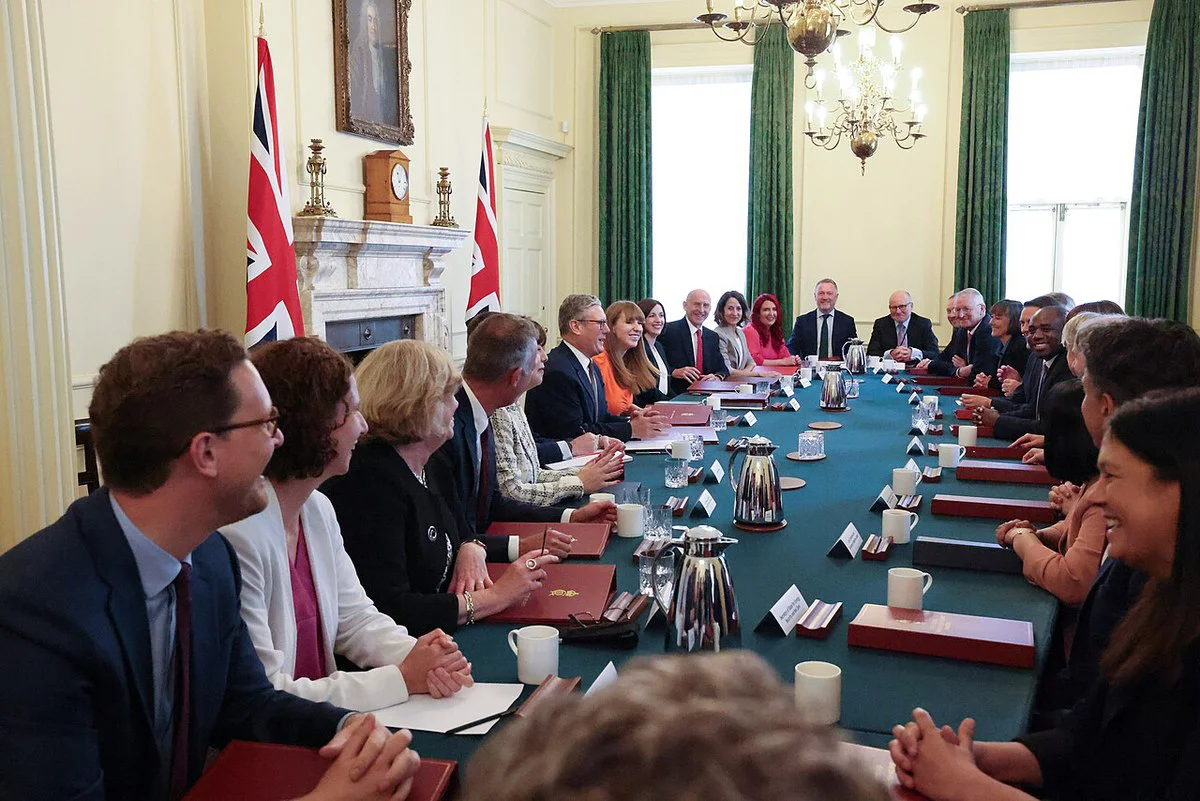
To build a broad church, party leaders will sometimes re-shuffle the appointments in their gift so that they cover all key policy bases. They want to ensure the cabinet represents the various elements of their broad church.
Whilst such top team reshuffles are fairly common and usually unremarkable, as recently with the Badenoch shadow cabinet, in the last few years PMs Johnson and Starmer have taken an unusual tack: they have deliberately purged their parliamentary teams of those they regarded as potential or actual disloyalists. They have removed dissent. They have narrowed their “churches” with the knock-on effect of reducing their support, not only in the House of Commons but in the country.
Loyalty works both ways
So why do they do that? Why are long-serving, experienced and, you might say, archetypal, Conservative and Labour MPs not only removed from Cabinet but suspended or ejected from parties they had spent years helping to build?
It would be hard to find individuals who more strongly represented Conservative values than Ken Clarke or Dominic Grieve; or who typified Labour more than Jeremy Corbyn and Diane Abbott, yet these are among those deprived of the party whip by leaders attempting to secure their position, either through shoring up personal loyalty or by pursuing a particular agenda.
Electors who had supported these MPs were then left unrepresented by the party for which they loyally voted and which has now so changed its spots: the Conservatives veering towards mimicry of Farage’s Reform, while Labour has donned old Tory clothes. Why, one might ask, and maybe the backroom people in both parties do, would voters now stay with the tribe which abandons them? Some calculation is at play here as to the degree of flexibility of these various loyalties. And, of course, loyalty works both ways.
How strong will tribalism prove in the face of these purges when the true reason for the Labour landslide of 2024 was that it was a “fed-up-with-the-Tories” election, rather than the outcome of any passion for Starmer’s Labour. Labour won its landslide with just 21% of the potential vote. Being fed up was enough to see off the previous government but what next? Despite the change of government, the country remains fed up and lacks enthusiasm for either main party or leader.
Further discouraging loyalists by hitting the pockets of those who could least afford it and then directing a Nelsonian eye towards the ethnic cleansing of Gaza can only do more damage. Labour’s support will ebb away. Purging these thousands of supporters will surely be seen as an act of self-harm.
Where then for democracy?
What is a fed-up electorate to do in these troubled times? The weaknesses of the FPTP system, to which both parties have clung for decades, means there is the distinct prospect of the largest party, not necessarily Labour, being invited to form a government with no majority and less than a third of the votes.
This collapse in support for the traditional parties will leave a vacuum into which an insurgent Reform UK party will charge. As if the appalling vision of a victory for Reform were not bad enough, it is equally possible that disenchantment may leads to mass abstention. Where then for democracy?
So, reshuffle if you must, PM, but excising dissent is not leadership. Just look what has happened to the Tories. If you are unable to lead a broad church, how will you lead whole nations?
Clearly, we need a parliament much more representative of the wider electorate, with electors being able to vote for someone who represents their values and with tribes collaborating for the common good. Introducing a fair voting system, that is some form of proportional representation, must be the best way forward for General Elections in this country, for politics generally and for the PM’s legacy.

CLICK HERE TO DONATE TO OUR CROWDFUNDER
HELP US BECOME STRONGER SO THAT WE CAN CONTINUE TO DELIVER POWERFUL CITIZEN JOURNALISM!






