


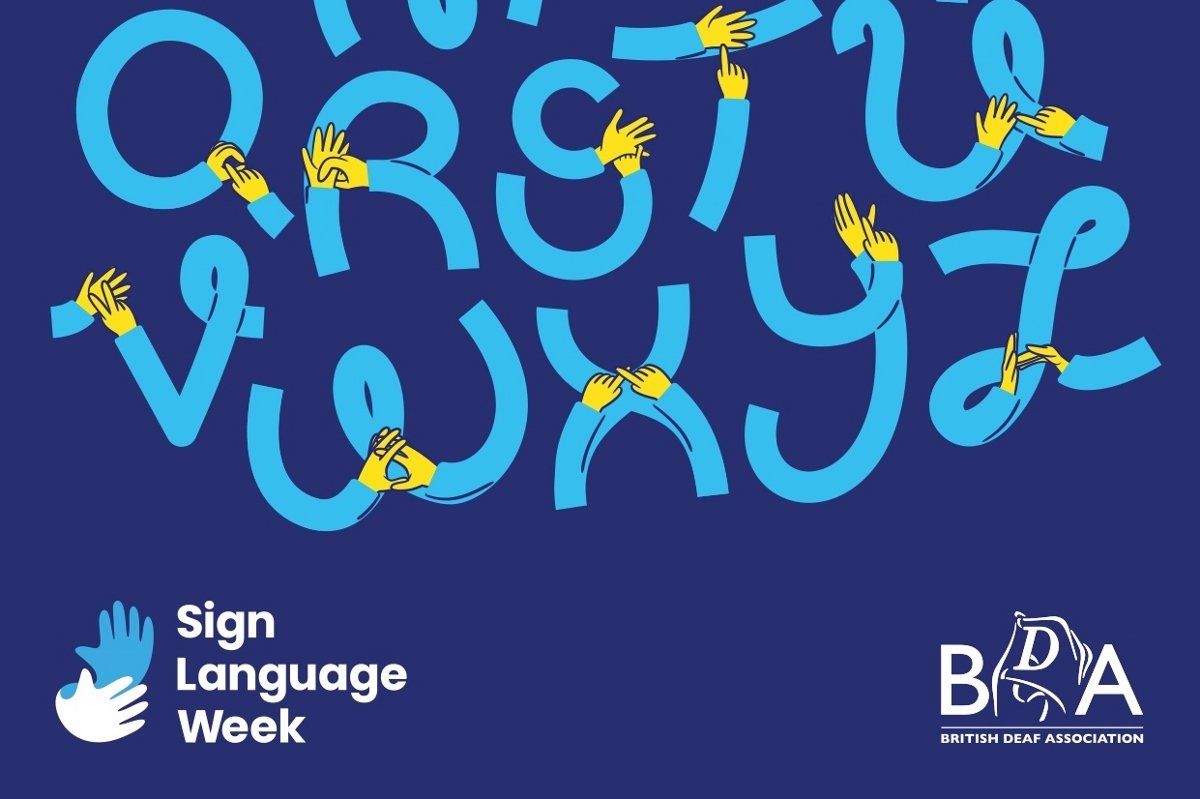
Across the globe there are an estimated 7000 languages. Out of these, it is thought that there are currently 300 sign languages in use. Sign language is a visual-spatial form of communication, using hand created signs, as well as facial expressions and body language to convey meaning. Sign languages have their own grammar, regional variations, and socio-political history. Sweden was the first country in the world in 1979 to legally recognise deaf people as bilingual.
The development of British Sign Language (BSL) in the UK has been arduous. Whilst sign language has had a storied history, the first documented instance of BSL dates to 1576. Subsequently, Deaf culture has evolved throughout the UK. However in 1880, the worldwide Congress on Education for the Deaf conference considered signing to be inferior – a pivotal moment for the approach towards sign language in education.
Following this decision, speech was prioritised as the goal for all deaf people. This was decided without any regard to the needs and wants of deaf people themselves. However, as progress was made by activists throughout the late 20th Century, BSL was recognised as a language in its own right in 2003.
Following on in 2022 the BSL Act was passed, legally recognising BSL as an official language in England, Wales, and Scotland. In regards to the prevalence of BSL today, it is the third most widely used indigenous language after English and Welsh. Statistics from the Royal National Institute of the Deaf (RNID) show there are around 150,000 BSL users, with 25,000 people who use BSL as their main language. However there are an estimated 12 million people who are deaf or have some form of hearing loss in the UK.
The myths of language development
Deaf people face persistent and systemic barriers in society, often on a widespread scale, with repeated documented instances of deaf people being excluded from basic public services. This ongoing inaccessibility leads to social and economic disadvantages, starting from childhood. Due to the long standing enforcement of oralism on Deaf communities, there is still a persistent stigma that learning to sign will hinder speech development.
As a result of this, there has been a policy of prioritising mainstream education. Over the last few years many Deaf schools and clubs have been shut down, leading to devastating consequences for deaf children.
Language development is in its most critical period for the first five years of child development, with fluency achievement being linked to this crucial time. The British Deaf Association (BDA) commissioned RAND Europe to assess the cost analysis towards BSL lessons for deaf children. Results found that early and consistent BSL exposure had positive lifelong improvement across social, education and economic categories.
Recommended actions from the report included providing all families with information and access to signing options and embedding early BSL exposure alongside speech. Further research demonstrates that bilingualism from learning BSL alongside speech for hearing children is also beneficial. This increases language acquisition for BSL and spoken language, preventing language isolation and deprivation for all children.
Families of deaf children are being failed
According to the RNID and BDA, there are 50,000 deaf children in this country, with 90% being born to hearing parents. Lessons and exams in BSL for more than one person can potentially cost thousands, with lack of access to lessons presenting a significant challenge for parents and families of deaf children.
These families are being failed by the government and the lack of political will to promote BSL on a national level and improve access for people who use or want to use the language. Due to this current reality, the BDA launched their ‘In Our Hands’ campaign, aiming to encourage the government to allocate funding and better access to BSL lessons for the families of deaf children.
Along with this current action and the law change in 2022, has been the development of a BSL GCSE. At first aimed to roll out in schools for September 2025, it’s now delayed, with a new potential start date of 2027. The delay of an individual qualification for sign language has been considered even more devastating by campaigners in light of the fact that in 2024, the GCSE was scrapped entirely in Wales.
The Welsh Government cited practical challenges, among which included the lack of qualified teachers. Instead they aim to provide individual BSL units as part of their Skills Suite Qualifications. Despite this setback, Signature, the national charity and awarding body for sign language and deaf awareness qualifications, stated in 2024 that they remain fully committed to working towards a GCSE for BSL in Wales.
Moving forward
BSL is without a doubt a vital and necessary form of communication, as well as a cornerstone for an entire community and culture. However, it is clear that there is a desperate need for progress around assumptions of how deaf people and sign language are viewed. Research by RNID suggests that 90% of BSL users have faced negative attitudes.
In 2024, the England Women’s football team wore “signed shirts” with their names displayed in BSL fingerspelling on their backs to promote accessibility in sports. This emphasis on sign language being used in such a public way fostered progress, but unfortunately was short-lived, demonstrating a clear need to move beyond basic awareness and a need to overhaul perceptions towards BSL inclusion.
Sign Language Week, 16-22 March, aims to ‘promote, preserve and protect’ BSL as more than a language and instead as a bedrock of cultural heritage and identity for d/Deaf people. Celebrated every March to commemorate the recognition of BSL in March 2003, it aims to develop a culture of respect and acceptance alongside awareness. To encourage access to spaces in which deaf culture can thrive and for barriers to be overcome, we need to create and nurture a culture of change and recognition.
See Commanding Hands tips for deaf awareness.

CLICK HERE TO DONATE TO OUR CROWDFUNDER
HELP US BECOME STRONGER SO THAT WE CAN CONTINUE TO DELIVER POWERFUL CITIZEN JOURNALISM!






