


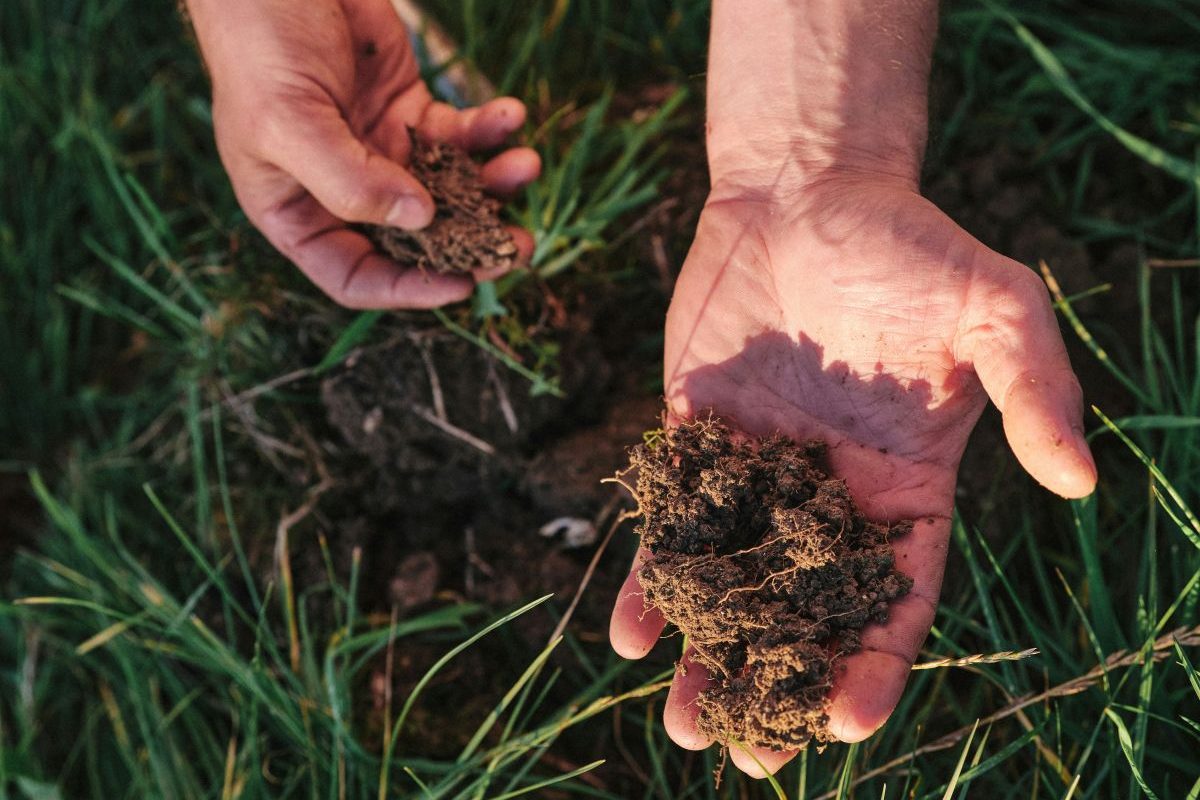
There is a particular kind of patience beneath our feet. It does not announce itself. It does not hurry. Most of the time, it goes entirely unnoticed. And yet everything we eat, every field we pass from a train window, depends on it.
Soil is not dirt. Dirt is what gathers under fingernails, what gets swept from the kitchen floor. Soil is alive. A teaspoon can hold more organisms than there are people on Earth. It is a slow collaboration – rock, water, air, fungi, bacteria, roots, all working in concert over time. Above all, time.
An inch of topsoil can take centuries to form. Rain fractures rock into smaller pieces. Lichens and mosses begin the first quiet work. Plants take hold, die back, return themselves to the ground. Worms and microbes pass through, breaking, binding, building structure. Gradually, almost invisibly, a thin, dark skin forms across the land – capable of holding water, holding nutrients, holding life.
We are losing it far faster than it can be made.
The exact figures are debated. The direction is not. Across large parts of the world, soil is thinning – eroded by rain, lifted by wind, compacted by machinery, stripped of nutrients. Modern farming has become extraordinarily efficient at producing yield, and, at the same time, remarkably effective at dismantling the structure that makes that yield possible. Turn the soil too often, press it too hard, leave it exposed, and it begins to come apart. Once that happens, it does not take much for it to leave.
There is a line that surfaces from time to time: that we have sixty years of topsoil left. It is not a countdown in the cinematic sense. The ground will not suddenly fail in a single season. But it is a statement about direction. Continue like this, and within a lifetime much of what we rely on becomes less fertile, less resilient, less alive.
Part of the problem is that soil changes quietly. A fraction of a millimetre lost to heavy rain does not make news. Nutrients washing away do not trigger alarms. The degradation is cumulative, dispersed, easy to miss – until it isn’t.
When soil weakens, everything built upon it follows. Yields become less reliable. Farming leans harder on fertilisers, with diminishing returns. Crops can look abundant and still carry less nutritional value. In some places, land tips into desert. In others, it sheds water instead of holding it, increasing the risk of flooding. Soil, when it is healthy, behaves like a reservoir. When it is not, it becomes a surface.
And yet this is not only a story of loss
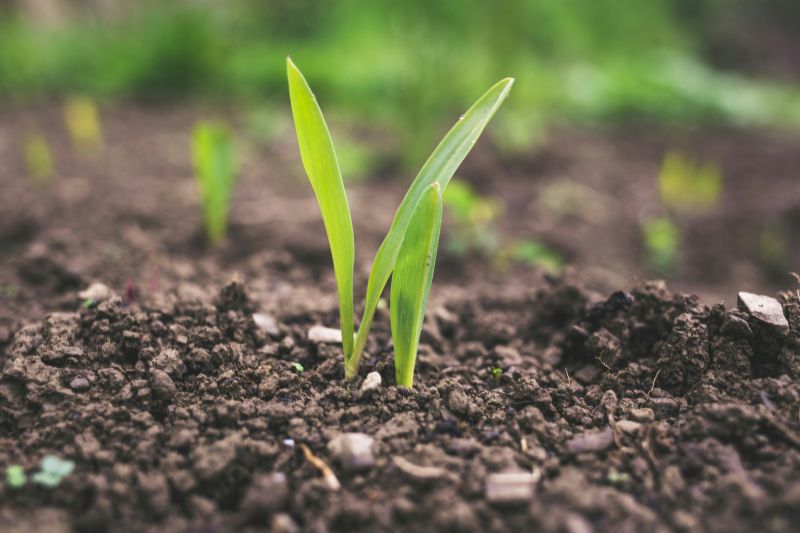
What becomes apparent, once you begin to pay attention, is how quickly soil can respond when it is treated differently. Not quickly by human standards, but far more quickly than once assumed.
Leave the soil undisturbed, and its structure begins to return. Keep it covered with living plants, and it holds together. Introduce diversity – different roots, different rhythms – and the biology beneath the surface strengthens. Trees, reintroduced into farmland, steady the ground and feed it. Even grazing, handled with care, can stimulate growth rather than exhaust it.
None of this is especially new. Much of it is a re-learning – older practices, seen again with clearer eyes. The shift is not technical so much as perceptual: from soil as a resource to be used, to soil as a system to be maintained.
There are already places where this is visible. Fields that once shed water now absorb it. Earthworms return. Crops endure dry periods that would previously have caused failure. Yields stabilise, sometimes improve, with fewer inputs. It is not universal, and it is not simple. But it is enough to show that the trajectory is not fixed.
The deeper tension is one of time. Modern life is organised around immediacy – quarters, targets, next year’s output. Soil does not recognise those intervals. It works on accumulation. Layer by layer. Season by season.
To pay attention to soil is to be reminded that some forms of wealth cannot be hurried. That stability is built, not extracted. That care, in this context, is not an indulgence but a requirement.
On a walk through the countryside, the fields appear solid, settled, as though they will continue much as they are. In reality, they are in motion – shaped by decisions repeated year after year.
The patience beneath our feet has not gone anywhere. It is still there, still working, still capable of renewal.
The question is whether we choose to meet it at its own pace.

CLICK HERE TO DONATE TO OUR CROWDFUNDER
HELP US BECOME STRONGER SO THAT WE CAN CONTINUE TO DELIVER POWERFUL CITIZEN JOURNALISM!






