


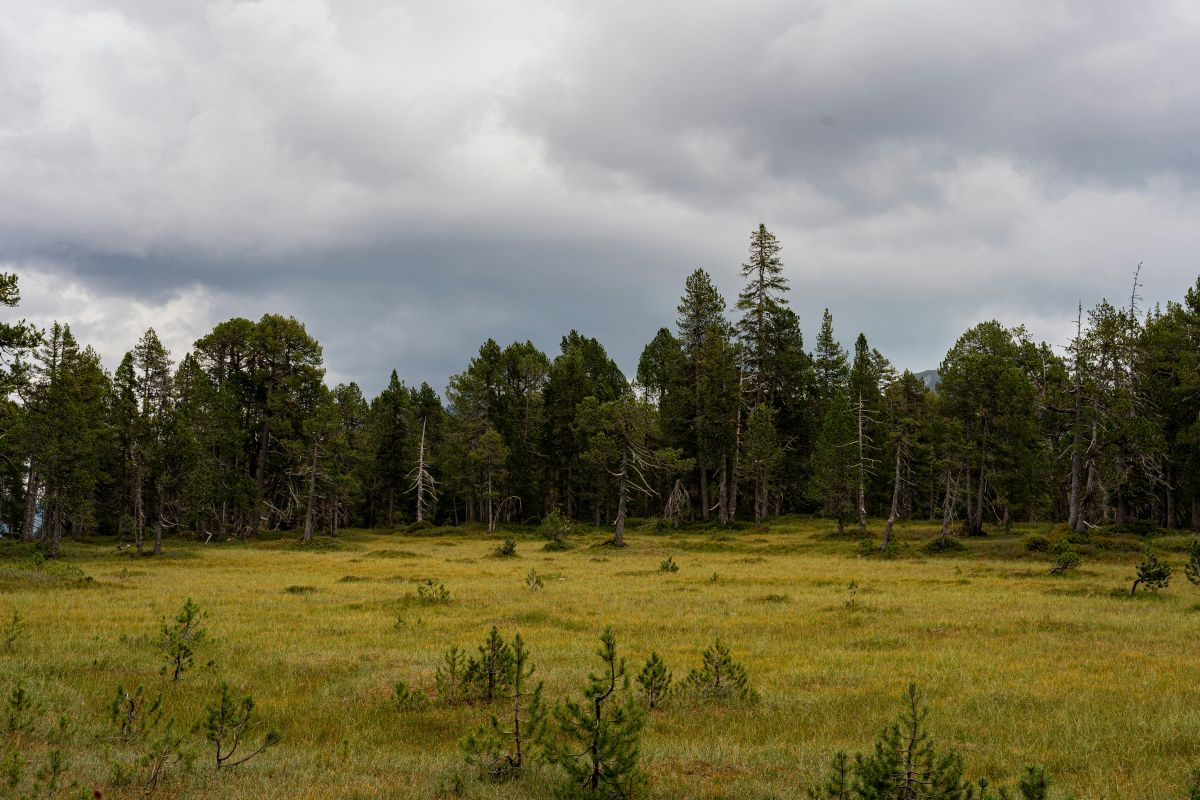
Walking close to home, I often find myself moving from one landscape to another almost without noticing. One moment I am beneath the cool canopy of mature broadleaf trees, the next I emerge onto open heathland where the sun beats down and the wind carries the scent of drying heather. Nearby are areas of managed forestry, rides cut through the trees and wide fire tracks that criss-cross the landscape. At first glance it can appear fragmented, yet the longer I spend there the more I see something different. Rather than existing as separate places, they function as a single living landscape.
Human beings have undoubtedly shaped it. Those fire tracks did not appear by accident, nor did the managed woodland. Yet standing there, it is difficult to argue that every human intervention diminishes nature. Quite the opposite. The different habitats support different species, the open rides provide valuable edges for wildlife, and the fire tracks help divide the landscape should fire ever take hold. It is managed, but it is also alive, and there is a lesson in that balance.
The word “diversity” has become central to modern conservation, and rightly so. A rich variety of habitats supports a rich variety of life. Yet diversity alone is not the end of the conversation. The question that increasingly occupies me is not simply how many habitats we can create, but how resilient those habitats remain as the world around them changes.
This summer has reminded us that Britain is becoming a warmer, drier place. Wildfires have become an almost expected feature of the news. It is tempting to imagine that every habitat faces the same risks, but they do not. Heathland, with its open expanses of heather, gorse and dry grasses, is naturally far more vulnerable to fire than established broadleaf woodland.
Once fire gains momentum across open heath, it can travel quickly, and if peat soils ignite or seed banks are damaged, recovery may take many years or even decades. Woodland tells a rather different story. Beneath a mature canopy, shade helps retain moisture, humidity remains higher and many woodland plants return surprisingly quickly after a surface fire, provided the blaze has not become too intense.
Neither habitat is better than the other. Each has its own strengths, its own vulnerabilities and its own remarkable communities of plants and animals. The mistake would be to imagine that one approach to management suits them all.
There is another layer to this that is easy to overlook. In much of southern England, our heathlands are also places where people choose to live. Open landscapes, wide skies and easy access for walking make them attractive neighbours. As towns and villages expand, more people enjoy these spaces than ever before, and rightly so.
Nature should never become something locked behind a fence. Yet greater access also brings greater responsibility. Most wildfires in Britain still begin through human activity, whether by accident or intent. Climate may create the conditions for fire, but it is often people who provide the spark.
Population grows, but land mass does not
Britain’s population has grown by around ten million people since 1980, yet the land itself has not grown with us. Every new home, road, industrial estate and piece of infrastructure places another demand upon a finite landscape.
None of this is inherently wrong; people need somewhere to live, work and raise their families. It does, however, remind us that conservation can no longer be viewed in isolation from the wider pressures society places upon the natural world.
The more I reflect on this, the more I wonder whether we have begun to ask too much of our natural spaces. We ask them to support biodiversity, lock away carbon, reduce flooding, provide clean water, improve our mental health, produce timber and food, absorb the pressures of climate change and offer places of peace and recreation for an ever-growing population. None of these expectations is unreasonable. Together, however, they amount to an extraordinary burden on a landscape that is both finite and already under pressure.
Perhaps this is why debates about conservation can become so polarised. We search for single answers to problems that are anything but simple. We argue over grazing or rewilding, over fallen timber or woodland management, over prescribed burning or leaving nature alone. Yet landscapes rarely respond to one influence in isolation. Climate, population growth, housing, recreation, pollution, invasive species and management all interact. Remove one pressure and another remains. Ignore one, and the others become harder to solve.
Standing quietly in the woods near my home, I am reminded that resilience is rarely accidental. It is often the result of understanding a place well enough to know what it needs. Sometimes that means stepping back. Sometimes it means intervening with care. The challenge is recognising the difference.
As our climate continues to change and the demands upon the countryside continue to grow, perhaps the question is no longer simply how we increase biodiversity. Perhaps the greater question is whether we are creating landscapes resilient enough to withstand everything we now ask of them. Nature has an extraordinary capacity to recover, adapt and renew itself, but resilience is not the same as limitless endurance.
In the end, the future of our landscapes may depend not only on what we choose to protect, but on whether we recognise that even the richest living systems have limits to what they can be expected to carry.

CLICK HERE TO DONATE TO OUR CROWDFUNDER
HELP US BECOME STRONGER SO THAT WE CAN CONTINUE TO DELIVER POWERFUL CITIZEN JOURNALISM!





