


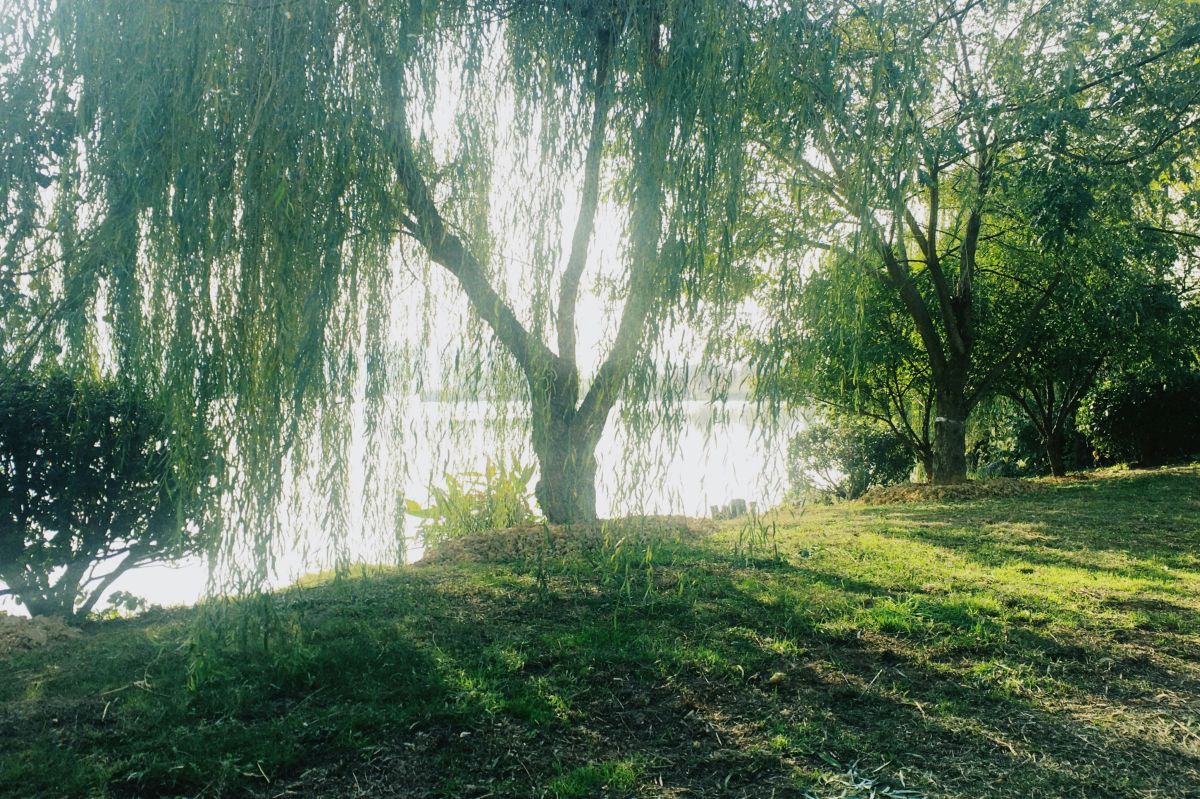
There is something unsettling about seeing a willow dying beside a river. Of all our native trees, we recognise the willow as normally pictured by water. Its roots seek the damp ground, its branches lean over rivers and streams, and even in the driest summer there is something about seeing a willow beside water that suggests it should be all right.
Yet people along parts of the Thames have been noticing willows struggling and dying.
There could be many reasons for this. Prolonged drought alone can place enormous stress upon a mature tree. Disease, age and local conditions may all play their part, and it would be foolish to look at a dying willow and immediately declare that we know the cause. But the observations interested me because they led to a question that at first seems almost contradictory.
How does a tree that has spent its life beside a river run out of water?
The answer begins much farther away
The Thames we see flowing through London is the result of rain falling across an enormous landscape. Water falls on the Cotswolds and the Chilterns, on fields and woods, gardens and towns. Some runs quickly into streams, while some disappears beneath our feet and moves slowly through soil, chalk and groundwater before eventually finding its way into springs and tributaries.
When the rain stops for a prolonged period, all of those small contributions begin to diminish. The river still flows, but there is less water making the journey downstream.
And that is when something unexpected begins to happen. While the river is travelling towards the sea, the sea is also travelling towards the river.
The lower Thames is tidal. Every day the tide comes inland and retreats again, and somewhere within that enormous movement freshwater and saltwater meet. That boundary has never been fixed. It moves according to tides, seasons and the amount of freshwater coming downstream.
During drought, the river’s influence weakens.
The sea can reach farther upstream. Suddenly drought becomes something rather different from the picture we usually carry in our heads. We think of drought as absence: no rain, less water, empty reservoirs and dry ground. But farther downstream, that absence can allow something else to arrive.
Salt.
This has happened on the Thames before. During the severe drought of 1989 and 1990, researchers studying the upper Thames Estuary recorded increased salinity as freshwater flows declined. They also found changes among freshwater invertebrate communities as conditions altered.
For me, that changes how we think about drought.
We stand on the bank looking at a low river and experience drought as missing water. A tiny creature living beneath the surface may experience exactly the same event as the arrival of salt. The drought is the same, but its meaning depends entirely upon where in the landscape you happen to live.
Now we can return to the willow
A willow beside a tidal river is living at the meeting place of several worlds. Its roots depend upon water within the soil. That soil is influenced by groundwater, rainfall, flooding and the river beside it. During a prolonged drought the tree may already be struggling to obtain sufficient water. If salinity around its roots also increases, another pressure is added, because salt can make it more difficult for a plant to take up the water that remains.
There is a cruel contradiction in that. A tree can effectively experience water stress while standing beside water.
Recent research into floodplain forests has found white willow particularly sensitive to salt intrusion during spring and summer, when the tree is actively growing. That does not prove that salt is responsible for the willows people are reporting along the Thames. We would need measurements from those particular places before making that claim. Drought itself may be enough to explain some losses, while disease or other local conditions may explain others.
But it gives us good reason to pay attention.
And the willow is not standing there alone.
Beneath its branches are insects and other invertebrates. Among its roots and along the margins of the river are plants adapted to freshwater conditions. Fish feed upon smaller creatures, birds feed upon the fish and insects, roots hold the bank together and branches cast shade across the water.
Change the chemistry of that water and the consequences begin to travel.
Not everything dies. Nature is rarely that simple. Some species tolerate brackish conditions better than others. Some may even benefit as competitors disappear. Gradually the community can change, not because somebody has drawn a new boundary between freshwater and estuary on a map, but because each living thing has its own limits.
Eventually the rain returns
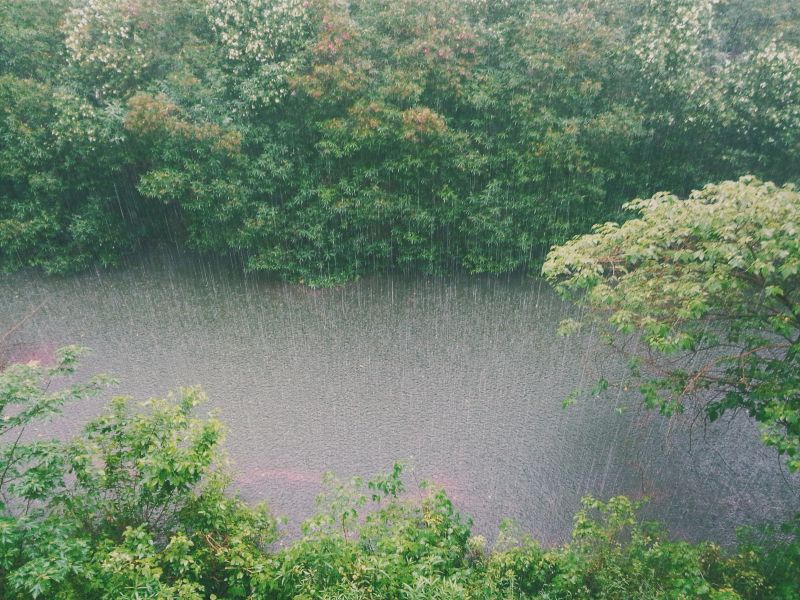
After months of watching brown fields and shrinking rivers, there is an enormous temptation to think that the drought is over when we hear rain against the window again. Rivers rise, puddles return and within weeks the countryside may become green enough for us to forget how dry it had been.
The river begins pushing freshwater towards the sea again and the salinity boundary can retreat downstream.
Perhaps that should be the end of the story. But the river has another lesson for us.
Water returning to the river is not the same as water returning to the landscape. After prolonged drought, soils need replenishing and groundwater has to recover. Some aquifers respond slowly. Heavy rain falling onto very dry or compacted ground can race into drains and rivers and disappear towards the sea without replacing everything that has been lost beneath our feet.
Living things recover on different clocks as well. An invertebrate population that disappeared from part of the river has to recolonise. Vegetation needs another growing season. A damaged tree may recover slowly over several years. A willow that has died will not suddenly burst into leaf because November is wet. Another may eventually grow in its place, but decades of life cannot be replaced by a few weeks of rainfall.
This is where one dying willow beside the Thames begins to ask a much larger question.
Nature has always experienced drought. Rivers have always risen and fallen, estuaries have always moved between fresh and salt, and living communities have always adapted to changing conditions. The remarkable thing about natural systems is not that they remain unchanged, but that they possess an extraordinary capacity to recover.
What concerns me is not one dry summer. It is what happens if the next drought arrives before the river has recovered from the last. Imagine the river having several good years between severe droughts. Groundwater replenishes, freshwater species recolonise, soils lose accumulated salt and young trees establish. The system bends and then slowly returns.
Now shorten the interval
Another drought arrives while groundwater remains depleted. Another period of low river flow allows salt farther upstream. Another generation of trees experiences stress. At the same time, sea level is gradually rising from the other direction.
Eventually we may find ourselves asking a different question. Not whether the old balance will return, but whether the balance itself has begun to move.
That is why I think those observations of struggling willows are worth listening to, while being equally careful not to claim that we already know what is killing them. People who live beside a river often notice small changes long before those changes become statistics: a tree failing to leaf properly, an insect no longer appearing, a patch of vegetation changing, a familiar bird becoming less common.
Observation is not proof, but it is often where enquiry begins. The next time I pass a willow beside a river, I think I will look at it a little differently. Not because every yellow leaf is evidence of some approaching catastrophe, but because I understand more clearly what is meeting beneath that tree.
Rain that may have fallen months ago and many miles away, groundwater moving invisibly beneath the landscape, freshwater travelling downstream and a tide arriving from the sea can eventually meet around the same roots.
A drought, then, is not simply a period without rain. It is something that travels. And if the willow begins to struggle, perhaps the first question should not be what is wrong with the tree.
Perhaps we should ask what is changing around it.

CLICK HERE TO DONATE TO OUR CROWDFUNDER
HELP US BECOME STRONGER SO THAT WE CAN CONTINUE TO DELIVER POWERFUL CITIZEN JOURNALISM!





