


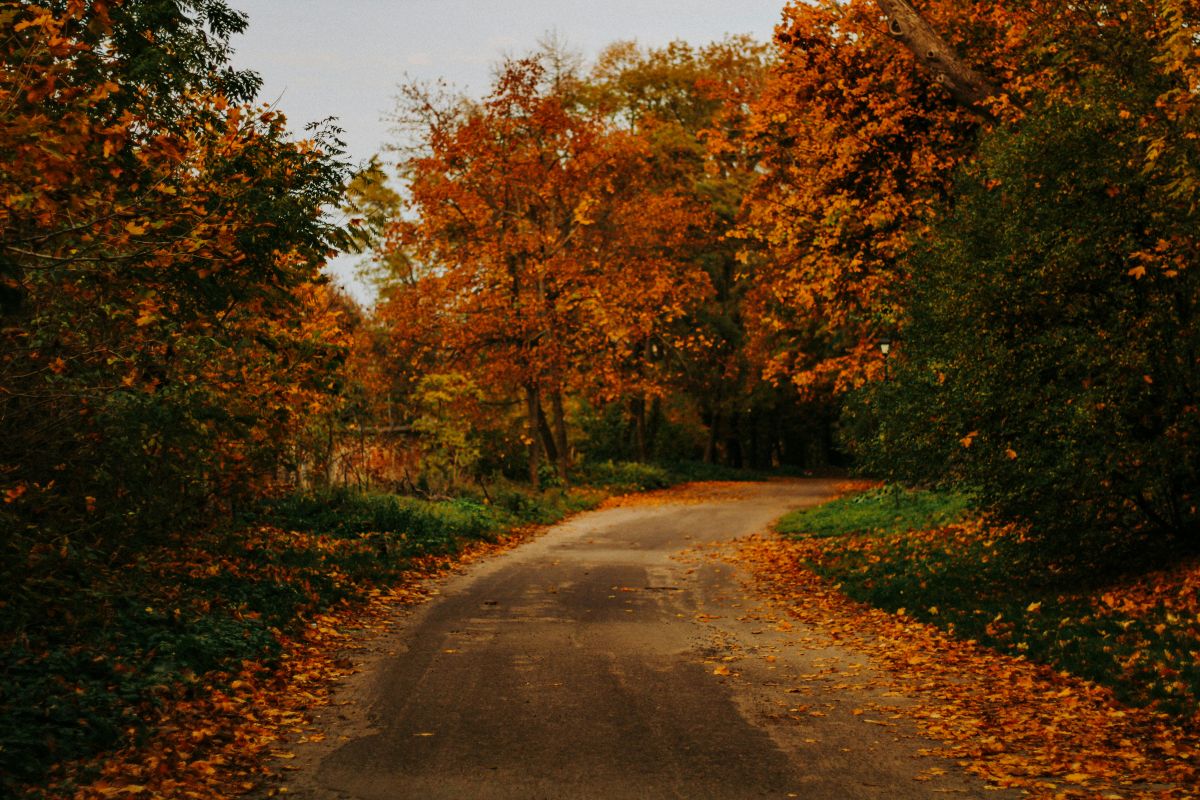
Something feels out of place in the forest, although it is difficult to explain exactly what because what I am looking at is extraordinarily beautiful. It is the middle of August and beneath the trees great stretches of bracken have already turned gold, not simply the occasional dying frond or a little browning around the edges, but whole areas of the forest floor glowing with colours I associate with autumn.
The sunlight catches them wonderfully and, had I taken the same photograph in October, nobody would think there was anything unusual about it. But I didn’t take it in October. I took it in August, and somehow that changes the way I look at it.
I have spent much of my life outdoors, and after enough years you develop an internal calendar that has little to do with the date displayed on your phone. There is a particular green to May and another to high summer; there is the smell of autumn, the first morning when the air changes and the gradual colouring of the woodland before the trees finally begin letting go.
Nature has never followed our calendar precisely, of course. There have always been early springs, terrible summers, late frosts and unusually mild autumns, but there has been enough of a rhythm for the creatures living within it to organise their lives around it, including us.
This year something about that rhythm feels different. The golden bracken is partly the consequence of an exceptionally hot, dry summer, while trees under drought stress also have to conserve water. They can close the tiny pores on their leaves through which water is lost and, under sufficient stress, begin sacrificing leaves altogether.
A false autumn
Chlorophyll disappears, the green fades and other pigments become visible, creating something that resembles autumn even though summer is still here. It is sometimes called a false autumn, an expression I find rather haunting because this is not necessarily autumn gently arriving ahead of schedule. Some plants are displaying the colours of autumn because summer itself has become difficult.
On one of the hottest days this year I sat outside and noticed how extraordinarily quiet everything had become. There seemed to be fewer birds moving, hardly anybody was outside and traffic appeared diminished. The landscape seemed to have withdrawn, and then it occurred to me that we had done much the same thing. Curtains closed against the sun, dogs walked very late, gardens empty and people remained indoors. We sought shade, conserved our energy and waited for the worst of the heat to pass.
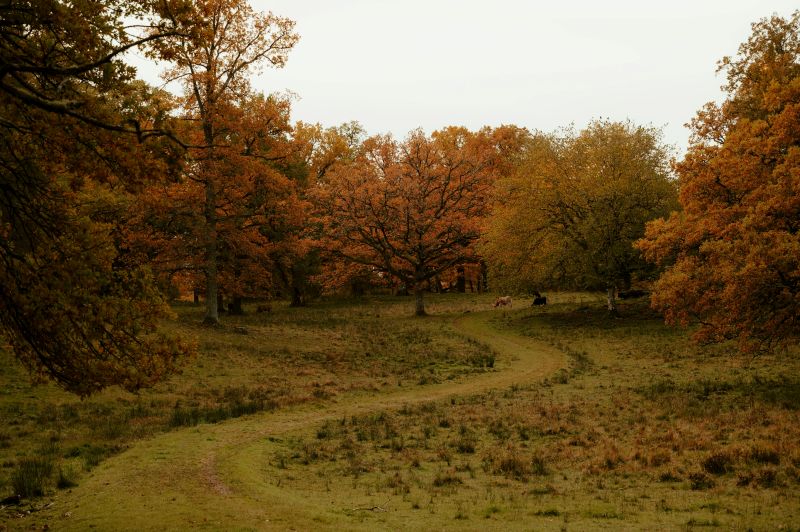
A human retreating into a cooler house and a tree responding physiologically to drought are obviously different things, but something connects them. When conditions become difficult, living things conserve what they have. We adapt remarkably quickly by changing our working hours, carrying water or simply moving somewhere cooler, but an oak tree cannot move, and the countless other organisms living around it have far fewer choices than we do.
Changes are becoming misaligned
This is where those golden leaves begin to tell a much larger story, because the problem may not simply be that our seasons are becoming warmer. The timing of events within the natural world is changing, and not everything is responding at the same speed. We tend to talk about climate change in terms of temperature, but an ecosystem also depends upon timing.
Imagine the natural world as an enormous timetable. A plant flowers and an insect arrives to pollinate it. Caterpillars emerge and birds raise their chicks while those caterpillars are plentiful. Fruits ripen and animals eat them, carrying their seeds elsewhere. Leaves fall and fungi and organisms within the soil break them down, returning nutrients to the earth. These relationships have developed over immense periods of time, with one event frequently depending upon another happening at approximately the right moment.
The difficulty is that the organisms involved do not all use the same clock. Some respond to temperature, others to rainfall or hours of daylight, while migrating birds may begin journeys thousands of miles away in response to entirely different conditions. Usually those different clocks overlap sufficiently for the system to work, but what happens when they begin drifting apart?
Suppose unusual weather causes a plant to flower several weeks earlier. The insect that depends upon it might emerge earlier too, but not necessarily by exactly the same amount. A migrating bird cannot look at a weather forecast in Sussex and decide that the caterpillars are early this year. The plant has done nothing wrong, neither has the insect nor the bird, but they may nevertheless stop arriving at the same appointment.
This is why I am becoming interested in whether the familiar sequence of the seasons is becoming less dependable. Over recent years I have noticed leaves remaining on trees remarkably late, sometimes towards the back end of November. Yet here I am in August looking at plants already displaying autumn colours because of heat and drought. Both things can happen. Summer can push part of the woodland towards an autumn response early while a warm October persuades another part of it to remain active much later.
Are seasons becoming less distinct?
Perhaps the seasons’ boundaries are becoming less distinct, and different organisms are reading different signals from the same changing environment. To us this can appear to be little more than strange weather, but for the natural world timing can mean survival. A caterpillar does not care what the annual average temperature was; it needs the right plant at the right moment. A chick in a nest knows nothing about whether this is one of the warmest years on record; it simply needs there to be insects when it is hungry.
There is something important in that difference. We humans have become good at insulating ourselves from the seasons. We heat our houses in winter, cool buildings in summer, light the darkness and import food. If the weather changes, we can alter our plans. Much of nature cannot. A tree cannot move to somewhere wetter, and a caterpillar cannot postpone its emergence because the bird that feeds upon it hasn’t arrived.
Nature does adapt and always has. Species move, behaviour changes and evolution continues, but nature does not necessarily change at the speed at which human beings can. More importantly, thousands of interconnected species do not necessarily adapt at exactly the same rate. The question is not simply whether an oak, butterfly or bird can respond to changing conditions, but whether the relationships connecting them can change quickly enough as well.
Perhaps we struggle with this because we have become accustomed to thinking of nature as scenery, a collection of trees, birds, butterflies, rivers and flowers arranged around us. An ecosystem is something more complicated. An oak’s roots is connected to fungi, insects feeding upon its leaves, birds feeding upon those insects, organisms consuming what falls to the ground, the soil holding its water and the weather influencing almost everything. A woodland is a web of relationships happening through time.
That is why the golden forest unsettles me – not because golden bracken in August means ecological catastrophe, it does not, and one unusual summer proves little by itself. Nature has always experienced extremes. What unsettles me is that I recognise when something feels different, and so I am going to watch what happens next. I want to see whether rain changes things, when the oak and beech begin colouring, when the leaves properly start falling and whether some remain on the trees deep into November again. Perhaps this false autumn will become a real one, perhaps summer will somehow resume, or perhaps we will experience something stranger still, an autumn that begins early and finishes late.
Standing amongst golden bracken beneath an August sun, I find myself wondering whether that is the larger story unfolding around us. It may not simply be that the seasons themselves are changing, but that ancient relationships between living things are being asked to adjust at a speed they have rarely had to face before.
Perhaps the question this autumn is therefore not when the leaves will fall, or when autumn will arrive, but something more important: when autumn does arrive, will everything that depends upon it be arriving at the same time?

CLICK HERE TO DONATE TO OUR CROWDFUNDER
HELP US BECOME STRONGER SO THAT WE CAN CONTINUE TO DELIVER POWERFUL CITIZEN JOURNALISM!





