


I had only been away for a week, but when I came home something had changed.
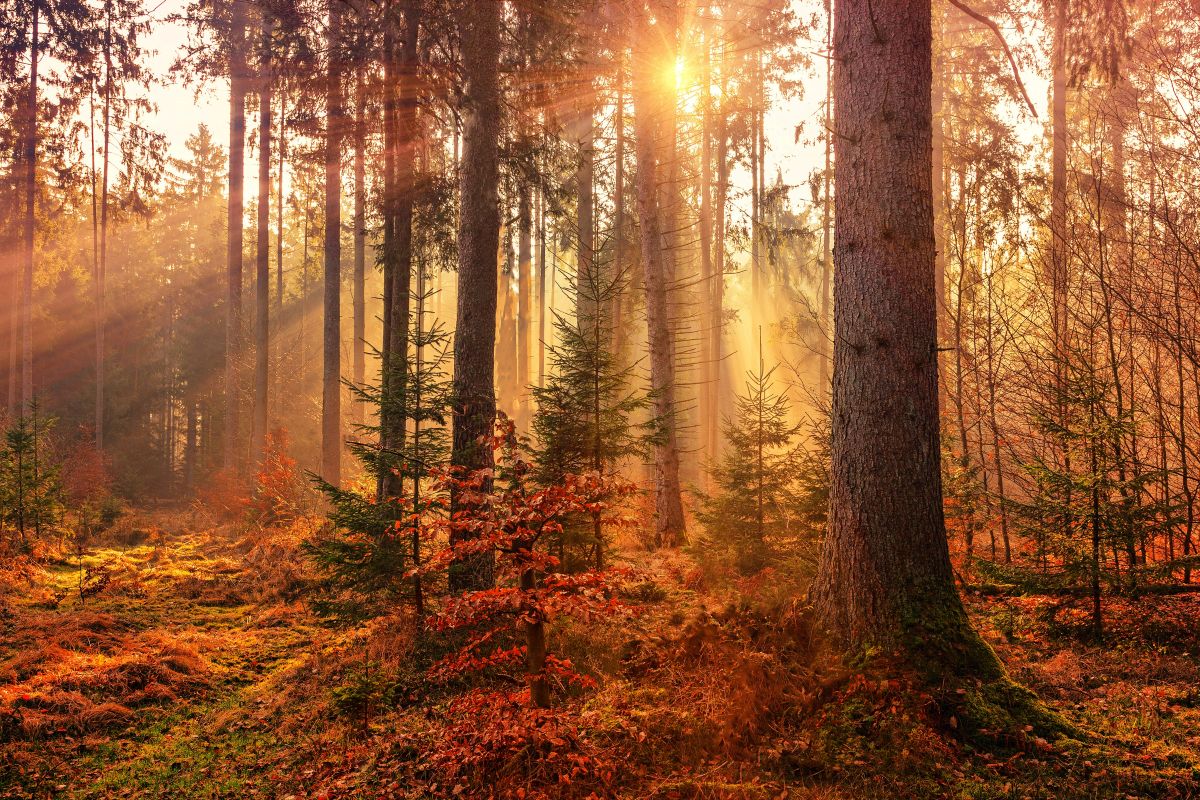
It wasn’t dramatic. There had been no great storm, no sudden frost and certainly no announcement from the trees that summer was over. It was simply there when I got up in the morning. A little over a week earlier, half past five had still carried enough light to make the day feel as though it was already beginning. Now, approaching six, the world sits somewhere between darkness and daylight. The shapes of the trees are visible, but their colours haven’t quite returned. The birds are quieter. The air feels cooler against my skin.
Walking into the forest, I can feel it even more.
Summer woodland has an energy of its own. There is movement everywhere: insects working through flowers, birds calling through the canopy, leaves shifting above you and young things feeding, growing and finding their place in the world. Life seems to be pushing outwards in every direction. But something different is happening now. The forest has become quieter. Not empty, and certainly not dead, just quieter. There is a stillness beneath the trees that feels almost as though the woodland is holding its breath before slowly breathing out.
Perhaps that is what autumn really is. The long exhalation of the year.
We tend to notice seasons through the obvious things. Leaves turning orange, the first frost on the lawn, daffodils appearing beside the road or the first properly warm afternoon when people suddenly emerge wearing shorts. But the seasons rarely arrive like that. They creep towards us. The light changes by minutes. Shadows lengthen. Morning air becomes slightly cooler. A leaf here and there begins to turn. Something inside us notices before we have necessarily found words for it.
Autumn equinox
The autumn equinox is approaching, that beautiful point in the Earth’s journey when day and night come close to balance. Afterwards the darkness begins to gain ground, little by little, until we eventually reach the depths of winter. Astronomically there is nothing sentimental about any of this. It is simply the consequence of a tilted planet making its journey around the Sun. Yet human beings have noticed these moments for thousands of years because we lived much closer to their consequences than many of us do today.
Our ancestors couldn’t simply turn up the thermostat and order food from somewhere else when winter arrived. Autumn meant preparation. Food had to be gathered and stored, fuel brought in, roofs checked, animals cared for and the coming months considered. Survival required people to pay attention to what the land was telling them.
Some of that remains in me.
I find myself looking at the wood store and thinking about what still needs doing before winter. I look around my garden differently now, considering what I will leave alone for wildlife, what needs cutting and, perhaps more importantly, what doesn’t. There is something instinctive about it. The days are shortening and a part of me begins putting things in order.
The woodland is doing much the same.
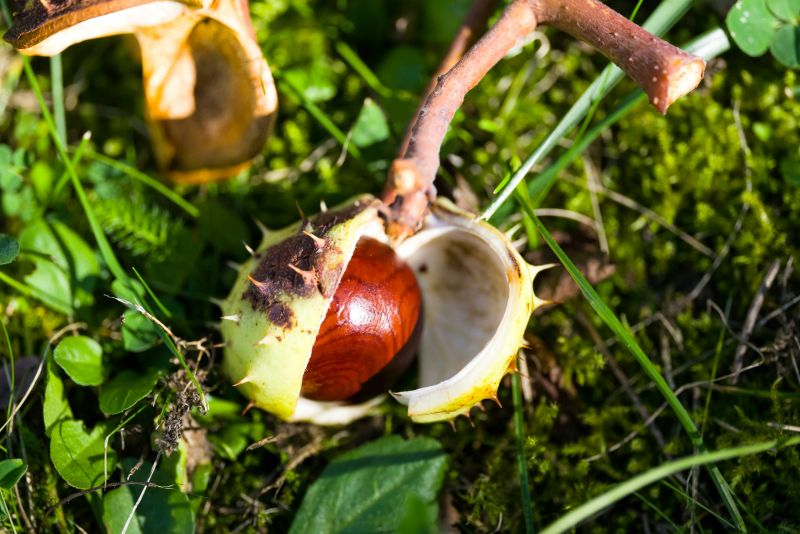
Sweet chestnuts are swelling inside their extraordinary spiked cases and before long they will begin falling onto the forest floor. Squirrels are already interested in the harvest around them. Berries and nuts are ripening in woods and hedgerows, while beneath our feet another world is becoming increasingly visible. With cooler, damper weather, the fruiting bodies of fungi begin pushing through the woodland floor: some tiny and easily missed, others appearing in colours so extraordinary that they seem almost impossible against wet leaves and dark soil. Autumn woodland is not a landscape shutting down. In many ways it is still offering one final great feast before winter.
Maybe that is why I have never found autumn particularly sad.
We often describe it through the language of endings. Leaves fall. Flowers disappear. Days shorten. Birds leave. Darkness grows. Yet an ending only appears sad when we imagine that everything ought to remain as it was. The forest doesn’t seem troubled by change. The oak doesn’t desperately try to hold onto every leaf, nor does the chestnut refuse to release its fruit because summer was pleasant. The living world moves onwards.
There is something wonderfully reassuring in that.
When I was younger, I don’t think I appreciated these points of balance very much. I understood summer and winter because they were obvious. One meant long days and warmth, the other darkness and cold. The solstices felt like great markers at either end of the year. But between those extremes sit these quieter moments, these small pieces of ground where light and darkness meet one another almost equally.
Now I think they may be among the most important moments of all.
A moment within movement
Balance doesn’t mean that everything stops. The equinox isn’t a pause button pressed upon the planet. The Earth keeps turning and travelling, daylight continues shortening and winter continues approaching. Balance is simply a moment within movement.
I find that strangely useful to remember.
We spend so much of our lives trying to arrive somewhere. We work towards the next weekend, the next holiday, the next promotion, the next purchase, the next stage of life. We tell ourselves things will settle down when this particular problem is solved, only to discover another waiting behind it. Perhaps we have become so accustomed to movement that we sometimes fail to recognise the small points of equilibrium that appear along the way.
Autumn reminds me to notice them.
There are moments when preparation is more useful than resistance. There are times when the sensible thing isn’t to cling to what has passed but to look towards what is coming and ask what we need. That might mean stacking logs, putting the garden to bed or checking the roof before winter rain arrives, but it might also mean something less tangible. What have I carried through this year that I no longer need? What has grown well? What hasn’t? Where have I spent too much energy? What do I want to carry with me into the darker months?
Nature doesn’t answer those questions for us. It simply creates a space in which we might hear ourselves asking them.
Over the years I have begun to see the whole turning year almost as a single day.
Spring is morning. The light returns and the world begins stirring. Shoots emerge, birds become busy and everything carries the feeling of possibility that belongs to a new day. Summer is midday and afternoon, the great outward expression of life when the canopy is full and the hours seem almost endless. Then comes autumn.
Autumn is evening
The light becomes softer. Shadows lengthen. Things begin returning home. There is still work to do and food to gather, but the frantic energy of the day begins to settle. We take stock of what we have, finish what needs finishing and prepare ourselves for night.
And winter is that night.
We have somehow learned to fear darkness, as though darkness means absence, but nothing in the forest suggests that. Beneath winter soil roots remain alive. Seeds wait. Animals sleep or slow themselves. Fungi continue their extraordinary work beneath the surface. Trees stand apparently still while holding within themselves everything they need for another spring.
Night is not the failure of the day. It is part of the day.
Perhaps that is what I feel walking through the forest on these September mornings. Not sadness and not an ending, but the approach of evening. The year has travelled a long way since those first tentative mornings of spring. It has flowered, grown, fed, struggled and produced another generation of life. Now the light is beginning to fade and the woodland seems ready to breathe out.
Soon the chestnuts will fall. The fungi will rise through the damp earth. Leaves will begin their slow journey back towards the soil and the evenings will arrive earlier.
And somewhere amongst all of that, I will stack my wood, tend my garden and prepare myself for winter.
Not because darkness is something to fear, but because there is something deeply comforting in remembering that we are allowed to have an evening too.

CLICK HERE TO DONATE TO OUR CROWDFUNDER
HELP US BECOME STRONGER SO THAT WE CAN CONTINUE TO DELIVER POWERFUL CITIZEN JOURNALISM!





