


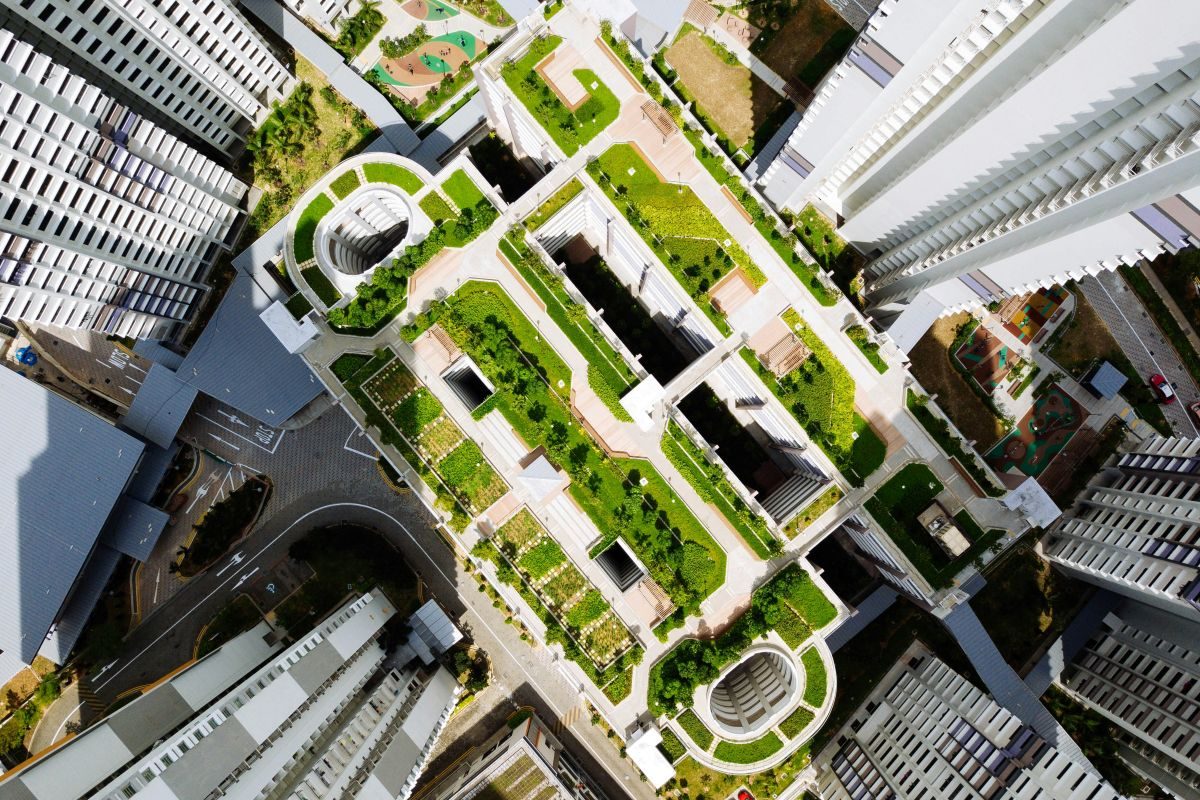
I am a creature of the forest, and last week the forest let me go for a few days. I found myself in the City of London, in the shadow of the Shard and the Gherkin, and by a stroke of luck I was taken up onto the roof of one of the towers to look out across the capital.
It is a view that catches your breath.
The Thames winds its brown way through the middle of it all, past the cranes, the domes and spires, the great glass blades throwing back the light. But a gardener reads a landscape differently. I wasn’t counting landmarks. I was looking for green.
There was precious little of it. Down in the streets, yes: a plane tree here, a pocket of park there, the odd churchyard holding on. But up where I stood, among the roofs, it was glass, steel, concrete and gravel as far as I could see. Acre upon acre of flat roof, baking quietly in the sun and doing nothing for anyone but keeping the rain off. Lay them all side by side and you would have a small county of empty land, sitting closer to the sky than anything else in London.
And the city is getting warmer. Anyone who lived through this summer knows it. The heat doesn’t leave London when the sun goes down. The stone and glass soak it up all day and breathe it out all night, so the centre stays several degrees warmer than the fields beyond the M25. The street trees shade the pavements, and bless them for it, but they can’t reach the roofs. The tops of these buildings face the full sun with nothing between them and it.
So I did what many of us have done. I looked at pictures of the famous green buildings. Singapore, with its hotels dripping in ferns and vines. The Gulf, with its gardens in the desert sky. Milan’s Vertical Forest, two towers bristling with trees like a hedgehog. Glorious, all of them. Why not here?
Then I thought about it as a gardener
Singapore is hot and wet all year round; plants there practically grow themselves. London is another matter. We have had three droughts in five years, and this summer the whole of London was officially in one. Even Milan’s Vertical Forest drinks thousands of tonnes of water a year and needs climbers on ropes to prune it. To plant a London tower like a rainforest, then pump precious water forty storeys up to keep it alive, would be a green costume worn by a building, not a living thing.
So the question isn’t whether London’s roofs could look like Singapore’s. It is what would choose to live up there on its own.
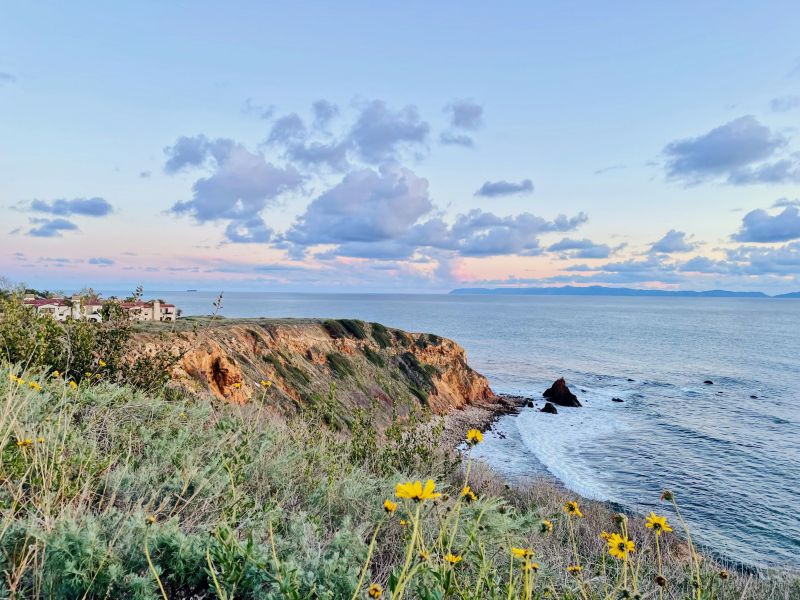
The answer came to me the next day, crossing London Bridge. The wind got up off the Thames and came howling between the towers like a gale on a headland. It is no small thing: the City now makes developers test new towers in wind tunnels before they build, because of the gusts they throw down into the streets. I had to pull my coat around me, and I realised a rooftop in the City isn’t a jungle. It’s a cliff.
Think about what a London roof really is. Thin soil, or none. Baking sun in summer, hard frost in winter. Wind that never stops. Rain that comes in floods, then not for weeks. That is a sea cliff. A chalk down. A scree slope. A quarry floor. And Britain is full of plants that thrive in exactly those places and ask for nothing.
Thrift, the little pink cushions of the clifftops. Sea campion. Wild thyme and marjoram. Bird’s-foot trefoil, which the bees adore. Viper’s bugloss, blue as a summer sky. The stonecrops, our native sedums, which store water in their fat leaves like tiny camels. Grasses that bend with the gale rather than fight it. Give them a deep enough bed of gritty soil and they will look after themselves, browning in a drought and greening again with the autumn rain, as they have done for thousands of years.
There is an older idea, too, and it comes with a bird. London has a small, sooty, robin-like thing called the black redstart, with a tail that flickers like an ember. Its true home is the stony slopes of the Alps. During and after the war it moved into London’s bombsites, which to a redstart looked just like home. As the city was rebuilt, the rubble vanished, and so did the birds. So a few stubborn naturalists had a wild idea: put the rubble on the roof. Crushed brick and local soil, left for whatever seed blew in on the wind. They called them brown roofs, and the redstarts came back.
That is the spirit I would want. Not a manicured garden winched into the sky, but a scrap of wild ground given back.
More than birds
And it wouldn’t only be for the birds. A planted roof can be many degrees cooler than bare felt on a hot afternoon, which means cooler rooms below and fewer air-conditioning units pumping yet more heat into the street. When the rain does come in a downpour, the soil and roots hold much of it, instead of sending it rushing into overloaded drains and out into the river. I’ll be honest: green roofs alone won’t cool the whole city. But they would cool the buildings, feed the insects, slow the floods, and give back a little of the land we have taken.
Some of this is already happening. London’s planning rules nudge developers towards greening, and quietly score the deeper, wilder roofs above a thin carpet of sedum laid for show. But stand at any high window and you will see how far there is to go. Most of the roofs I looked across were built before anyone thought of it, and those are the ones that matter most.
I came home to the forest with that wind still in my ears. The trees here don’t need watering. Nobody plants the bluebells. Nature, given a scrap of the right ground, does the work itself.
That is all I’m asking for our capital city. Not a rainforest in the sky. Just a few thousand little cliffs, and room for the wind to bring the seeds.

CLICK HERE TO DONATE TO OUR CROWDFUNDER
HELP US BECOME STRONGER SO THAT WE CAN CONTINUE TO DELIVER POWERFUL CITIZEN JOURNALISM!




