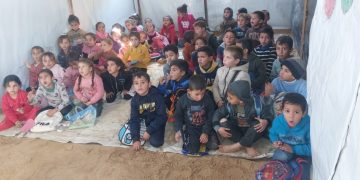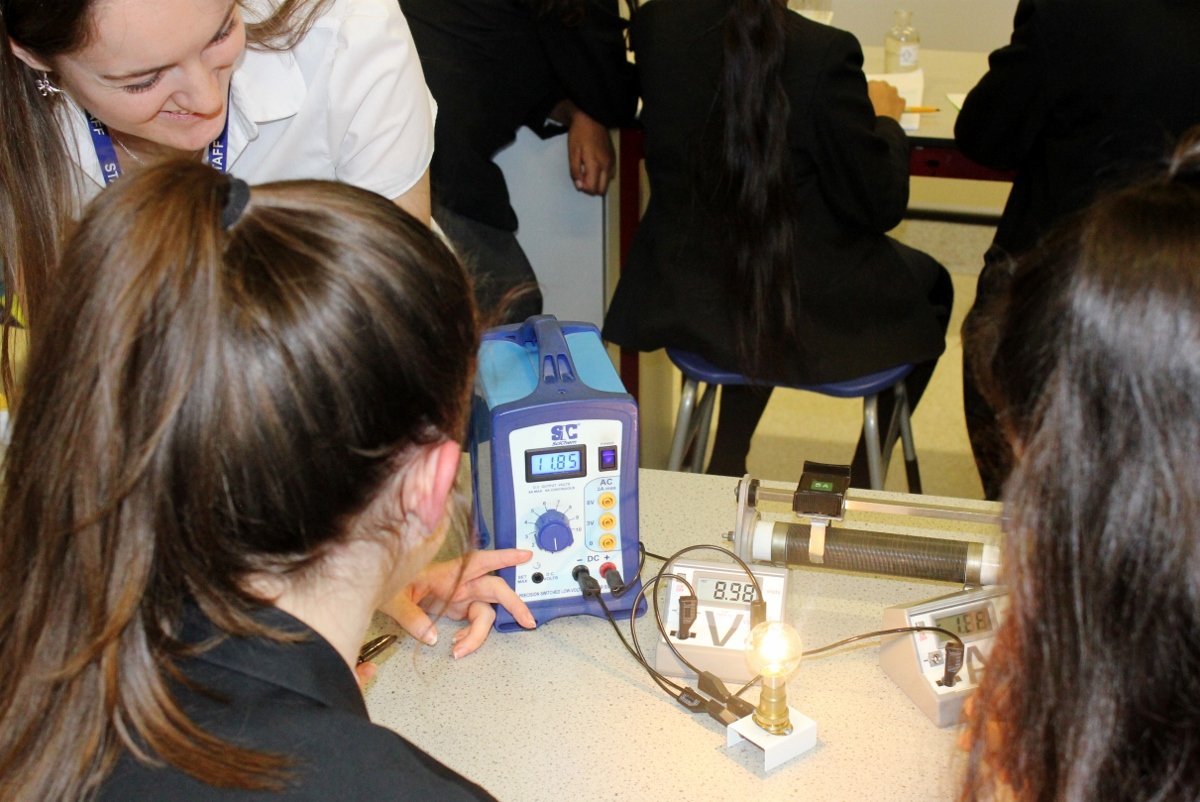
Spend a few minutes in a reception classroom and one thing becomes immediately obvious. Children do not all think in the same way. Some talk constantly, asking questions before the previous answer has had time to settle. Others watch quietly, absorbing everything before speaking. Some learn by listening, others by making, building, moving or simply trying something for themselves. They arrive at school carrying different ways of making sense of the world.
That diversity is one of childhood’s greatest strengths. Yet it also presents education with one of its greatest challenges. How do you teach millions of children fairly while recognising that no two minds work in quite the same way?
Modern education has, in many respects, achieved remarkable things. Standards have risen, literacy has improved and schools are expected to prepare young people for a world that grows more complex with each passing year. Examinations and national standards exist for good reason. They bring consistency, accountability and a degree of fairness that earlier generations often lacked.
The difficulty is that every system, however well intentioned, begins to value what it can most easily measure.
Knowledge can be examined
Mathematical reasoning can be tested. Written answers can be marked against agreed criteria. These things matter enormously, and no sensible person would argue otherwise.
But not everything that matters fits comfortably into a mark scheme.
Curiosity does not always produce the right answer first time. Imagination rarely follows a predictable route. Good judgement often develops through uncertainty rather than certainty, while creativity has a habit of wandering away from the obvious before arriving somewhere new. These qualities are harder to quantify, which means they are easily overshadowed by those that can more easily be measured.
The consequence is rarely dramatic. It happens quietly, over years rather than weeks.
Children experience education differently
Children do not experience education as a set of policies or performance measures. They experience it as something deeply personal. School is one of the first places where they begin to form lasting beliefs about themselves.
The child who grasps ideas quickly is praised for being clever. The child who reaches the same understanding by a different route may begin to feel they are somehow behind. Another, whose strengths lie in asking unexpected questions or seeing connections others miss, may discover there is little time for those qualities in a lesson that has twenty-five other pupils to reach the same destination.
None of this is the fault of teachers. Most know better than anyone that children learn differently and work tirelessly to meet those differences. The challenge lies in the system itself. Classrooms run to timetables. Curricula have to be completed. Progress has to be demonstrated. In a world of finite time and finite resources, standardisation becomes not simply desirable but necessary.
Yet necessity comes with a cost.
Psychologists have long understood that repeated experiences shape how children see their own ability. When effort repeatedly fails to produce the expected result, some begin to conclude that the problem lies not with the task but with themselves. They stop putting up their hand, not because they have nothing to say, but because being wrong has become something to avoid.
Certainty replaces curiosity
Others succeed academically yet become so anxious about making mistakes that certainty replaces curiosity. In different ways, both have learned the same lesson: that the safest path is the one where failure is least likely.
That may be understandable in an examination hall. It is a less useful habit for life.
The world beyond school rarely presents problems with neat answers waiting at the back of the book. Scientific breakthroughs, successful businesses, works of art and technological innovation all depend upon people willing to explore uncertainty, question accepted thinking and persist through failure.
Increasingly, they also depend upon qualities that artificial intelligence struggles to replicate: judgement, originality, empathy and imagination.
Knowledge has never been more accessible. What matters now is what we do with it.
Perhaps this is where our understanding of creativity has become too narrow. Schools have never abandoned it entirely. Music, art, drama, design and creative writing continue to provide opportunities for young people to express themselves, experiment and develop their talents. For many pupils these subjects become the highlight of the school week, and for some they lead to fulfilling careers.
The question is whether we have quietly come to believe that creativity belongs only there.
Creativity is in every subject
Original thought is not confined to the art studio or the theatre. It lies at the heart of scientific discovery, engineering, architecture, medicine and entrepreneurship. The mathematician searching for an elegant proof, the engineer solving a complex design problem and the historian drawing unexpected connections between events are all engaged in acts of creativity. They are not simply recalling knowledge but using it to see possibilities that others have overlooked.
Knowledge and creativity are not opposites. They depend upon one another. A composer studies harmony before writing a symphony, just as an artist learns technical skills alongside painting. The question is whether we have allowed measurable achievement to become almost synonymous with educational success. A child learning technique before developing a distinctive style.
Mastery provides the foundation from which imagination can flourish. The challenge is ensuring that education encourages young people to do more than reproduce what they have learned. It should also give them the confidence to question, explore and create.
Perhaps this is where the unintended message arises. If imagination is celebrated in the art room but every other subject rewards only the expected answer, children may begin to believe that creativity has its place, but only on certain days and in certain classrooms.
Yet the world they will inherit asks something rather different. It needs people who can combine knowledge with originality, rigour with curiosity and expertise with the confidence to think beyond the obvious.
Measurable achievements become synonymous with educational success
That is why this conversation matters. It is not about lowering standards or abandoning examinations. Rigour is essential, and schools should continue to expect the very best from every pupil. The question is whether we allow measurable achievements to become almost entirely synonymous with educational success.
A child who thinks differently should leave school understanding that difference can be a strength, not a deficiency. They should know that solving a problem in an unexpected way is still solving it, that asking difficult questions is every bit as valuable as giving confident answers, and that intelligence is richer and more varied than any examination can fully capture.
Education has always been about more than the transfer of knowledge. At its best, it helps young people discover not only what they are capable of learning, but who they might become.
If our education system leaves too many young people believing that their way of thinking is somehow the wrong one, then we have narrowed something far more important than the curriculum. We have narrowed their sense of possibility.
Surely the purpose of education is the opposite. It should broaden horizons, deepen confidence and help every child recognise that there is more than one way to understand the world. That does not mean lowering standards or abandoning academic rigour. It means recognising that human intelligence is richer than examination results alone can reveal.
Some children will express that intelligence through music, others through mathematics. Some will find it in drama, others in science, engineering or philosophy. Some will create with paint, while others create through ideas, inventions or new ways of solving old problems. Creativity is not a subject. It is a habit of mind.
A system capable of measuring attainment is valuable. One capable of recognising and nurturing the many different ways in which human beings think, imagine and create is something greater still.
In an age when knowledge is available at the touch of a screen, perhaps the greatest gift education can offer is not simply the ability to recall information, but the confidence to use it in ways that are thoughtful, original and distinctly human.

CLICK HERE TO DONATE TO OUR CROWDFUNDER
HELP US BECOME STRONGER SO THAT WE CAN CONTINUE TO DELIVER POWERFUL CITIZEN JOURNALISM!