The political situation is in stalemate. The local elections are behind us (with, as Sussex Bylines reported, a positive story for progressives locally) but it looks like Boris Johnson will survive Partygate at least for the moment and, anyway, the Tories are still in charge. In fact, the bookies believe Johnson will still be in Number 10 after an election next year. But nothing lasts forever, and political analysts are turning their thoughts towards how the Tory grip will eventually be broken.
One key element is the growing push for a ‘progressive alliance’. In several areas around the country, including Sussex, Compass, a think tank and “home for those who want to build and be part of a good society” is mobilising people from all the progressive traditions to come together, win power and reverse the accelerating and worrisome decline and decay. Just last week activists from Labour, Green, Lib-Dem and non-aligned backgrounds met in Brighton to discuss how to prepare for the election that will be upon us only too soon.
They are under no illusion that there is a giant mountain to climb. In fact, the data crunchers tell us Labour has an almost impossible task. An in-depth report on this from Compass suggests that, even under the most optimistic assumptions, Labour needs to win 125 seats to get a majority of just one. Add in likely boundary changes and that figure could jump to 148. Everyone, including die-hard Labour activists, knows it ain’t gonna happen. In truth, the only surefire way to throw out Johnson and his gang is to combine the resources of everyone who can conceive the world differently and align these carefully against the foe’s weak points and vulnerabilities. It’s something like a basic Sun Tzu stratagem: “Attack him where he is unprepared.”
Some of the Tories’ weakest points are, in fact, in Sussex where in several seats non-Tory voters already exceed the Tory vote and/or where working together, and/or a moderate swing away from Johnson, would lead to a non-Tory victory.
The Portillo moment
What other big ideas might also be productive? What if a situation not currently within the purview of conventional analysis was to be created?
Remember the Portillo moment?

Michael Portillo was a high-flying member of Thatcher’s cabinet. Smug, obnoxious and exuding entitlement (and long before his present incarnation as TV’s genial Railway Man), he was Margaret Thatcher’s attack dog and obvious heir apparent. But then, on election night 1997, the nation watched agog as Labour challenger Stephen Twigg, unknown and openly gay, bested the ogre in his own lair. All of a sudden people grasped that the world had changed. The Tory hegemony that had seemed so permanent was vulnerable after all. A cheer went up around the land not least because, as Portillo himself had to concede “My name is now synonymous with eating a bucketload of shit in public.”
It was such fun. The campaign work was a gas, and the end result triggered a three-day party. It was the delight and mischief of it all that surely suggests the potential for another type of action: one-off actions or events that would deliver a big impact and galvanise activists.
There have been other similar incidents, of course. Readers may recall the inspiration of Martin Bell who, in the same election, sickened by the sea of “sleaze” that had engulfed the Tory party, resigned from his post as a leading BBC reporter to stand as an independent candidate in the Tatton constituency in Cheshire. Tatton was one of the safest Conservative seats in the country but, incredibly, after just 24 days of campaigning, Bell, with his determination and commitment (and his trademark white suit), somehow created a wave of defiance that went on to wash away Neil Hamilton (the main protagonist in the cash for questions affair and later, briefly, leader of UKIP).
One takeaway from these two famous successes was that relatively small actions can generate very big impacts. Another takeaway was that if Labour and the Liberal Democrats could act together, in the Tatton case withdrawing in Bell’s favour, the spivs could be thrown out on their ear. Unfortunately, that is a lesson we are still struggling to internalise now.
Startling situations
Thinking about how one might precipitate an explosion, a depth charge, a tsunami like this recalls echoes of the Situationist International (SI). With their roots in the avant-garde art movements of the early 20th century, particularly Dada, SI ideas have resonated down the years. One intention was to construct startling situations that would challenge the prevailing mood, or as theorist Guy Debord wrote, “moments deliberately constructed for the purpose of reawakening and pursuing authentic desires, experiencing the feeling of life and adventure, and the liberation of everyday life”.
Over the years SI ideas made it into the mainstream, most prominently through the Paris events of May 1968, when actions, happenings, subversive political pranks (and barricades) almost brought down the Republic and when “Be reasonable, demand the impossible” was a credible strategy.

SI influence was also evident through the Yippies, famous for their sense of humour, direct actions and pranks, including, in Britain, their live-on-air takeover of the David Frost show but also through the likes of Germaine Greer with her epoch-making book, The Female Eunuch.
In the 1970s situationism was all over the punk explosion, not least via the likes of Malcolm McLaren and the Sex Pistols. Having God Save the Queen at Number One in the charts in the very week of the Queen’s Silver Jubilee genuinely shook the country. The BBC not only banned the song but refused to even say its name. Many people will have remembered, and played, the piece as we got through another jubilee last weekend, 45 years later.
In our time we have the likes of the brilliant Led by Donkeys with their billboards and their real-life stunts, like projecting messages on iconic places such as the Houses of Parliament and the white cliffs of Dover. Their videos have been viewed millions of times on social media.
Mischief and fun: towards a strategy
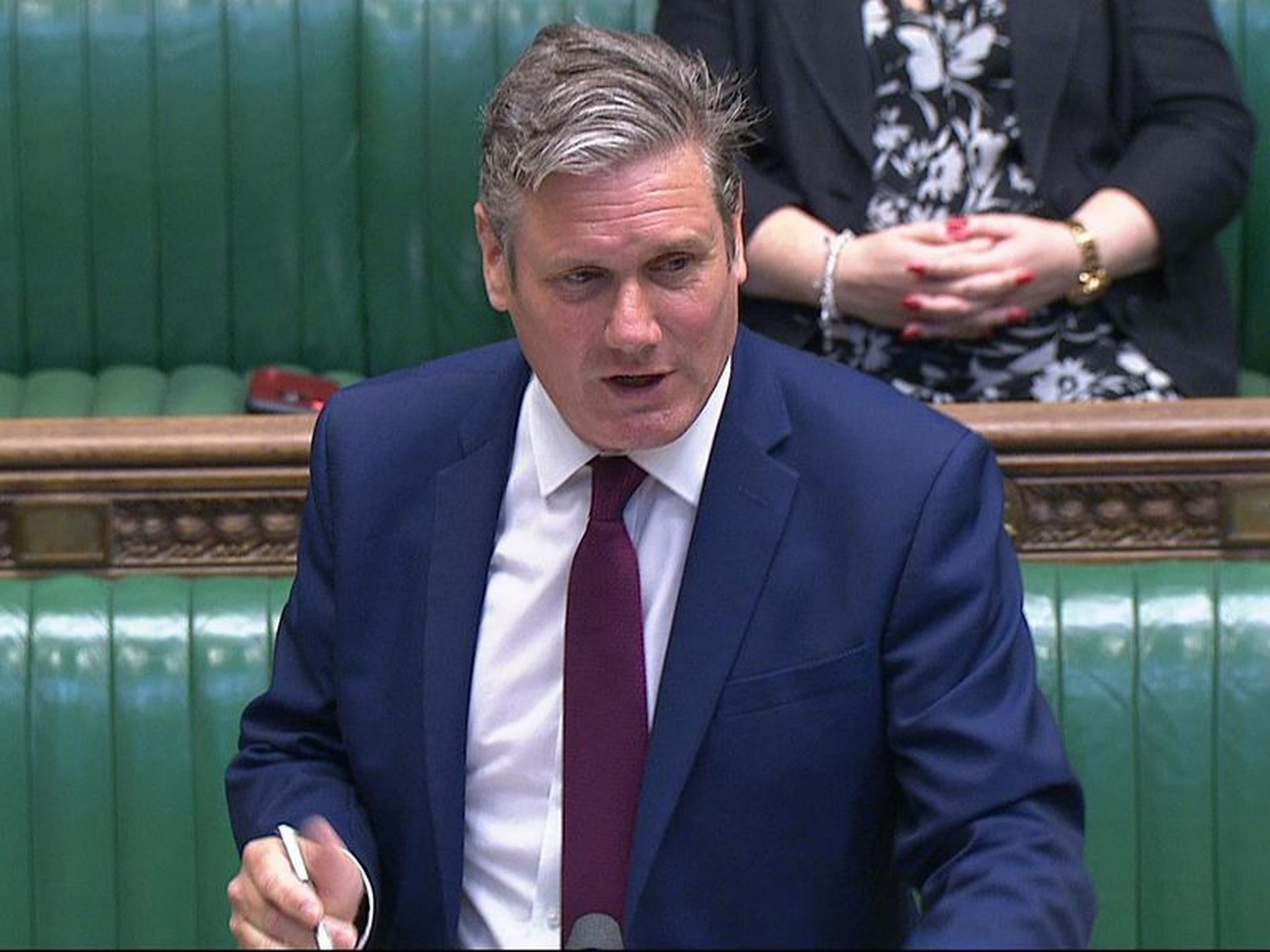
A big part of our current problem is that people are tired, disempowered, demotivated, even bored. Keir Starmer is doing his best on one front, but other fronts have to be opened. This is where the politics of mischief might come in. Deliberately constructing situations, from pranks to targeted actions, is a notion that is still largely alien to most mainstream political wonks and activists. Still, it is one that might bring in a wider demographic, especially young people.
In which connection, and whatever is said about Jeremy Corbyn, let’s not forget this was something he and his team had a handle on – remember his stage performance at Glastonbury in 2017? We need to understand that moment better. We also need to study why Extinction Rebellion engages better with the young than mainstream politics ever manages to do. Clearly it is connected to a clear, unspun message – being upfront about one’s beliefs – but also smart campaigning tricks and techniques, both on- and offline.
Mischief and fun bring unpredictability, of course, and that brings a degree of risk. Critics say taking risks is irresponsible and, of course, they have a point. What if the whole thing got out of hand and voters lost respect? Too late, we’re there already. Things are already out of hand and unravelling further. We need to grab the steering wheel and start compiling a new agenda now. We also need something that will bring a smile to the lips of a weary nation. We need to make something happen. We need some reawakening, some adventure. Make some noise. I bet even that nice Railway Man, Michael Portillo, wouldn’t begrudge us one his slippery oh-so-ironic, TV-friendly grins.
James Joughin’s second article will look further into the possibilities for another Portillo moment and whether one could be constructed in Sussex.