


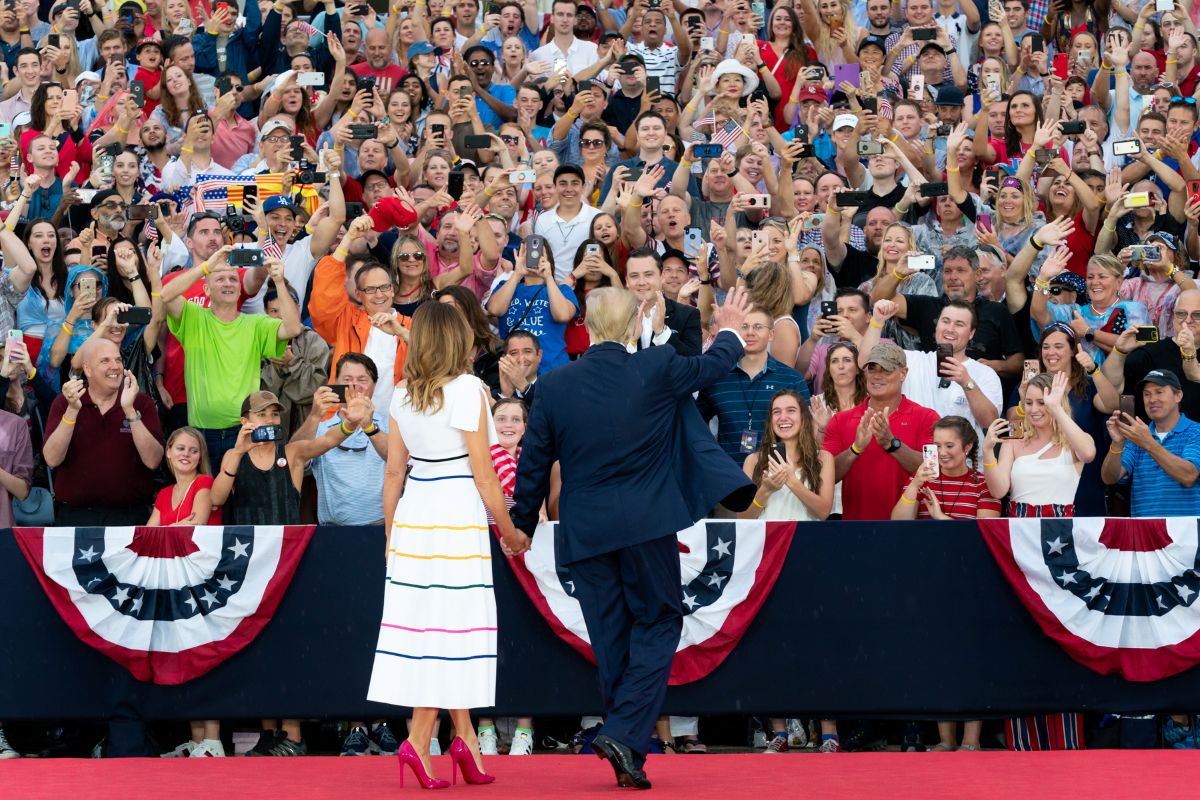
There is something rather reassuring about human nature. Not because it is especially noble, wise or enlightened, but because it is so wonderfully predictable. Give people power and they will seek more of it. Give them a stage and they will move towards the centre. Give them a microphone and they will assume everyone wants a longer speech. Give a political leader a national celebration and, sooner or later, there is a fair chance they will begin to behave as though the entire occasion was arranged in their honour.
As America approaches its 250th birthday, I find myself thinking not of the Founding Fathers but of the Romans. The Romans, after all, understood spectacle better than almost anyone. They built an empire, but they also built a theatre around it. Triumphs marched through the streets, soldiers paraded, crowds cheered and banners flew overhead. The ruler occupied the most visible position available. It was politics dressed as celebration and celebration dressed as politics.
The clever part was that nobody had to say it aloud. The people were told they were celebrating Rome; the emperor merely happened to be standing in the middle of every painting. A remarkable coincidence. History is littered with such coincidences. A nation commemorates itself, a leader appears, the cameras gather and the speeches begin. Before long it becomes slightly difficult to determine whether the event is intended to honour the country or the individual waving enthusiastically from the viewing platform.
Patriotism and personal publicity
This is not unique to America. Britain has produced its own examples, as have France, Russia and countless others. Most countries eventually discover that patriotism and personal publicity are ingredients that blend together rather easily. The Romans practically wrote the recipe. Their emperors understood something fundamental about the human mind. People may not remember economic policy. They may struggle to recall legislation and are unlikely to quote budget statements years later. But they remember the parade, the banners and the grand entrance. Most of all, they remember who was standing at the centre of the photograph.
That is why public spectacle has always been politically valuable. It creates emotional associations. The crowd feels pride in the nation, the leader stands nearby and the brain quietly joins the dots. It is a trick so old that it predates modern democracy by two millennia.
Which brings us to the curious spectacle of national anniversaries. A country’s birthday ought to be one of the few occasions that genuinely belongs to everyone. It marks a shared story rather than a particular government. Leaders come and go, political parties rise and fall, but the nation remains. At least that is the theory. The temptation, however, is irresistible. Here is a ready-made celebration. Here are flags, cheering crowds and television cameras. Here is an audience already feeling patriotic. It requires almost superhuman restraint not to edge slightly closer to the spotlight.
Some leaders manage it. Others arrive with what appears to be a tape measure and begin calculating exactly how much of the stage they can occupy. One can almost imagine the conversation. “We are celebrating the nation.” “Of course.” “And this has absolutely nothing to do with me personally.” “Naturally.” “Would it be possible to make my image slightly larger on the backdrop?”
Advice from the Romans
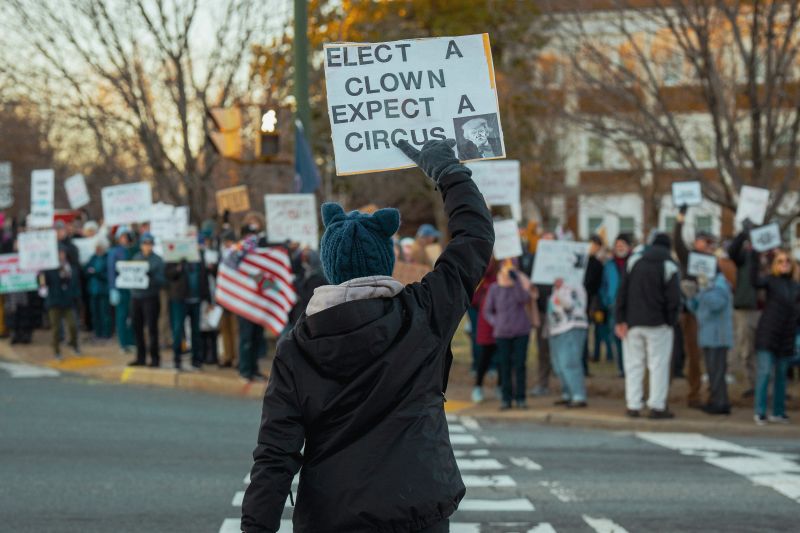
The Romans would have approved. Indeed, one suspects they might have offered professional advice. The modern world likes to imagine it has moved beyond such things. We have constitutions, elections, independent institutions and twenty-four-hour news coverage. We are sophisticated, discerning and certainly not the sort of people who would confuse national identity with a charismatic individual. And yet history continues to raise a sceptical eyebrow. The faces change, the technology changes, but the instincts remain remarkably familiar.
The Roman emperors placed their likeness on coins; modern politicians have social media accounts. The Romans built statues; modern politicians commission photographs. The Romans staged triumphal processions; modern politicians organise events with carefully arranged camera angles. Civilisation advances. Human vanity keeps pace.
Narcissism takes centre stage
Now, before anyone accuses me of comparing modern leaders directly with Roman emperors, let me clarify. Most politicians are not declaring themselves divine. They are not demanding temples or feeding opponents to lions. The comparison is subtler than that. It concerns narcissism rather than tyranny.
Narcissism is one of those fascinating qualities that appears almost tailor-made for public life. A healthy degree of confidence helps people pursue leadership. An excessive degree persuades them that every important event somehow revolves around them. The country’s achievement becomes their achievement. The nation’s story becomes their story. The public celebration becomes their celebration. Eventually one begins to wonder whether the fireworks are marking a historical milestone or simply applauding the arrival of a particularly enthusiastic ego.
This is where Rome offers its most useful lesson. Empires do not become self-absorbed overnight. The process happens gradually. The symbols of the state become intertwined with the image of the ruler, not through force alone but through repetition. The leader is present at every ceremony, every parade and every commemorative event. After a while the association feels natural. The emperor becomes Rome, Rome becomes the emperor and nobody can quite remember where one ends and the other begins.
Perhaps that is why national anniversaries deserve a little caution. They should remind citizens that their country is larger than any individual, older than any administration and more enduring than any political career. A nation is not a president, a prime minister or a monarch. It is millions of lives, memories, sacrifices and aspirations woven together across generations. That story belongs to everyone.
Which is why I find myself smiling whenever a leader appears determined to occupy centre stage during a national celebration. Not because it is shocking or unprecedented, but because it is so profoundly, unmistakably human.
Two thousand years after Rome perfected the art, the rest of us are still performing variations of the same play. Different costumes, different flags, different speeches. Yet somewhere in the background, one can almost hear an ancient emperor whispering across the centuries: “Excellent parade. But have you considered making it a little more about me?”

CLICK HERE TO DONATE TO OUR CROWDFUNDER
HELP US BECOME STRONGER SO THAT WE CAN CONTINUE TO DELIVER POWERFUL CITIZEN JOURNALISM!






