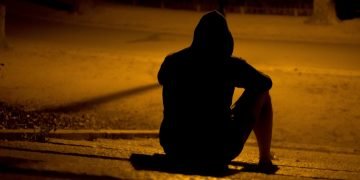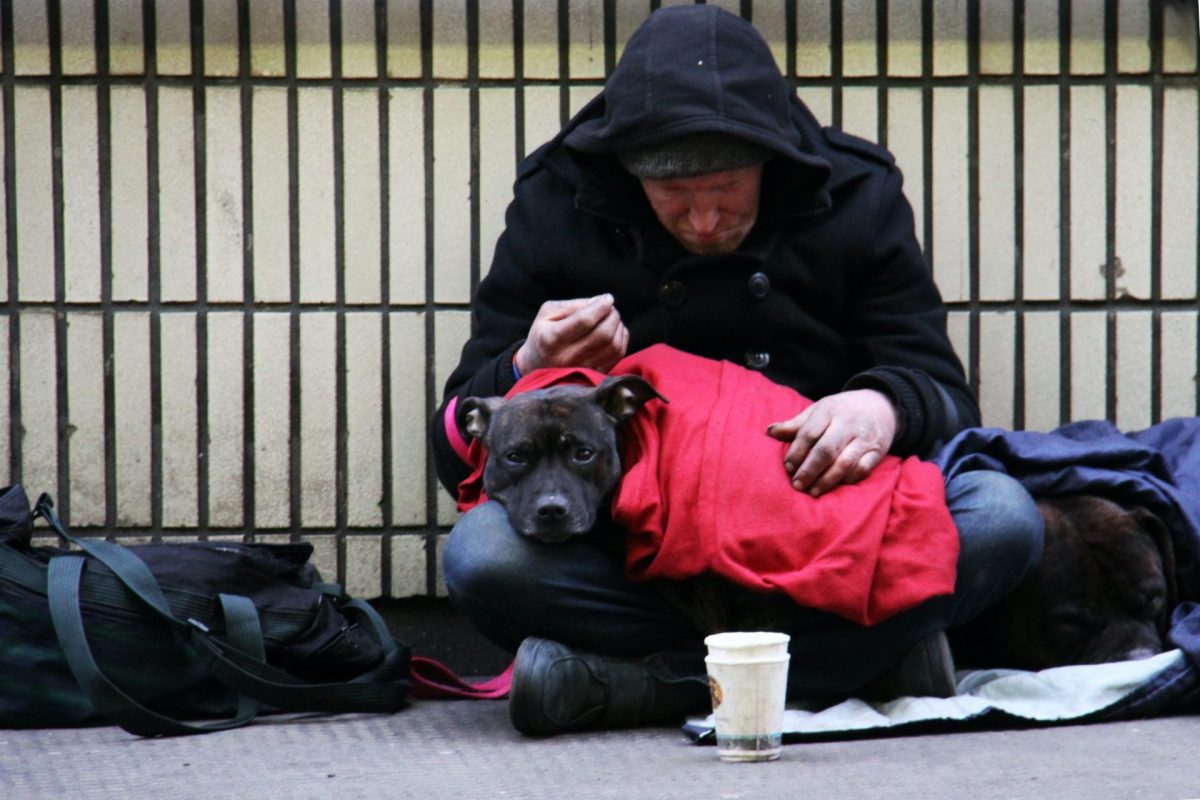
Spend any time on Facebook comment threads which follow stories about people seeking asylum and you’re certain before long to see the well-worn phrase “What about our homeless veterans?” Here’s just one example, from the Eastbourne Herald & Gazette, 20 January 2023: “They give them rooms in good hotels but leave the ex-soldiers in the gutter to fend for themselves. What a disgrace, England wake up and look after your own first.”
How to respond without being lured into a position of defence other than by courteously disseminating facts about a complex issue, laying to rest, once and for all, that this is not a zero-sum game?
A false win-lose relationship
What exactly is a zero-sum game? In some circumstances, helping one group of people may be at the expense of another group. In the language of game theory, this win-lose relationship is called a zero-sum game. Does this apply when accommodation is provided for someone seeking asylum? Does it mean that a homeless veteran – indeed, anyone who is homeless – is therefore denied a roof over their head?
Those of us who speak up for asylum seekers, who work or volunteer for one of the many charities or grassroots organisations that support them, would say “No!” in a heartbeat. Others would disagree. And never the twain shall meet. It’s the sort of polarised debate that deepens division and splinters societies.
Absent from any online discussion has been the input of those concerned with one of these weaponised groups – the organisations that support veterans. One of these, Veterans Aid (VA), agreed to remedy that by answering my questions.
Veterans benefit twice over
First of all, how are veterans supported in the UK?
VA told me: “There is no single, ring-fenced budget for housing homeless veterans, though in 2016 the government spent £40mn on the provision of a Veterans Accommodation Fund. However, there are around 1,500 UK charities dedicated to the help and support of ex-servicemen and servicewomen in some way whose services are not available to the general public, and hundreds of civilian organisations dedicated to providing accommodation – temporary or long-term.”
So homeless veterans are in a cohort that benefits twice over – from funding and provision aimed at the general population and from that set aside exclusively for veterans.
No need for veterans to go homeless
Of those projects specifically dedicated to veterans across the country, many have vacancies. VA’s view is that there is no need for any veteran to be homeless and that “this has been the situation for a considerable period of time. Supply has exceeded demand.”
There are now fewer than 2.4 million veterans in the UK, relatively few of whom are homeless. The number of rough-sleeping UK veterans has declined to the point where they are no longer identified as a discrete cohort in annual homelessness/rough-sleeping statistics.
Added to that, the service narrative of those claiming to be veterans is rarely checked, even by the charities who support them. False claims are not uncommon. The status of asylum seekers, by comparison, is rigorously investigated.
Is there really a conflict between the needs of homeless people and those of veterans?
VA’s view is unequivocal: “It is shameful, inappropriate and inhumane to make comparisons or assume that one vulnerable group can justifiably be demonised because of the existence of another.”
Overuse of the word ‘hero’
Veterans are generally resilient men and women who thrive in civilian life. In VA’s opinion, overuse of the word ‘hero’ has led to unrealistic stereotyping, and the manipulative juxtapositioning of ‘homeless veterans’ and ‘housed asylum seekers’, may be inflammatory and irrelevant – but it is far from harmless. VA told us: “History shows us how the demonisation of vulnerable minorities led to the rise of Nazism – what followed speaks for itself.”
How can we go about changing the inaccurate narrative?
It seems that, no matter how many times it is patiently explained that seeking asylum is not illegal, that there is no law saying that people must claim asylum in the first safe country, that they are not all ‘fighting-age men’ – and that asylum seekers do not take accommodation away from homeless veterans – some people will stick doggedly to their chosen narrative.
In their book Denying to the Grave: Why We Ignore the Facts That Will Save Us, Jack and Sarah Gorman, cite research suggesting “people experience genuine pleasure – a rush of dopamine – when processing information that supports their beliefs. It feels good to ‘stick to our guns’ even if we are wrong”.
So the challenge remains
Only by successfully distinguishing what’s driving people’s resistance to incontrovertible facts – Is it fear? Is it prejudice? Is it ignorance? Is it their own challenging circumstances? – could there be a glimmer of hope in the otherwise apparently gloomy scenario experienced in the amplified unpleasantness of Facebook.
Next time you see “What about our homeless veterans?” on a comment thread, you might add a link to this article. Will it help? I hope so. Even if it’s helpful to just one person. What else can we do but keep on trying?
CLICK HERE TO DONATE TO OUR CROWDFUNDER
HELP US BECOME STRONGER SO THAT WE CAN CONTINUE TO DELIVER POWERFUL CITIZEN JOURNALISM!