



Chocolate eggs and bunnies cost more than ever this Easter – but the farmers who make these treats possible are in dire straits.
Cocoa is currently more expensive than copper, its price having soared 60% this month alone. Demand for the crop is expected to grow by more than 4% a year this decade but bad harvests in west Africa mean chocolate makers are scrambling for scarce beans.
The crisis is bigger than cocoa – food production globally is facing an increasingly hostile climate. Amid the turmoil, one academic describes how things could start to change.

This roundup of The Conversation’s climate coverage comes from our weekly climate action newsletter. Every Wednesday, The Conversation’s environment editor writes Imagine, a short email that goes a little deeper into just one climate issue. Join the 30,000+ readers who’ve subscribed.
Two countries in west Africa, Cote D’Ivoire and Ghana, grow 60% of the world’s cocoa. The arrival of El Niño last year (a warm phase in a natural cycle of Earth’s climate centred on the Pacific Ocean) has brought dry weather to the region and drove an outbreak of swollen shoot disease that has cost Ghanian farmers 500,000 hectares of cropland.
Michael E Odijie, an economist at UCL, describes how cocoa production has hit several environmental limits simultaneously, raising production costs.
This is a situation that could be dawning on other crops.
The darker side of chocolate
“Historically, farmers have tended to abandon old farms and start anew in fresh forests,” Odijie says, referring to the fact that cocoa trees become more susceptible to disease and so are more expensive to maintain as they age.
“Unfortunately, finding new forests is now increasingly difficult.”
Making a profit from cocoa is hard despite the price surge. Low output, combined with high inflation and currency devaluation, has left farmers worse off, Odijie explains. Many have given their land over to illegal mining instead which degrades the soil and water, making future cultivation a remote prospect.
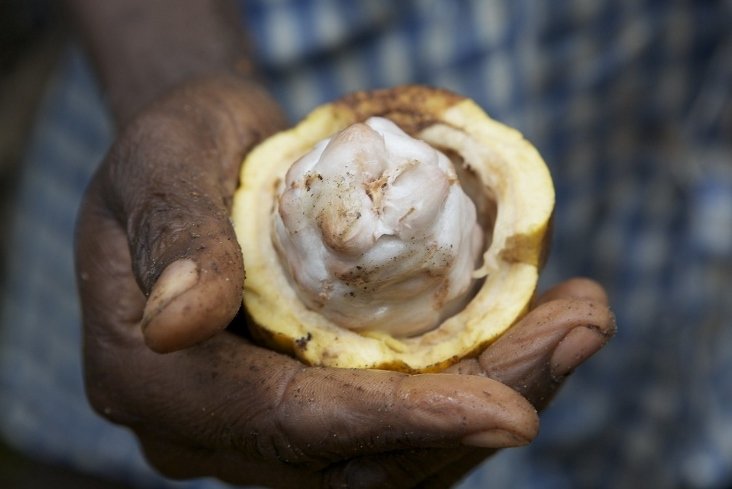
Growing conditions are deteriorating in other ways. A study published in 2022 warned of a “hidden collapse” in insect numbers that was most severe on tropical farms with scant neighbouring habitats.
On such plots, wildlife has less shade to escape the increasingly harsh climate.
“Flying insects are key pollinators of many major food crops, including fruits, spices and – importantly for chocolate lovers – cocoa,” say Tim Newbold and Charlie Outhwaite, the UCL biodiversity scientists behind the research.
The pair analysed three-quarters of a million samples from 6,000 sites worldwide and found that the most climate-stressed farms had lost 63% of their insects. Bugs are now so scarce that some cocoa farmers in Ghana have resorted to pollinating the flowers of the cacoa tree by hand.
Even if you only relate to food production as a consumer, you will notice the impact of rising temperatures at the checkout. A new study by German researchers found that food prices could rise 3.2% a year between now and 2035.
“As climate change continues to worsen, this price inflation will mean more and more people around the world don’t have a varied and healthy diet, or simply don’t have enough food,” say health and nutrition experts Jessica Boxall and Michael Head of the University of Southampton.
Pay farmers more
“Perhaps the most severe issue of all is the lack of fair compensation for sustainable cocoa production,” Odijie says.
Research suggests that cocoa farms could be better for nature and more resilient to climate change if farmers planted a greater variety of shady native trees on their land. You may be able to enjoy cocoa from such farms in chocolate bars stamped with a third-party certificate.
“While cocoa certification helps restore biodiversity, it doesn’t necessarily increase the money farmers receive for their crop,” says Michael Rogerson, a lecturer in operations management at the University of Sussex.
“Large chocolate producers prioritise short-term profit over meaningful structural change and this can result in [them] benefit[ing] from poor cocoa farmer pay and low transparency in their own self-certified reporting.”
Major cocoa processors and chocolate producers pledged to eradicate child labour in their supply chains by 2005. Nearly two decades later, exploitation is still rife, Rogerson says.
Odijie argues that growers should use the cocoa shortage as negotiating leverage against these companies and demand industry-wide solutions.
“What would it cost for cocoa farmers to cultivate cocoa beans sustainably, and ensure a living income, without contributing to deforestation or resorting to child labour?” he asks.
Ghana and Côte d’Ivoire devised a way to make cocoa buyers cover that cost in 2019: the “living income differential”. This was a premium that buyers would be expected to pay on top of the market price for cocoa, to ensure growers could earn a sustainable wage from their produce.
The initiative floundered in a saturated market. It’s time to revive the idea, Odijie says, now the supply crunch has put cocoa producers in a stronger negotiating position.
“Both Ghana and Côte d’Ivoire must recognise this pivotal moment,” he says.
“They must take the lead, and frame the current production challenges as deep-seated structural problems requiring solutions, rather than as short-term issues.”
Jack Marley, Environment + Energy Editor, The Conversation
This article is republished from The Conversation under a Creative Commons license. Read the original article.





