


Special Enterprise Zones and Freeports were an idea of the 2010-2016 Osborne chancellorship, and, on the face of it, look attractive.
Reducing red tape and focussing funds on areas needing an economic boost sounds like a good idea. There were, and still are, plenty of areas that fit the bill: former industrial communities which were collateral damage of the Thatcher years, and which were subsequently neglected by governments of both main parties. Under these new schemes not only could communities and workers be offered new opportunities, but specific industries could develop centres of excellence, some attached to favourable trade terms. What’s not to like?
Freeports have additional tariff cash-flow advantages from tariff exemption
We need to look at the difference between theory and practice – between presentation and reality and between opportunity and risk. State funds, favourable tax and zero business rate treatment are the headline advantages to business investors in all of the zones, while Freeports have additional tariff cash-flow advantages from tariff exemption.
Such zones are not, contrary to what the government might like us to believe, Brexit benefits, if they are benefits at all. They have been around in this and many countries for decades, enabling experience to be gained and shared.
The key lesson to date seems to be that they actually produce few benefits to the overall economy or to employment.
This is because, stimulating though they may be to their host communities, they can damage the communities from which employment or investment are diverted and they rarely generate growth for the economy as a whole.
Two high-profile controversial new Freeports
To judge from two high-profile controversial new Freeports, we may even need to re-think their benefits. The way in which Teesside Freeport has been set up and funded has led to many a raised eyebrow, with accusations of cronyism and fraud. Public assets have effectively been gifted to the Freeport private company. Concerns continue, and whatever the outcome, it’s helpful that some alarm bells have been raised for other communities to note.
The sheer scale of the Freeport area delineated by government around the tiny nuclei near Plymouth is another amber warning. The area covers the whole of the South Hams, a quiet and picturesque residential and tourist area plus a significant part of Dartmoor, a National Park mostly free from large-scale commerce but with substantial private landownership. Why include areas of natural beauty in what is supposed to be a focus for industrial and employment initiatives? It looks worryingly like preparation for inappropriate expansion and/or unwarranted generosity with public funds and space.
Only time will reveal either motives or outcomes of these arbitrary, partisan decisions by the Conservative government, but with a total of 12 Freeports and 74 SEZ announced, the alarm bells should be ringing across the country, including for us here in East Sussex.
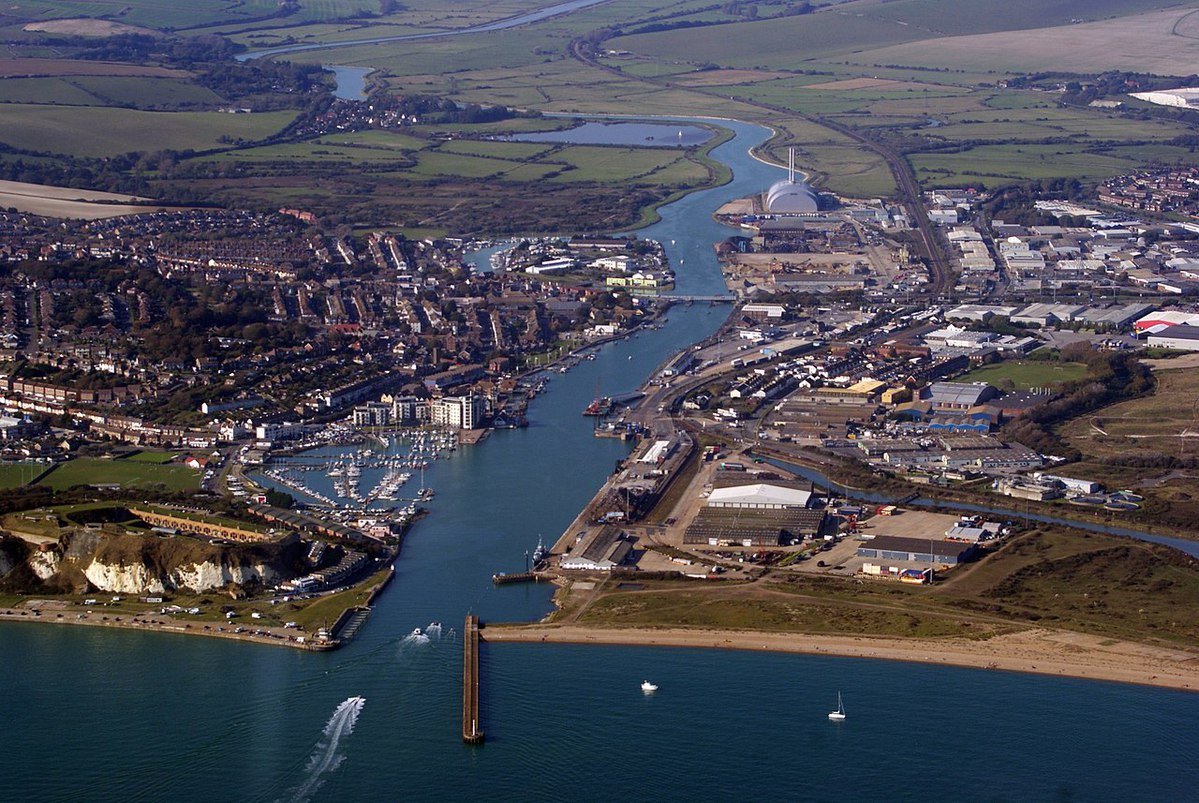
Newhaven next – time for some questions
Local Authorities for our struggling Channel port of Newhaven have celebrated the injection of funds and opportunities of the town’s nomination as a Special Enterprise Zone (SEZ), the only one in Sussex, for apparently good reasons. But in light of the experiences of others, should we all be asking more questions? How about:
- Who most benefits from these zones? Public money may be injected but it passes to a private sector company. Just how accountable will that company be to the community? How are directors or businesses which may benefit selected? What guarantees will there be on future investment? How will the use of funds be governed?
- Who will lose out by virtue of Newhaven’s good fortune? Local Authorities, already severely under-funded, will lose the income of business rates. Not only will other communities, possibly also in Sussex, lose employers and jobs, but exemption from some planning rules and constraints may enable construction of buildings which are inimical to the local landscape, environment and residents.
- On what terms will employment be offered within the zone? Effectively, the zone falls outside of national standards for wages, workers’ rights, and working conditions. SEZ companies may recruit local councillors to their boards, but they aren’t obliged to and if they do, what conflicts of interest may this present?
- Assuming success in attracting new employers and jobs, what will be the impact on housing provision and prices, not least rents for existing tenants in the catchment area?
If these are valid questions, who should be asking them and of whom? It has been suggested that every target zone should recruit an SEZ community group to police issues like these, but many questions remain. Issues of accountability for the public’s investment, and in case of complaint, are unclear. Private investment will be sought and encouraged – but will it only be the private investors who benefit? Is that really good enough?






