


Note to readers: this article contains reference to infant bereavement.
Lucy Letby said during her trial she was “not the sort of person who would kill babies“. Despite protesting her innocence throughout her trial between October 2022 and August 2023 for the murder of seven babies and the attempted murder of seven others at the Countess of Chester neonatal unit, the jury found her guilty.
I’m not usually drawn into murder investigations and their often-sensationalised reporting in our press. But there was something that haunted me about Lucy’s pale passive face on the front page of every newspaper under headlines which seemed to revel in the suggestion that this ordinary, innocent-looking young woman might be the next Myra Hindley. Once the guilty verdict was announced, the misogyny underlying its reporting was cranked up by our overwrought press. The Daily Mail wrote: “She has thrown open the door to Hell and the stench of evil overwhelms us all.”
The intensity of care in a neonatal unit
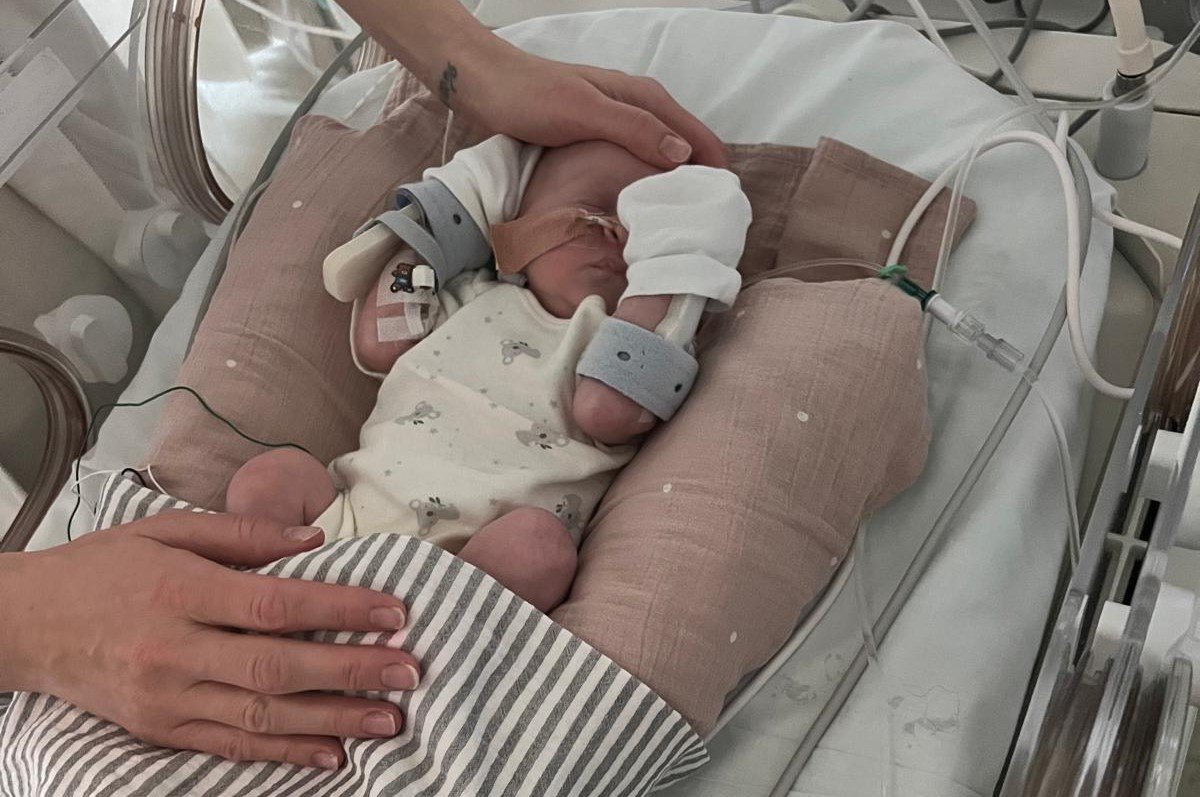
I thought about Lucy Letby again this Spring, when I myself spent several hours in a neonatal intensive care unit after the premature birth of my grandson with severe medical complications. I watched him fighting for his life with the constant noise of alarms blaring, monitors bleeping, and phones ringing across the ward. Harassed nurses endlessly patient but so obviously stretched to breaking point were having to make rapid decisions about which babies to move out of the ward to make way for another, even more vulnerable baby.
We take intubation for granted, but the insertion of breathing tubes and other wires into such tiny human bodies thrust into the world weeks before their allotted time is a delicate, complex procedure, and it is surely not surprising that things sometimes go wrong.
A neonatal unit ‘out of its depth’
Between 2015 and 2016, there was an ‘unusual cluster’ of baby deaths in the Countess of Chester neonatal unit (from around four per year to 13). Concerned, the hospital commissioned the Royal College of Paediatrics and Child Health to conduct a review which reported in July 2016.
The review found the unit was chaotic, very short of nursing staff, with less experienced nurses replacing senior staff and consultants spread too thinly between the paediatric ward and the neonatal unit. Beds and cots were in short supply and there were delays in transferring babies between hospitals. In addition, the hospital was old, and for months the unit had been dealing with sewage problems and struggling to contain a ‘potentially lethal, antibiotic-resistant bug’.
Circumstantial evidence
In June 2016, a couple of senior consultants began to think there could be a link between the babies’ deaths and the presence of Nurse Letby. No one saw her murder the babies, and in fact hospital staff including managers made it clear they rejected the suggestion that Letby was responsible, citing instead medical explanations. Nevertheless, she was removed from the unit. Crucially, at the same time, the unit was downgraded and no longer took the most premature and vulnerable of babies. The number of deaths subsequently decreased.
At the trial all the evidence against Letby was circumstantial. The prosecution made much of the ‘confessional’ notes found in her home: “I am evil” and “I did this”. It was not revealed at the trial that Letby’s counsellor, offered by her employer, had encouraged her to write down her feelings.
Now, with court proceedings over, doubting voices are being heard. Many health practitioners are coming forward with their own accounts of self-doubt when working in such a high-stress environment. For example, an experienced ICU nurse recently wrote to Private Eye: “I do not know any ICU nurses whose reaction on or after a profound deterioration of their patient isn’t ‘Oh no. WTF have I done?” (PE 1631 30.08.24).
Another key piece of evidence for the prosecution was shift records showing that Letby was present at each ‘suspicious event’. But as Rachel Aviv pointed out in The New Yorker in May 2024 [original link only available via VPN in the UK], this evidence may too be questioned. Not only was Letby one of the few qualified nurses available, she was also volunteering to step in when there were staff shortages as she was keen to earn money to save up for a mortgage. Aviv notes that there are questions as to the statistical validity of the prosecution’s interpretation of the shift records.
Growing concern about the conviction
After a retrial in July of this year, The Guardian, freed from reporting restrictions, noted a growing chorus of voices raising questions about some of the key evidence presented in court. In August, a leading UK neonatologist who had studied the Letby baby deaths stated that there “could be plausible alternative causes of death in each case”. Much of the medical evidence and the tests used to determine causes of death have been questioned. It also became apparent that many staff still working in the NHS would only speak if anonymity were guaranteed, fearing the impact if they were named.
In addition, a growing number of statisticians are arguing that the ‘evidence’ against Lucy Letby can be interpreted in a number of different ways. Some have argued that ‘cluster events’ are not necessarily statistically significant.
Last month, 24 expert professors in statistics and forensic science together with neonatologists and paediatricians wrote to the Government to share their concern about the safety of the convictions. They wrote: “We believe that legal systems are particularly vulnerable to errors when dealing with scientific evidence, especially in cases involving statistical anomalies in healthcare settings, and the complex physiology of neonates.”
Thirlwall Public Inquiry
While neonatal surgery and intensive care saved my grandson’s life, we are left not knowing why he didn’t breathe for several minutes on his entry into the world. We will have to live with that, but for those parents whose babies died in the Countess of Chester Hospital, the not-knowing must make their unimaginable grief even more painful. The anger of loss demands an outlet, and apportioning blame is part of that process.
Chairing the public inquiry, Lady Justice Thirlwall, undoubtedly with the interests of the parents in mind, is adamant there will be no review of Letby’s conviction. Instead, the focus of the current public inquiry into the deaths will focus on whether Letby could have been stopped sooner. Some have questioned whether this narrow focus risks missing lessons that might be learnt were there to be a wider review of the deaths that occurred.
Letby has now appointed a new barrister, Mark McDonald, and will be making an application to the Criminal Cases Review Commission for her case to be returned to the Court of Appeal. McDonald acknowledges the difficulty for the parents of the babies who died. He accepts their right to be angry but, he argues, it is vital their anger is directed where the true blame lies. He told the BBC:
“There is a strong case that she is innocent. The fact is juries get it wrong. And yes, so do the Court of Appeal, history teaches us that.”
Letby may be guilty of murder, but it looks quite possible that some key evidence was ignored and other evidence, both medical and statistical, misinterpreted.
Has justice been served by her conviction, or is she an individual tragically taking the rap for institutional failings?
If you have been affected by the issues raised, please visit the following charities for further support.
- Sands, saving babies’ lives, supporting bereaved families.
- Tommy’s, the pregnancy and baby charity.
- The Lullaby Trust, raising awareness of sudden infant death syndrome.
- Child Bereavement UK 0808 02 888 40

CLICK HERE TO DONATE TO OUR CROWDFUNDER
HELP US BECOME STRONGER SO THAT WE CAN CONTINUE TO DELIVER POWERFUL CITIZEN JOURNALISM!







