


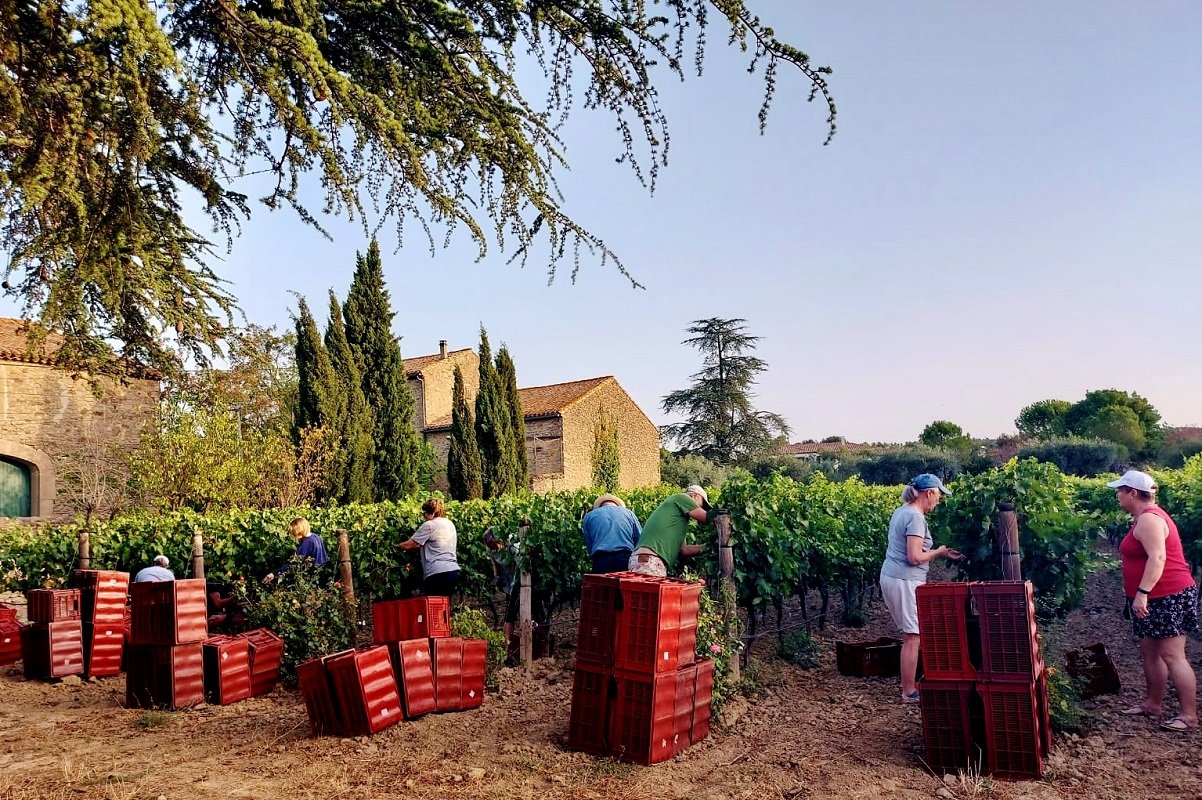
Summer is coming to an end earlier than usual here in the southwest of France. The skies are still blue, but the mornings are chilly, and the Tramontane, the north-west wind from the Pyrenees which blows relentlessly through this region, has a sharp edge to it.
Vineyard workers have been anxiously consulting weather maps and cloud formations to judge the best time for the grapes to be harvested. Each parcelle of vines requires different timings. There’s a vineyard behind where we are staying whose grapes must be picked when the air is fresh, and if that is at 3 am in the morning, then don’t expect to get any sleep beyond then.
Culture and tradition of wine
Here in the Département of Aude, wine is the lifeblood of the many villages which nestle among acres and acres of vines, interspersed with olive groves. Most people are connected to the land in some way, either by owning or working in the vines (viticulture), or by creating, producing and selling the finished product (viniculture). The rest of us do our bit by drinking it, and at 1€50 for a glass at the local bar, it’s not a hardship!
I love the Vendange. During September, expect traffic jams as motorists file patiently (usually!) behind lumbering agricultural machinery – tall grape pickers used to straddle the vines and shake off the grapes, tractors moving to and fro between vineyards and Cave Cooperatives, and tankers transporting crushed fruit to the distilleries.
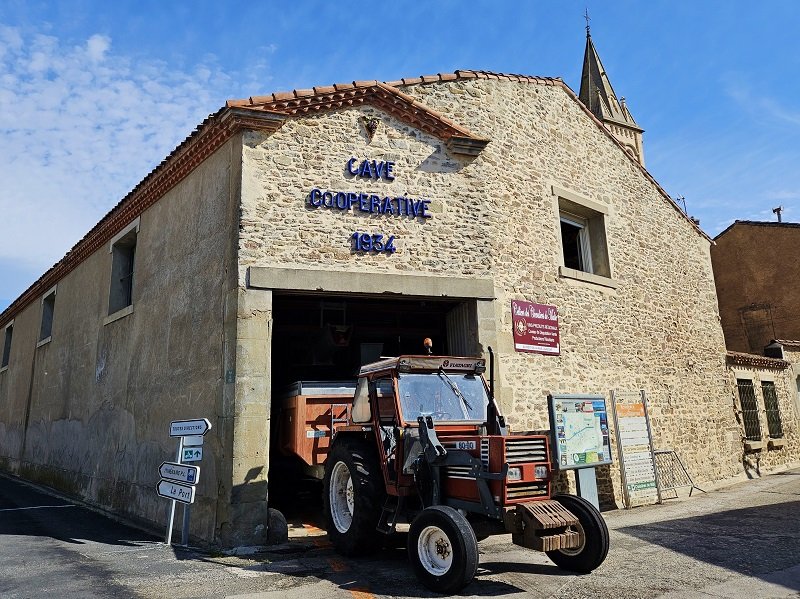
A few decades ago, most villages would have had their own Cooperative. There are fewer now, and during this time of year these sleepy villages turn into hives of activity as men and their grape-laden trucks wait outside the Cooperative for their turn to have their grapes assessed for quality and a price agreed. The ground is sticky with spilled juice and the air heavy with the smell of fermenting grapes.
A community affair
Smaller vineyards can hire machinery from the local Co-operative, but many independent vineyards choose to pick the grapes manually. Competition between the very many ‘Domaines’ is fierce, and being able to label the wine ‘vendanges manuelles’ is a selling point, as is an emphasis on growing organically: gaining ‘bio’ (organic) status is a hard-won achievement.
Although itinerant workers are hired to pick grapes, there are always vineyards looking for volunteers to help, often offering free lunch at the end of a shift as an enticement. It’s a serious but enjoyable day being part of a vendange team: in pairs, armed with secateurs, working both sides of the vine, snipping the bunches into crates which are then loaded onto the tractor.
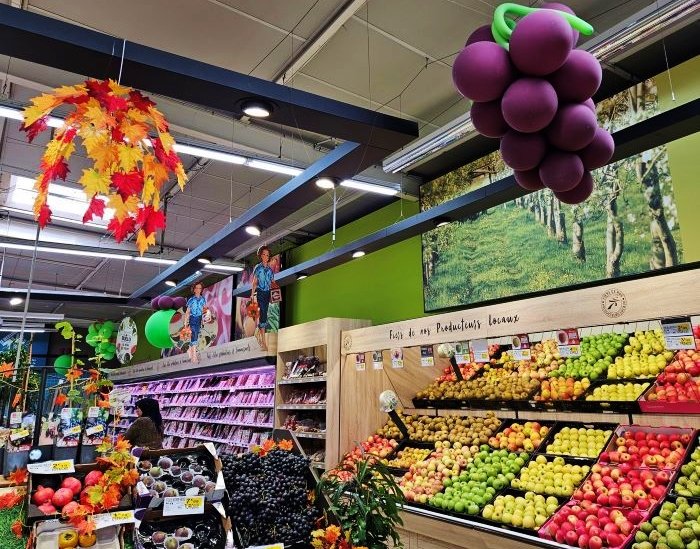
All parts of the community get involved in the vendange. Even the little tots from the nursery schools come along with their teachers and parents, wearing wellies and carrying buckets to be initiated at a very early age into the cultural traditions of their land. The focus on ‘terroir’ is important down here. Supermarkets get involved too, hanging inflatable grapes from the ceiling and stacking their fruit stalls high with local produce.
History of the land and its people
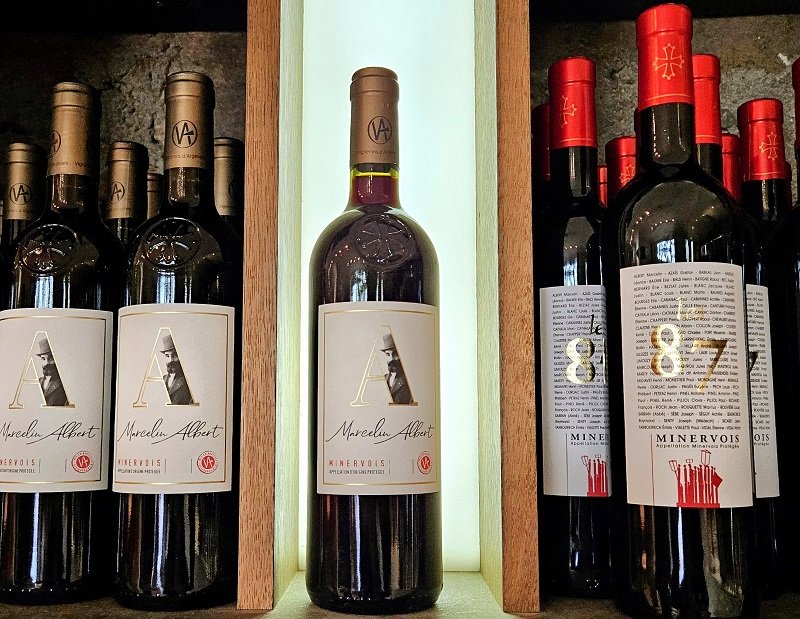
The French love a hero and in the vineyards of Pays D’Oc they’re keen to tell you about Marcelin Albert. He was a local wine grower who led the 1907 revolt against the Clemenceau Government which was turning a blind eye to the influx of cheap adulterated wine onto the market. 87 protesting wine-owners from the nearby village of Argeliers grew into mass demonstrations in towns such as Montpellier and Narbonne.
Clemenceau eventually agreed to a law protecting the quality of wine, and the Confédération générale des vignerons du Midi was established. Albert is now remembered in street names, public buildings and, in Argeliers, on wine labels.
Climate change
Not everything is going well in the village. The rain hardly fell this summer. Vineyard owners complain that their crops are smaller this year because of the lack of rain. And the river which normally runs through the centre of the village dried up, depriving both the local children and the tourists of their summer bathing spot.
Accusations and rumours fly around. Those who love to criticise the mayor blame his new flood defence scheme. Others reckon vineyard owners make stealthy nighttime raids syphoning off the water for parched vines.
But all agree that ultimately climate change is an ever-present threat to the way of life here. Over the last summer or so there has been a dramatic increase in the sudden appearance of large plumes of grey smoke rising into the sky. It’s scary if you are on your way home and you can’t quite see which village’s fields or forests have burst into flames this time – is it ours?
Fires are usually followed pretty swiftly by a team of specially-equipped light aircraft dropping water bombs, and the next morning the air smells of charcoal and everything is covered in a layer of ash. But worse is the sight of acres of blackened ground and scorched trees the fires leave in their wake.
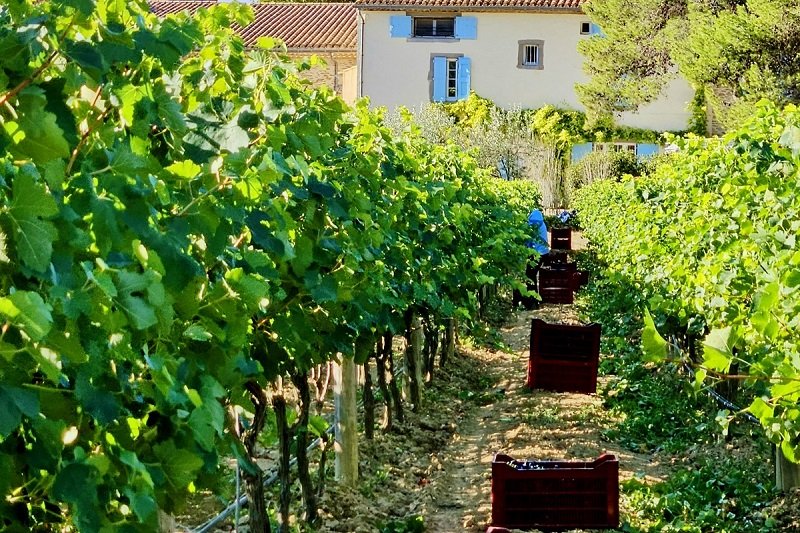
Even so, dreams are made down here. Although many vineyards are owned by generations of families, it is surprising how many young locals are buying small parcelles of land and learning the trade. Consumption of wine is shifting from the heavier reds to lighter reds and rosé and the younger generation are well placed to both anticipate and respond to changing drinking habits.
Talk to those selling wine on the market stalls and you find out how many non-French have decided to sell up and make a life down here on the land. Spend a day with them picking grapes and you’re blown away by just how hard and precarious growing vines is…..but the beauty of the land, the warmth of the community and the richness of the culture and tradition is intoxicating.

CLICK HERE TO DONATE TO OUR CROWDFUNDER
HELP US BECOME STRONGER SO THAT WE CAN CONTINUE TO DELIVER POWERFUL CITIZEN JOURNALISM!






