


Lynn Hilditch, Liverpool Hope University
Kate Winslet battled for eight long years to get her biopic of American war photographer Lee Miller made, and last month finally saw its UK release. The Lee in question is the American-born Elizabeth “Lee” Miller, a remarkable woman whose glamorous and colourful life has often overshadowed her photographic career.
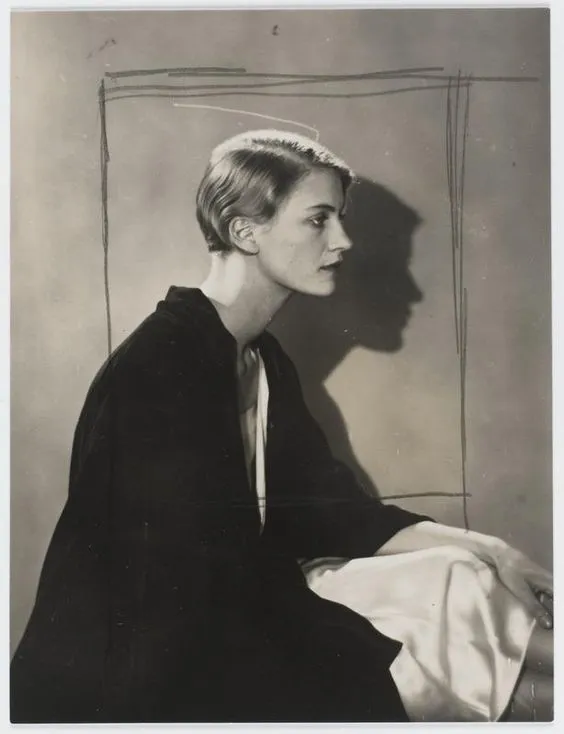
Miller was not only a top fashion model for magazines like Vogue, Harper’s Bazaar and Vanity Fair, she was also an important female surrealist photographer and a courageous war correspondent who documented the atrocities of the second world war.
Lee Miller was born in 1907 in Poughkeepsie, a small industrial town 90 miles north of New York City. Her father, Theodore, was an engineer, inventor and amateur photographer who encouraged Miller’s interest in photography, buying her her first camera, a Kodak Box Brownie, at the age of ten.
It was in her father’s own darkroom that Miller first started experimenting with the photographic process. She would also model for her father, who took thousands of photographs of his daughter from birth into adulthood, including several nude portraits.
A free-spirited young woman, Miller found the quiet life in Poughkeepsie tiresome, and in 1925 the 18-year-old persuaded her father to let her take a study trip to Paris where she encountered a vibrant city of cultural, artistic and intellectual life. On her return to New York in 1926, she had a chance encounter with the founder of Vogue magazine, Condé Nast, who was so enchanted by Miller’s sophistication and beauty that he invited her to model for the magazine.
Throughout the 1920s and 1930s, Miller worked with some of the leading fashion photographers of the time including Edward Steichen and George Hoyningen-Huene. However, she always preferred to be behind the camera than in front of it.
It was Steichen who introduced her to the American surrealist Man Ray who was working as an artist and commercial photographer in Paris. Miller was Man Ray’s muse, lover and collaborator in Paris between 1929 and 1932.
She would sometimes take on Man Ray’s commercial photography assignments so that he could focus on his art projects, although the published photographs were very rarely credited to Miller. She also played a significant role in the rediscovery of a photographic process called solarisation which produces “halo-like outlines around forms and areas of partially reversed tonality to emphasise the contours of the body”, which for years was attributed only to Man Ray.
In 1932, Miller returned to New York where she opened her own commercial outfit, Lee Miller Studios Inc, before moving to Egypt in 1934 to marry wealthy Egyptian businessman, Aziz Eloui Bey. Egypt inspired Lee to create many surrealist images including her 1937 work A Portrait of Space. However, her time in Egypt was short-lived, as was her marriage to Aziz.
Photographing war
Lee met the British Surrealist Roland Penrose in Paris in 1937 and hung out with his circle in the south of France – including Man Ray, the poet Paul Eluard and Pablo Picasso, who memorably painted her portrait. Miller moved to London with Penrose in September 1939 just as Britain declared war on Germany. As a photographer with a surrealist background, the London Blitz in 1940 provided an exciting opportunity to capture the strangeness and oddities of war.
Twenty-two of her Blitz photographs were published in the 1941 Ministry of Information publication Grim Glory: Pictures of Britain Under Fire. She became accredited to the United States army in 1942, becoming one of only a few women war correspondents travelling with the army across Europe.
Miller was the only one to photograph combat and witnessed the siege of St Malo where the Americans tested their new secret weapon, napalm. Miller’s photographs were published as photo essays in British and American Vogue.
The editor of British Vogue Audrey Withers, wanted not just to cover fashion and beauty, but to keep her readers abreast of current affairs and social issues. Miller and Withers closely worked together to transform the fashion and lifestyle magazine into something that also spoke to what was going on in the world, publishing fashion features alongside stories and images from the war.
Miller always aimed to show the truth in her war photography. In her photographs of the liberation of the concentration camps at Buchenwald and Dachau in April 1945, she documented the atrocities of the Nazi regime at their most dreadful.
The day after photographing Dachau, she posed for her most famous wartime portrait, taken by her friend and colleague, Life photographer David E. Scherman. The portrait shows Miller washing herself in Hitler’s bath in his Munich apartment, looking weary but beautiful, her boots discarded on the floor, and a picture of the Führer propped up by the taps.
After the war, in 1947, Miller became pregnant with her only child, Antony Penrose, author of The Lives of Lee Miller, on which Winslet’s film is based, and married his father, Roland Penrose.
They moved from London to Farley Farm in rural East Sussex in 1949 where Miller turned her attention to the domestic arena, becoming an accomplished cook and hostess. The sights she witnessed during the war haunted her for the rest of her life, and she became dependent on alcohol – today she would have been diagnosed with PTSD. Miller died at Farley Farm in 1977 leaving behind an extraordinary photographic legacy, and has been the subject of numerous exhibitions ever since.
Lynn Hilditch, Lecturer in Fine Art and Design Praxis, Liverpool Hope University
This article is republished from The Conversation under a Creative Commons license. Read the original article.

CLICK HERE TO DONATE TO OUR CROWDFUNDER
HELP US BECOME STRONGER SO THAT WE CAN CONTINUE TO DELIVER POWERFUL CITIZEN JOURNALISM!






