


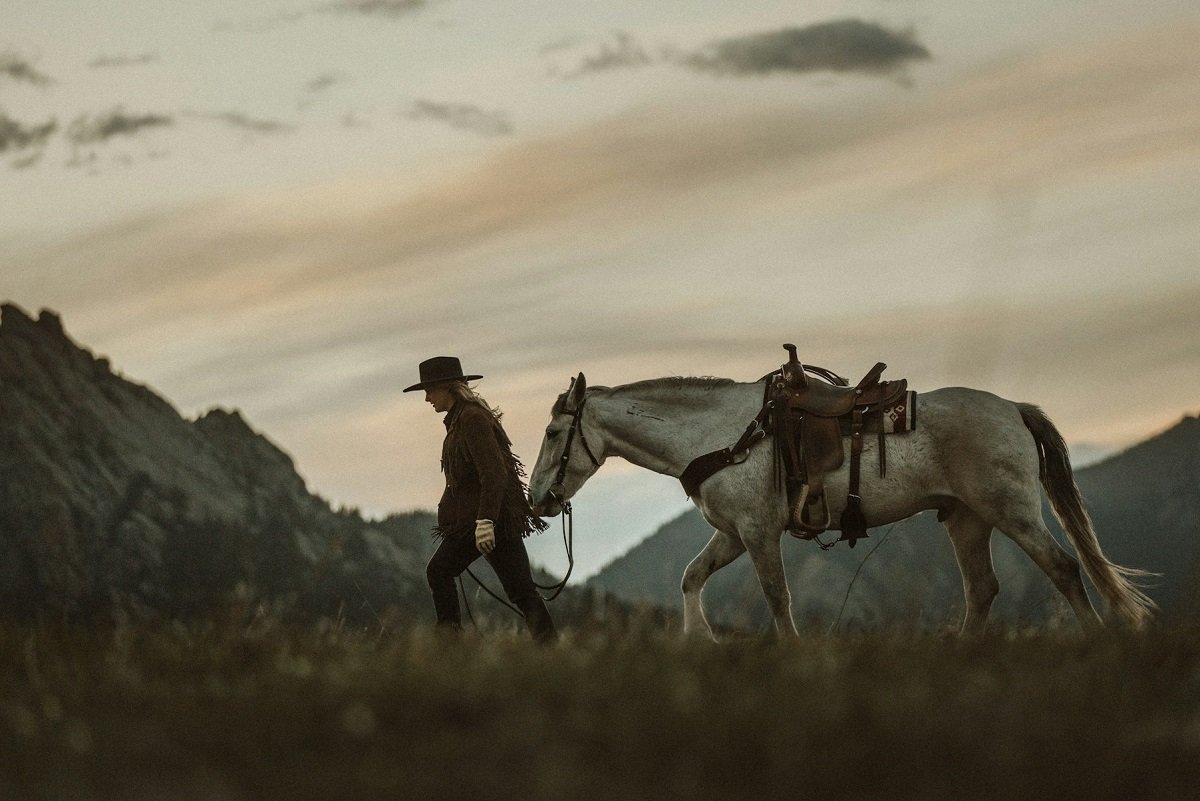
Many of us have watched, stunned, as the Land of the Free morphed into the land of Trump and the Oligarchs. The phenomenally successful Yellowstone series, first aired in 2018, reflects a shadow of things to come.
Yellowstone, often described as a neo-Western, was created by Taylor Sheridan and John Linson. After five seasons, the final episode in 2024 drew in 13.1 million viewers. The series’ popularity encouraged several spin-off series, including two prequels to date, set in the years 1883 and 1923.
Watched in chronological order, from the prequels to the present day, these shows offer a fascinating ride through American history and an unsettling glimpse into the corruption of the values that once made America great. We see how fear and greed erode the ideals of freedom, and how what feels like a sudden downfall has been decades in the making.
Westerns have always been a barometer of the cultural and political landscape, and Yellowstone, spanning 150 years, is a potent lens through which to view this collapse.
Nineteenth century America
In the series entitled 1883, we are introduced to the Dutton family as they trek westward on the Pioneer Trail. It’s a story full of the rugged individualism and pioneering spirit that Western lovers adore. But this isn’t the classic “good vs. evil” of early Westerns. In this world, good doesn’t always triumph — but it always stands up. People fight for what they believe in, for their right to be counted, and to protect those in need.
The American right to bear arms, ratified nearly a century earlier, was essential to life on the trail for defence against both wildlife and hostile humans. Today, gun ownership has evolved, but its defenders still wield the same rhetoric. Yet, the real question remains: what needs to be defended — and why?
In 1883, we also see many of the pioneers exercising another quintessential American value: the freedom to worship. For others, the journey is motivated by missionary zeal to spread their own truths. The freedom to worship stands in lockstep with another core American value: freedom of speech.
Unlike early cinematic Westerns, creator Taylor Sheridan presents a complex relationship between the pioneers and Native Americans. Yes, there’s fear and anger from a nation dispossessed of its land, but there’s also a willingness to work together, and a deep respect on both sides. Above all, there’s an innocence and joy for life, one that will corrode as America’s future unfolds.
The rise of modern-day America
By 1923, the Dutton family has become successful ranchers, established in their community but still fighting to survive in an unforgiving world. A new enemy emerges, one rooted in commerce.
These Duttons are still recognisable descendants of the originals: believers in doing right by others and protecting family at all costs. The world, however, has become a place of ruthless violence, where businessmen wield power to feed their insatiable lust for more money and more control.
The land, once a source of nourishment and pride, becomes a battleground for corporate interests and unchecked development. This is the beginning of a long-standing conflict between true environmentalists and the pillaging forces of commerce.
Meanwhile, in a side plot, we see the rise of corruption during Prohibition and the early signs of the Great Depression. We catch a glimpse of the America we recognize today: a land where corporations pursue resources at all costs, and where freedom of speech, once a hallmark of democracy, is now a right reserved for only the powerful few.
Yellowstone: a ranching family drama set in Montana
In Yellowstone, the modern-day Duttons control the largest ranch in Montana, the land given to them by Native Americans in 1883 with a prophetic caveat: that seven generations hence, the Native peoples would rise to reclaim it. Now, John Dutton must defend his land from threats on all sides.
The Duttons have entered the business world themselves, and their hands are just as stained as those they once fought. To be rich and powerful in America requires a flexible morality — where greed and ambition become the driving forces, fracturing the family from within.
The ranch borders the Broken Rock Indian Reservation, and old tensions between Native Americans and settlers rise once more. The fight for the environment is a central theme in Yellowstone; the underlying tension between greed and the environment is palpable.
A changed world
Yellowstone and its prequels are more than just entertainment. They offer a sobering portrait of the collapse of American values.
From the pioneers’ need to arm themselves to survive, to today’s debates over gun ownership in American homes, Yellowstone highlights the stark contrast between historical necessity and modern-day obsession.
It chronicles the freedom to worship — once a cherished right — only to see it hijacked by those who seek to enshrine a single, exclusionary belief system. Likewise, freedom of speech, once a cornerstone of American democracy, now belongs to the few.
The unshakable premise of standing up for what is right — of protecting the vulnerable and doing what you believe is just — is a thread that runs through Westerns from John Wayne to Gary Cooper. Today, this ideal has been shredded by a political climate that turns those in need into burdens.
The hard-won respect for Native Americans that once emerged from the Vietnam peace protests and the Civil Rights movement is being replaced by a resurgence of white supremacy. Meanwhile, greed and corruption have America in their grip. The pursuit of power and wealth justifies any means, including the destruction of the environment — all while the oligarchs pull the strings from behind the scenes.
Yellowstone and its prequels are not merely a reflection of the American past; they are a chilling glimpse into the future, showing us just how much we have already lost — and how much more we could stand to lose.

CLICK HERE TO DONATE TO OUR CROWDFUNDER
HELP US BECOME STRONGER SO THAT WE CAN CONTINUE TO DELIVER POWERFUL CITIZEN JOURNALISM!






