


There are projected to be 1.4 million people living with dementia by 2040 and more and more people want to know how they can support family members who develop this condition.
I have some experience here as my mother, aunt and mother-in-law all gradually lost their short-term memories as dementia took hold. By then I had realised how all three used to reminisce about past times with enviable clarity.
This helped me when, late one night, I received a call from the hospital where my 88-year-old aunt had been admitted, asking me to come in to help calm her down. A visit was not practical but I was able to tell the nurses to ask my aunt about life in old Portsmouth during Second World War as I knew she loved to chat about this. This was a tactic that often seemed to work.
Knowing the history of family members
The incident prompted me to reflect on the importance of having knowledge of family history. I had already embarked on a Master’s degree in Cultural History, Identity and Memory and this provided an opportunity to research memory and reminiscence.
In my work, I came across a term called the ‘reminiscence bump’, described by Clare Rathbone as, “…..a phase in life in young adulthood where many significant memories happen for the first time and it is these that re-emerge in later life.”
Travelling through time
Other explorers in this world support this notion. An article in the Huffington Post encapsulated many of my own family experiences. Dr Pam Jarvis, in her insightful piece, The Time Traveller’s Daughter, described how her mother often forgot those in her current life and seemed to live in the past. Pam described this as, ‘time travelling’ back to her mother’s earlier life to inhabit her reality.
I also recall my 94-year-old mother-in-law wanting me to help pack her bag her go home, which to her meant Ireland. I would deflect her by telling her that the ferries weren’t running due to poor weather.
The importance of collective memory
Maurice Halbwachs suggests that memories are gathered in the form of frameworks. Each frame triggers memories to another memory through our ‘collective memory’ which is set within a particular context. An example of this could be a song from the past. When the notes are heard it conjures up a memory which in turn might trigger other ones.
Schweitzer & Bruce feel that, if we are to provide for person-centred care, we need to understand the people we care for and their life history. Wendy Mitchell (2018) believes that, despite her dementia diagnosis, her writing gave her a purpose.
All this highlights the importance of passing life stories down the generations, as a cherished piece of family history. Grandparents are often the purveyors of stories in many cultures and I suggest it is important to gather stories from your own youth while you can.
As a child of the 60’s I witnessed moon landings, the mini skirt and societal changes regarding women’s independence. I have written up my life story and explained to our son how and why this has influenced my views and thoughts in the present.
Similarly, artefacts can be a useful resource for triggering memories and discussion. These could be a shell from a holiday, a toy from childhood, or an item of clothing. As I say, we seem to have that ‘reminiscence bump’ so, as with a music track from our youth, an object instantly transports us back to our youth, with all its associated memories. Having knowledge of these cultural memories is important for families and carers so they can travel back in time with us.
This seems to be particularly significant in the case of those who may have spent the early part of their life in a different country or culture using a different language.
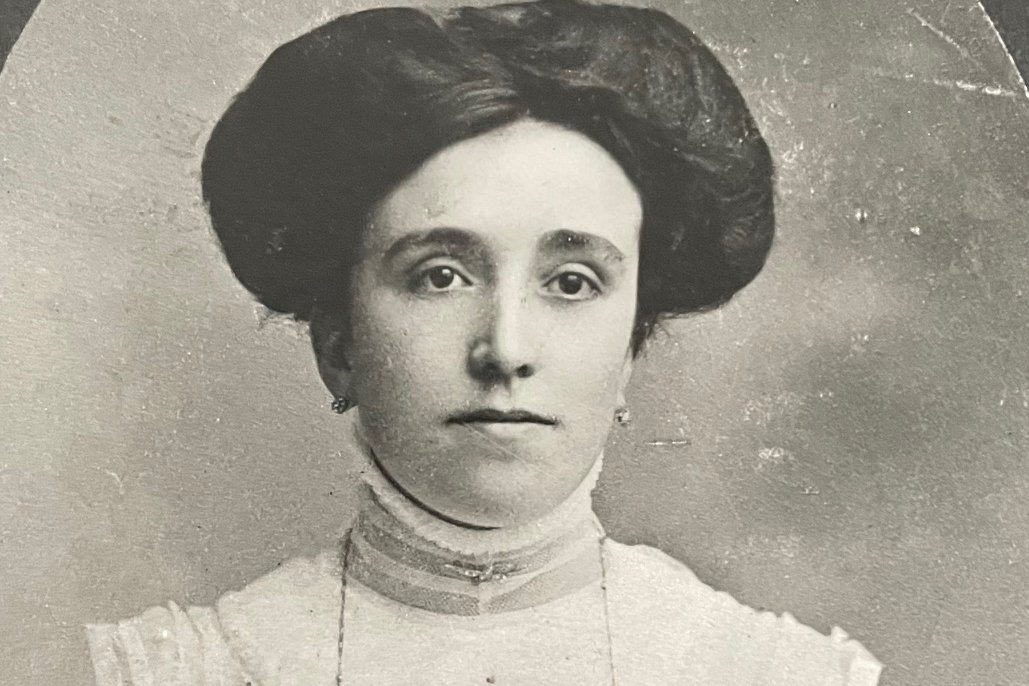
Old photos are a favourite way to engender discussion. Alison Ilem and others discovered that older women with dementia recognised photos of their younger selves more easily than contemporary ones.
Shadows of the past
On a practical level, BBC Rewind has a series of useful resources that can be used to stimulate productive conversations. It is useful to note, though, that revived memories can be happy or sad. Events that were buried may resurface and these ‘shadows of the past’ can raise ethical concerns as to how they might be dealt with.
My own research shows that the cultural history of family members with dementia is important regardless of whether they are residing at home or in a care facility. An ideal scenario is that hospitals/care facilities request that family members or next of kin complete a pro forma that details information about an individual’s early life – their music choices and food preferences – in order that all carers can support them effectively.
Of course, the responsibilities faced when dealing with family members living with dementia brings into focus the importance of memories in our own lives too. So, whether it’s conversations or a recorded life story, ensure you share your own memories with your family.
The significance of these memories is huge and may serve a deeper purpose to the well-being of your future self.

CLICK HERE TO DONATE TO OUR CROWDFUNDER
HELP US BECOME STRONGER SO THAT WE CAN CONTINUE TO DELIVER POWERFUL CITIZEN JOURNALISM!





