


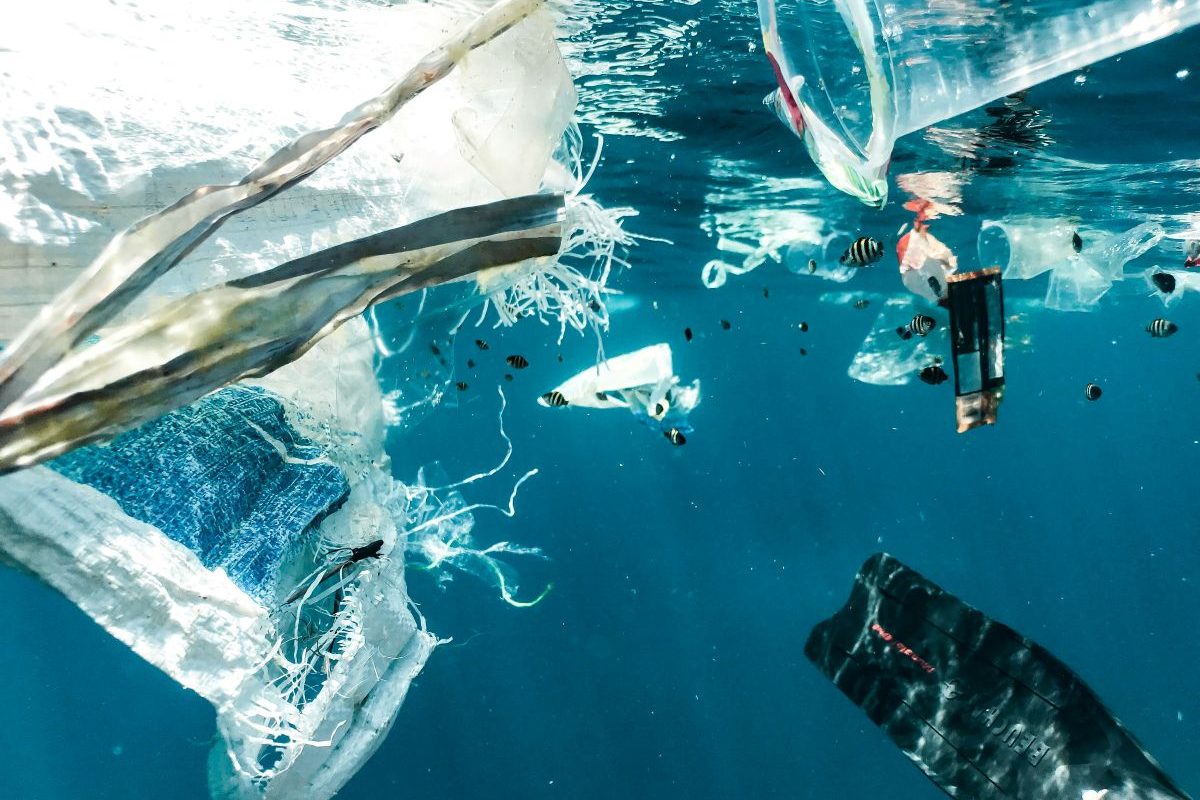
Deep beneath the seabed and at the bottom of ancient lakes, layers of sediment have accumulated over thousands of years. Each layer records something of its time: changes in climate, floods and droughts, volcanic eruptions, shifts in vegetation and the countless natural events that have shaped our planet. Together they form a remarkable archive of Earth’s history, preserving a record of the past long after memories have faded and civilisations have disappeared.
It is therefore deeply unsettling to learn that scientists are increasingly finding microplastics within these natural archives, including sediments that predate the invention of plastic itself.
At first glance, the discovery appears almost impossible. Plastic was not invented until the twentieth century, so how can traces of it be found in deposits that are centuries or even millennia old? The answer is not that ancient societies somehow produced plastic, but that modern pollution has become so pervasive that it is now infiltrating places once thought beyond human reach. Tiny plastic particles are being carried by wind, rain, ocean currents and biological processes into environments that should have remained isolated from the modern world.
Sediment provides a geological record
The finding matters because sediment is more than mud at the bottom of a lake or ocean. It is a geological record. Scientists read these layers much as historians read documents, searching for clues about past environments and the forces that shaped them. When fragments of modern plastic appear within that record, they reveal the extraordinary extent to which human activity has become intertwined with natural systems.
For most of history, people left local marks upon the landscape. Forests were cleared, fields cultivated and rivers altered, but nature retained a remarkable capacity to absorb those changes over time. Plastic presents a different challenge because it is designed to endure. Rather than breaking down and returning to natural cycles, it fragments into ever smaller pieces that persist in the environment for decades, centuries and perhaps far longer.
Plastic is everywhere

What makes microplastics particularly troubling is their mobility. They have been found on remote mountain peaks, within Arctic ice, in the deepest parts of the oceans and now within geological deposits that should have been protected from contemporary contamination. There are few corners of the planet where they have not been detected. The image many of us have of plastic pollution as a problem confined to litter-strewn beaches or floating ocean debris no longer reflects reality. Plastic has become woven into the fabric of the Earth itself.
To be balanced, it is important to acknowledge what remains uncertain. Scientists are still investigating the long-term effects of microplastics on human health and many questions have yet to be answered. The presence of these particles in the environment does not automatically translate into catastrophic outcomes, and careful research is essential if we are to understand the risks properly.
At the same time, there are facts that should concern us. Microplastics have been found throughout food chains and in a wide range of species, from plankton and shellfish to birds and marine mammals. Researchers have also detected them in human blood, lung tissue and placentas. Laboratory studies suggest that some particles may contribute to inflammation and other biological effects, although the full implications remain under investigation. While uncertainty exists regarding the precise consequences, there is little doubt about the scale of exposure.
What legacy are we leaving?
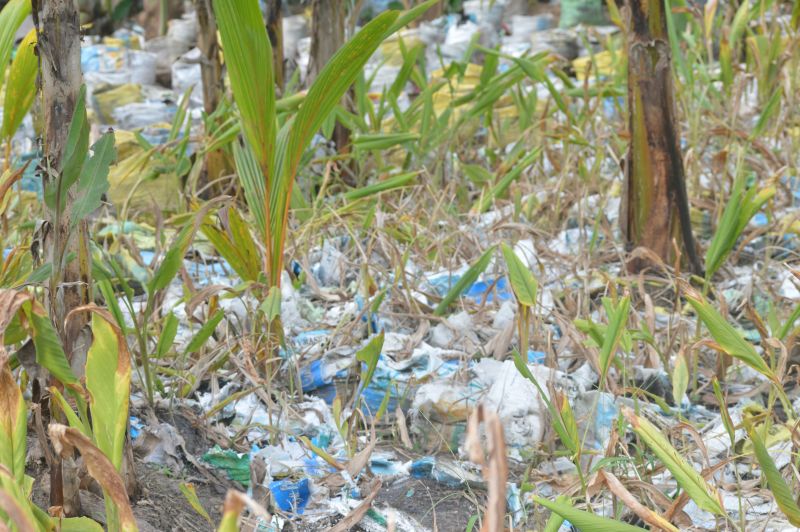
The larger issue may be philosophical as much as environmental. Every civilisation leaves traces behind, but most disappear gradually into the landscape. Stone erodes, timber decays and metal corrodes. Plastic behaves differently. It lingers. Long after today’s political arguments, economic debates and cultural fashions have been forgotten, microscopic fragments of our disposable age may remain embedded within the geological record.
Future generations may one day study these sediments and identify a distinct horizon marking the period when humanity began producing synthetic materials on an unprecedented scale. They will see evidence not only of our ingenuity but also of the unintended consequences that accompanied it. The story preserved in those layers will be one of remarkable technological achievement coupled with a profound failure to consider where all that material would eventually end up.
None of this means the situation is hopeless. Plastic has transformed modern life in many beneficial ways, from medicine and food preservation to countless products that improve everyday living. The challenge is not the existence of plastic itself but our relationship with it. A material designed to last for generations has too often been used for moments of convenience before being discarded.
The discovery of microplastics in ancient sediments should therefore be understood not as a scientific curiosity but as a warning. It reminds us that there is no true “away” when something is thrown away, and that the natural world records our actions with far greater fidelity than we sometimes imagine.
The Earth keeps its own archive. What scientists are now uncovering suggests that we have written ourselves into it more deeply than we ever intended, leaving behind a legacy that may endure long after every other sign of our age has vanished.

CLICK HERE TO DONATE TO OUR CROWDFUNDER
HELP US BECOME STRONGER SO THAT WE CAN CONTINUE TO DELIVER POWERFUL CITIZEN JOURNALISM!





