


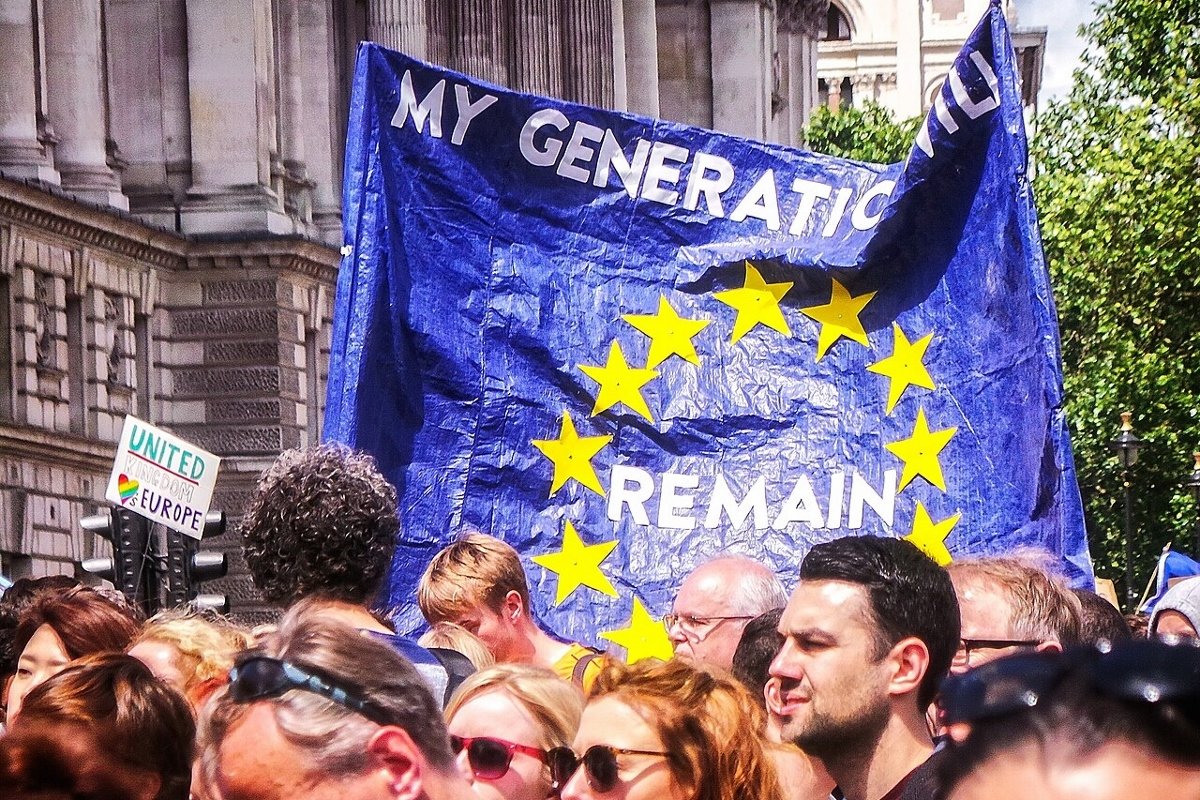
Ten years since the momentous EU referendum, I have been looking back at the impact of the vote to leave on me and my life.
On 16 June 2016, a week before the referendum, pro-European Labour MP Jo Cox was murdered in a horrific attack by a man shouting: “This is for Britain. Britain will always come first.”
I was in Malaga at the time, but hearing the news was so shocking – I was “reeling and upset” (diary entry) – that it overshadowed the holiday and left me more convinced than I already was that Britain would vote to leave the EU.
Although the perpetrator was a loner, his affiliation with far-right groups seemed to exemplify the anti-European sentiments of the Vote Leave campaign and anti-immigrant extremes stirred up by Nigel Farage (then leader of UKIP).
Ten years on, and anti-immigration unrest in Southampton and racist-driven riots in Belfast are making headline news. The UK seems more divided than ever.
Lead-up to the EU referendum
Time spent in Europe over the years, especially Berlin and The Hague, had strengthened my commitment to the EU’s founding principles, forged after World War 2, of peace, unity, equality and international law. I had always hated the ‘little Englander’ mentality and isolationist approach which was prevalent, particularly among the Conservatives.
Like many other pro-Europeans, I was actively involved in campaigning for Britain to stay in the EU. In the months before the referendum – and after – I went on all the pro-Europe marches and was a core member of Brighton and Hove for EU (BH4EU).
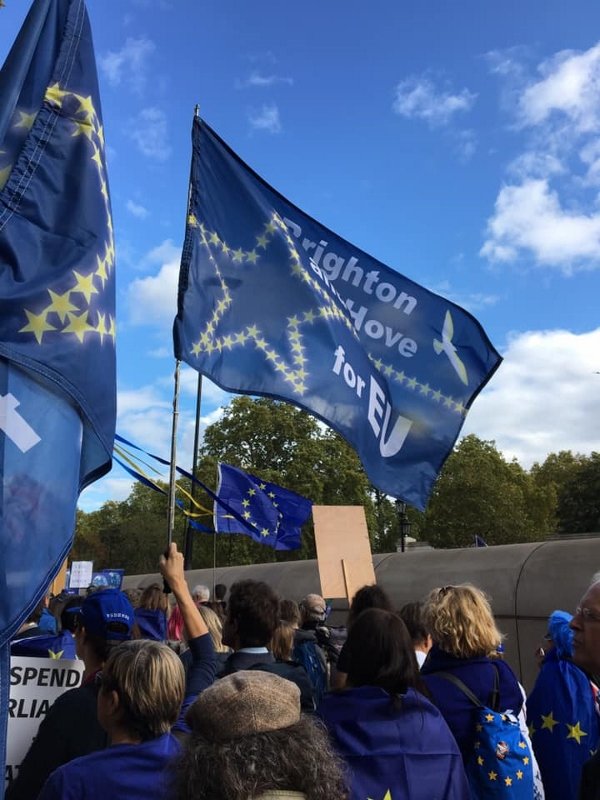
Although Brighton and Hove voted overwhelmingly to stay in the EU (68.6% for Remain on a 74% turnout), there was quite a lot of vociferous opposition, which I experienced first-hand while leafleting or helping with BH4EU stalls. It was shocking and surprising to be called “Nazis” and worse by people passing our Saturday morning stall on New Road, despite many supportive voices too. One weekend, we set up a stall in George Street, Hove, only to find a UKIP Leave group further up the road, whose supporters hurled abuse at us as they passed.
A way of handling these responses was to dismiss them as extremists, but harder to deal with was ‘Lexiteer’ friends and acquaintances, who regarded the EU as a ‘capitalist club’. While I had some sympathy with criticisms of the EU, I could only try to counter these with my own commitment to the European project, experienced first-hand during Erasmus-funded research collaborations.
The referendum result – a devastating sense of loss
On the morning of 24 June 2016, a friend texted me the result before 6.00am. I had an immediate sense of grief and loss: “Feel like someone’s died” (diary entry). My partner and I both felt “totally devastated by the result”. I met my daughter and we walked in Preston Park and talked about the outcome and implications for her future.
The next day, I felt very depressed. I commiserated with a like-minded neighbour and met a pro-EU friend to talk it through. Then did some displacement activities: “Weeded front garden and played piano loudly” (25 June, diary entry). My son phoned and was also very upset.
These reactions continued into the following week. At yoga class the next Monday, I “collapse in tears” as our European teacher talked about “seeing the bright blue sky” during a guided meditation. “Can hardly speak. Feel very tearful. Cameron resigns. Slept later on. Felt sick. Watched a bit of tennis to normalise things” (27 June, diary entry).
A March for Europe on 2 July – 500,000 people – had a “very positive feel” despite cold and rain. The speeches in Parliament Square were great, the sun came out and everyone hoped to stop the government from triggering Article 50.
At the end of that week my diary records: “Country in disarray following referendum vote. Labour trying to oust Corbyn – mass resignations. Tory leadership contest. Gove stabs Boris in the back! Caroline Lucas – a voice of sanity, calling for alliance of progressive left”. (She still is). I decided to join the Green Party as a result.
As the weeks went by, I still recorded low, tearful days. My partner and I went back to Spain in December and decided to move to Berlin for six months the following year.
Move to Berlin but missing home
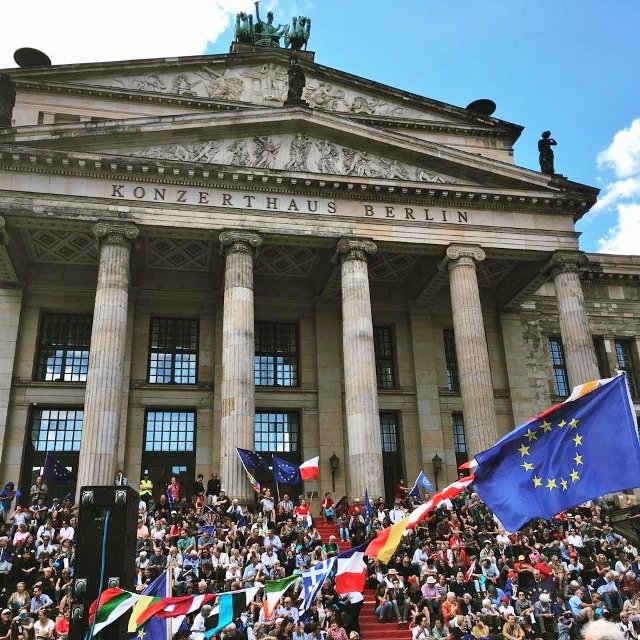
The time in Berlin, with its vibrancy, history and culture, was restorative in many ways. The Pulse of Europe meetings we joined on Saturday mornings in the beautiful Gendarmenmarkt square were joyful and uplifting, with speakers, music, and people of all ages. We could have stayed on and applied for residency, but I struggled with the language and living in a noisy inner-city apartment, and I missed my garden and ‘home’.
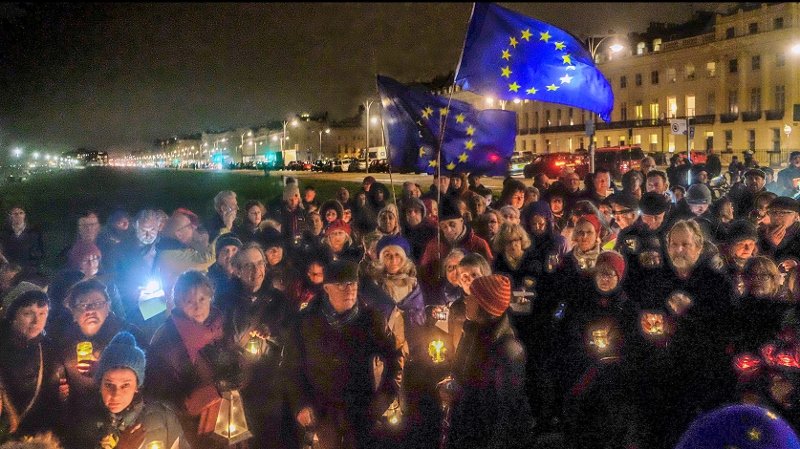
So we moved back to Brighton, and I carried on marching and hoping, as the country continued to be divided. I spent as much time as I could in Europe while I was still a European citizen, including a month teaching English in Spain. When Britain finally left the EU on 31 January 2020, I was heartbroken.
Rejoining the EU?
The adverse effects of leaving the EU on the British economy are well-established. Indeed, a new report suggests the UK economy has taken a 6% hit from the effects of Brexit. But other impacts are also strong. Ever since Britain left the EU, I’ve felt displaced and (in Turkish activist Ece Temelkuran’s words) “unhomed”. Young people in particular are missing out on opportunities to live and work in Europe.
I’m not confident that Britain will rejoin the EU in my lifetime – for a start, other European countries may not want us back – but there are some helpful signs. The UK’s gradual rapprochement to Europe, including rejoining Erasmus+, is positive, though slow, and recent opinion polls show a desire for a closer relationship with Europe.
The direction is encouraging, so I have to try and stay hopeful.

CLICK HERE TO DONATE TO OUR CROWDFUNDER
HELP US BECOME STRONGER SO THAT WE CAN CONTINUE TO DELIVER POWERFUL CITIZEN JOURNALISM!



