


One of the pleasures of walking regularly in the same woodland is that you begin to notice when something is different.
This week, it was the silence.
The heat had settled over the woods like a heavy blanket. The usual chorus of birdsong had all but disappeared. Even the leaves seemed reluctant to stir. It felt as though the whole forest had agreed that movement required too much effort.
Yet beneath every mature oak there was a sound. Not loud enough to be immediately recognised, but impossible to ignore once you became aware of it. A low, continuous buzz hung beneath the canopy, as though each ancient tree possessed its own quiet electrical current.
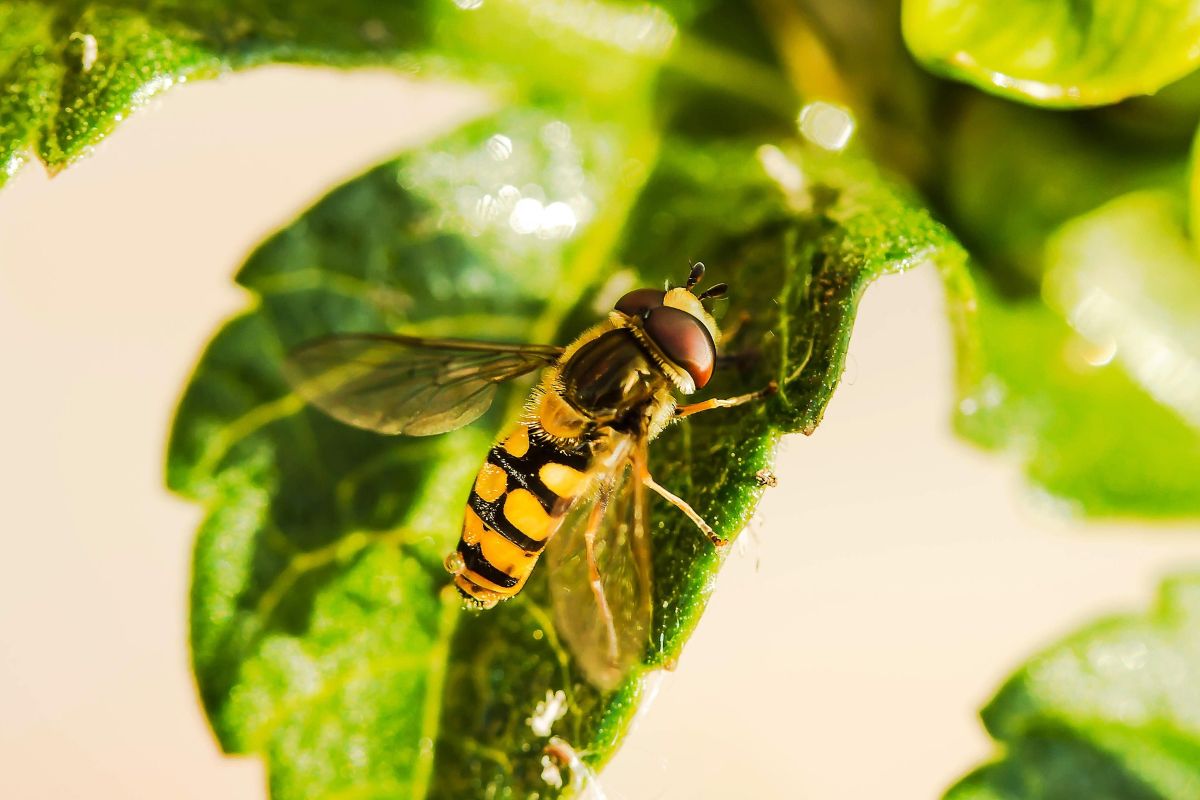
At first, I assumed it must be bees. Drawing closer, I expected to see bumblebees weaving between flowers or perhaps a wasp’s nest tucked into a hollow trunk. Instead, I found myself surrounded by thousands upon thousands of hoverflies. They drifted through shafts of shade, suspended effortlessly in the warm air before darting away with astonishing speed. Every oak seemed to shelter a cloud of them.
It is remarkable how often hoverflies are mistaken for something else. Nature, after all, has made them expert impersonators. Many wear the bold yellow and black stripes of wasps, while others resemble honeybees so convincingly that most of us never question what we are seeing. It is one of evolution’s cleverest tricks. Predators have learned to leave anything dressed in warning colours well alone, and hoverflies have quietly borrowed the uniform without acquiring the weapon.
Despite appearances, they cannot sting us. They have no interest in attacking people. Their only defence is deception.
Perhaps there is a lesson in that. How often do we recoil from something simply because it resembles a threat? The hoverfly has spent millions of years reminding us that appearances are often the least reliable guide to reality.
The deeper I looked, the more curious I became. Why had so many gathered beneath the oaks?
The answer lies partly in the extraordinary generosity of those trees.
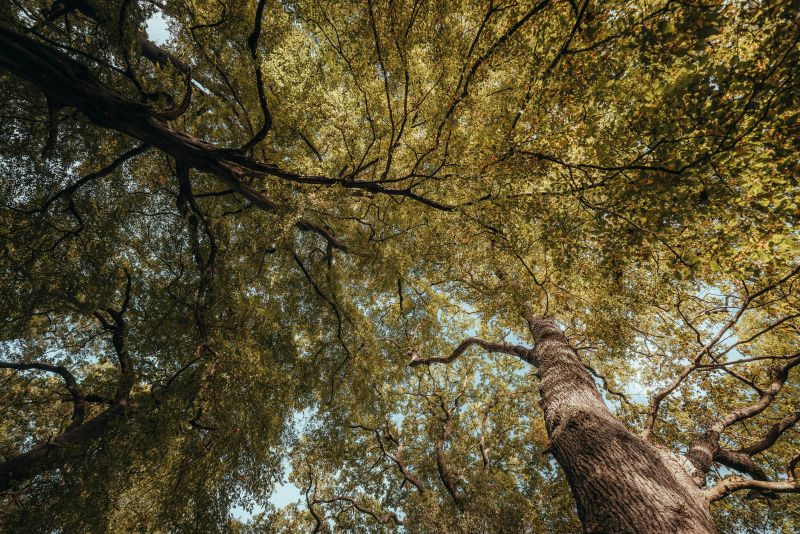
On a day when the sun was beating relentlessly onto woodland rides and open glades, the great spreading canopy of an oak created its own world. Beneath its branches the air was cooler, slightly damper and infinitely more comfortable than the baking woodland edge. The hoverflies had found refuge from the heat.
But the oak offered more than shade. An oak is less a tree than an entire living community. Hundreds of insect species make their homes upon its bark, leaves and branches. Tiny aphids feed upon its sap, producing droplets of sugary honeydew that become a feast for countless other insects. Adult hoverflies happily sip this sweet food when flowers are scarce or distant.
For many species, the oak is also a nursery. Female hoverflies search patiently for colonies of aphids before laying their eggs nearby. When the larvae hatch, they begin one of the least celebrated services in the British countryside. They devour aphids in astonishing numbers, acting as tiny natural pest controllers that ask for no wages and require no chemicals.
Gardeners often wage war against greenfly. Hoverflies simply eat them. Every vegetable patch, orchard and allotment benefits from these silent hunters without ever noticing their presence.
Yet even that is only part of their story.
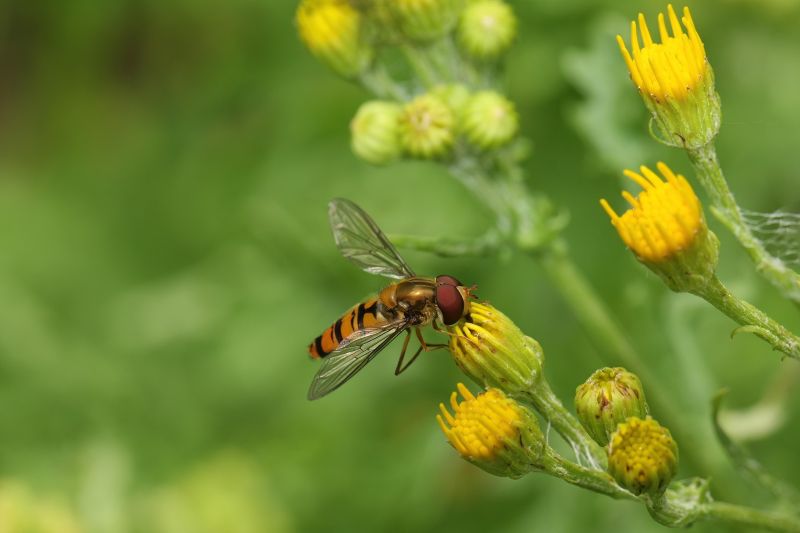
As adults, hoverflies become tireless pollinators. Because we rightly celebrate bees, it is easy to imagine they shoulder the burden alone. They do not. Hoverflies visit flower after flower from early spring until late autumn, carrying pollen wherever they go. Some plants depend heavily upon them. In cooler weather, or when bees are less active, hoverflies continue working with quiet determination.
Without fanfare, they help produce wildflowers, berries, fruits and seeds that support everything from songbirds to mammals. They ask for almost nothing in return beyond somewhere to live.
Perhaps that is why I found myself strangely moved by those singing oaks. Thousands of insects were taking shelter together, performing lives of immense value that almost no one notices. Most walkers passed beneath those trees without lifting their eyes. Had I done the same, I would have missed one of the woodland’s great summer spectacles.
There is a tendency to divide insects into friends and enemies. Butterflies become symbols of beauty. Bees receive our admiration. Wasps often suffer our irritation.
Hoverflies belong to none of these categories because many people never realise they exist. They are dismissed as anonymous little stripy things that buzz past in the garden.
Yet there are hundreds of species in Britain, each with its own remarkable life. Some spend their larval stage in ponds, others in rotting wood, compost heaps or damp woodland. Some migrate across the English Channel on warm southern winds. Others remain faithful to a single landscape year after year.
Collectively, they pollinate crops, regulate pests, recycle decaying matter and quietly sustain ecosystems that would be poorer without them. Their importance is entirely out of proportion to the attention they receive.
Perhaps that is why they appealed to me so much beneath those oaks. The natural world is full of creatures whose greatest achievement is that they perform essential work without demanding recognition. They ask neither applause nor affection. They simply continue doing what they have always done, unnoticed by those hurrying past.
There is something deeply reassuring about that.
We live in an age where everything seems to compete for our attention. The loudest voice usually wins. Yet the woodland reminded me that much of life depends upon things so small they escape our notice altogether.
The old oaks were not singing because they contained danger.
They were singing because they were full of life.
And once you know that the cloud of tiny striped insects surrounding them is neither threatening nor troublesome, but one of nature’s great unseen workforces, it becomes impossible to hear that gentle sound in quite the same way again.
The next time you walk beneath an oak on a warm summer’s day, pause for a moment before moving on.
Listen carefully.
The forest may be introducing you to some of its most faithful servants.

CLICK HERE TO DONATE TO OUR CROWDFUNDER
HELP US BECOME STRONGER SO THAT WE CAN CONTINUE TO DELIVER POWERFUL CITIZEN JOURNALISM!





