


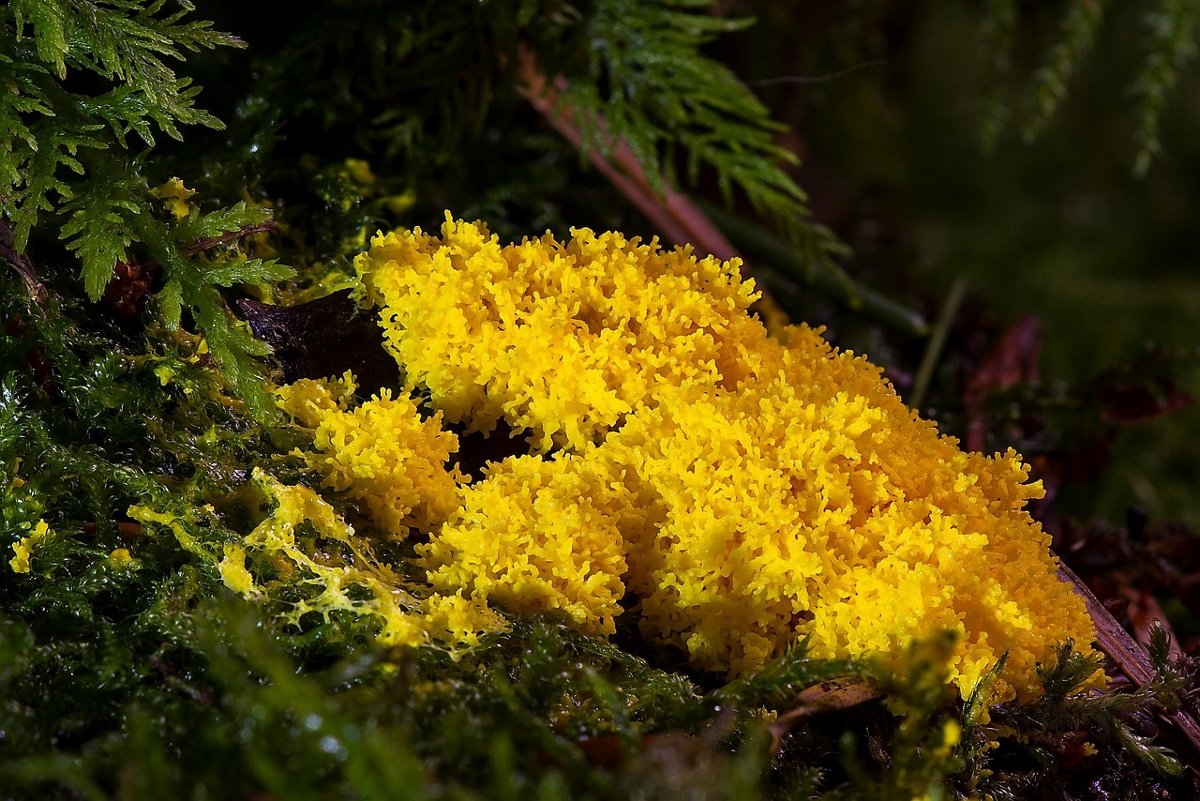
A species that can move freely, has a memory, and can solve complex problems would usually describe a mammal, but this common organism exhibits all of these abilities.
You’ve probably seen it before; while walking through a forest in autumn, you may spot orange patches on tree bark or a root-like yellow growth on a leaf. At first glance, slime mould may just look like an unassuming fungus that you would rather not touch, but this organism is far from ordinary. Older than the dinosaurs, found almost everywhere on Earth, and claimed to be smarter than a ten-year-old?
Slime mould is not a fungus
Despite its name, slime mould is not a fungus like the everyday mould you would find on food. It’s also not a plant or an animal. Instead, it is an amoeboid organism consisting of a single giant cell containing millions of nuclei – the structures that hold genetic information – unlike human cells, which typically contain just one nucleus. The most well-studied of the 900 known species is Physarum polycephalum, which looks like a yellow branching network spreading across rotting wood and prefers dark, damp conditions.
To investigate its unique abilities, biologist Toshiyuki Nakagaki added a slime mould to a maze, placing its favourite food, porridge oats, at either end. The maze had four possible routes from one oat to the other. The slime quickly spread throughout the maze, connecting the two oats. It then began to retreat, leaving behind only the shortest and most efficient route between the oats.
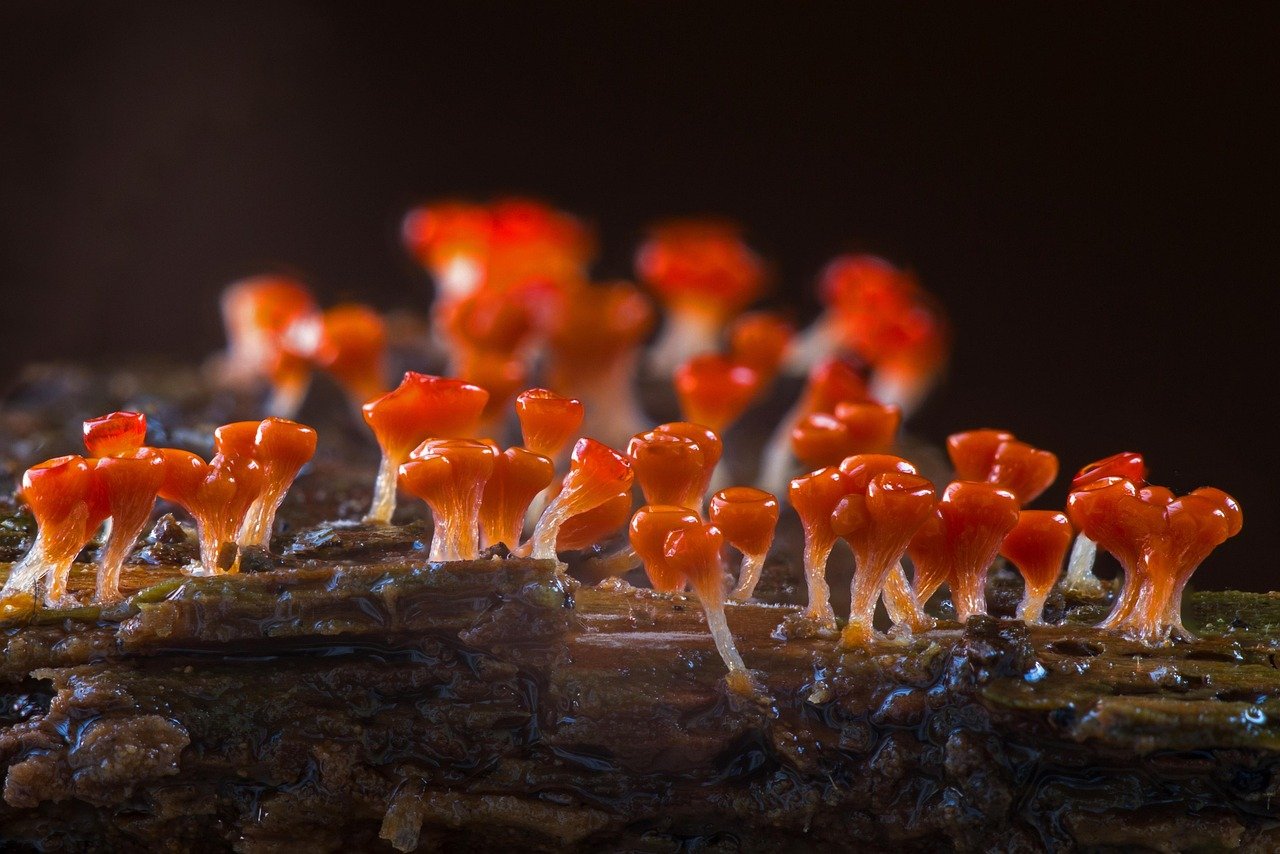
Slime mould can identify the most efficient routes
The experiment was then repeated using a model of the greater Tokyo area, with oat flakes corresponding to the locations of major cities. Bright light was used to simulate obstacles such as mountains and water, which slime mould would avoid because bright light inhibits its growth. Beginning in Tokyo, the slime mould spread out across the modelled cities, refining its pathways between oats.
The resulting slime mould network almost perfectly matched Tokyo’s rail network. What had taken engineers and city planners nearly 100 years took the slime mould just 26 hours.
The point of these tests isn’t just for our own amusement; it is a way of finding the most efficient methods of transporting resources. While the slime mould transports nutrients, humans need to transport energy, information, water and people around large areas.
Determining the most efficient routes while remaining cost-effective and robust is a challenge that slime mould may help us understand.
The slime mould achieves this by first creating an initial network of possible routes and repeatedly strengthening what works best while eliminating inefficient ones.

How do slime moulds move?
But how does a single-celled blob with no legs, no muscles, and no brain move? The slime mould pulses using motor proteins to contract and relax its tubes. The pressure generated causes the mould to expand, allowing the edges to grow across a surface. Tendrils stretch out searching for food, and if it is found, that region expands faster, growing towards the nutrients.
In difficult conditions, when the cell is starving, it can “send out a chemical signal calling for a mass congregation of cells”. Individual cells join together, forming a “slug” that can travel to new areas more easily in search of food.
As exciting as it is to imagine a Hollywood slime monster that is more intelligent than us, slime mould is not capable of higher intelligence, as far as we can tell. Biologically, it simply navigates its environment to maximise growth and food intake, resulting in surprisingly effective problem-solving. The slime mould is entirely focused on creating the most efficient network possible to reach and digest an oat, rather than consciously solving problems in the way humans do.
Even so, humans can learn a lot from this remarkable organism. So next time you walk through a forest and see slime mould on a leaf, pay it some respect—one day it may overthrow society.

CLICK HERE TO DONATE TO OUR CROWDFUNDER
HELP US BECOME STRONGER SO THAT WE CAN CONTINUE TO DELIVER POWERFUL CITIZEN JOURNALISM!






