


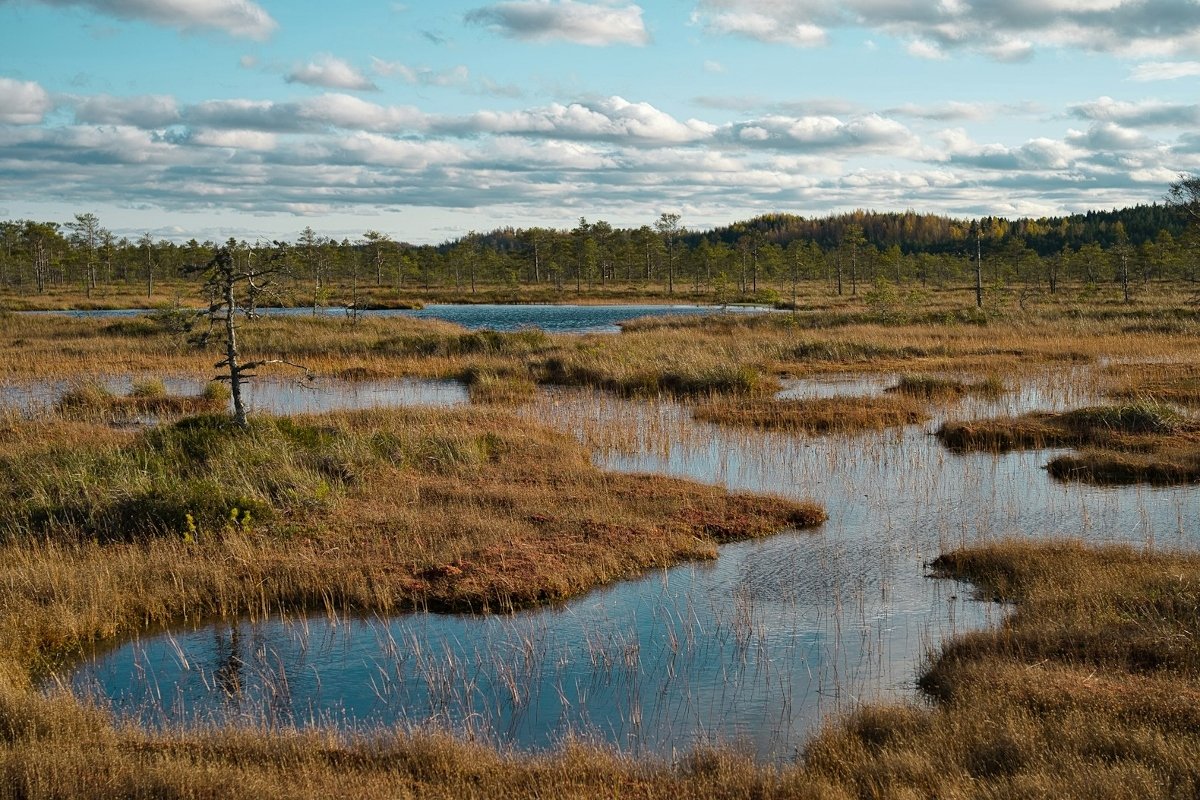
NATO currently faces two urgent challenges: global climate change and the threat of a Russian invasion. It proposes a solution to address both issues by weaponising nature – flooding the eastern Russian border in countries such as Finland, Latvia, and Estonia.
In March 2022, as Russian forces invaded Ukraine, the Ukrainian military flooded farmland occupied by the Russians by destroying their own dam on the Irpin River, forming a swamp that trapped several Russian tanks and vehicles. This earned the Irpin the nickname ‘Hero River’ and the original plans for a housing estate to be built in this area have been cancelled, with it hopefully becoming a protected habitat in the future.
Hydraulic warfare is a war tactic that was first recorded in ancient China when Chinese nationalists intentionally breached levees along the Yellow river to half the advancing Japanese army. It was also used by both sides during WW2 and could see a resurgence in modern warfare.
Scientists from Ukraine, Poland, and Germany are advocating for these examples to be used as inspiration for more planned and tactical control strategies along the Russian border. There were previously large peatlands in these areas, but they have been drained in order to harvest peat and to incentivise agriculture. Up to 50% of peat bogs in the EU have been degraded; these could be reflooded by diverting rivers in order to restore them.
Restoring peat bogs
Restoring peat bogs serves two main benefits: the first, a new line of defence similar to that utilised by Ukraine, which is a hard counter to heavy terrestrial invasions. These waterlogged areas are often not visible until it is too late and so could cause major issues for invading Russian forces. Flooded land serves as a funnel for vehicles as they would only be able to pass through a few routes which can be tactically defended.
The peatlands bear 75% less load than dry land, making them impassable to tanks, causing them to sink. This was displayed as recently as 2025 in a tragedy where a NATO deterrence operation went wrong, causing a M88 Hercules armoured recovery vehicle to become submerged in a deep peat bog during training, killing four US personnel, showing just how dangerous these can be.
The second is the large environmental benefit of peatbogs: peat is a special type of mud formed when plants die and break down. The bog’s flooded state means that organic matter takes a long time to decompose, forming a nutrient-rich and biodiverse area. It acts as a carbon store, absorbing and trapping CO2, therefore reducing the greenhouse gases in the atmosphere, which cause global climate change.
It is estimated that 31 million tonnes of CO2 have been released from the destruction of peat bogs since 1990. It would require 1.4 billion trees uptaking CO2 for a year to offset this.
Although in theory this plan works, in practice there are some flaws. To finance this will be very difficult, as the farmers whose land this belongs to will need to be paid off. However, it could be funded through verified CO2 offset credits that companies could use to offset their own CO2 output.
Another issue is the fact that this peat bog will most likely freeze over during the winter, so if Russians were to invade, then they would have free passage as the frozen ground would support their vehicles. The peat bog could also act as a risk to our own forces, and critics argue that funds could be better invested in a more reliable defence.
Environmental Modification Convention (ENMOD)
The Environmental Modification Convention (ENMOD) is an international treaty signed in 1977 that prohibits the military or other hostile use of environmental modification techniques that have a severe or long-lasting effect. ENMOD covers methods such as weather warfare and herbicide warfare used in the Vietnam War and was first put in place after the US renounced the use of climate modification techniques for hostile purposes. This could create issues for the flooding plan which may fall under the ENMOD treaty’s prohibitions but it could be claimed that it is an environmental project, so there is a grey area.
In recent times we have also seen that less and less conflict is actually carried out on the ground, with recent events in the Middle East displaying the use of mostly air strikes and cyber attacks being used in place of tanks and soldiers.
Although NATO has not actually announced anything officially so far, national incentives are taking place in these Eastern European countries to solidify their borders. This is the sort of simultaneous innovation for climate and peace that we desperately need.

CLICK HERE TO DONATE TO OUR CROWDFUNDER
HELP US BECOME STRONGER SO THAT WE CAN CONTINUE TO DELIVER POWERFUL CITIZEN JOURNALISM!







