


Every time we have a dry summer, a hosepipe ban or another story about homes losing their water supply, the same perfectly reasonable question appears: why don’t the water companies simply build another reservoir?
I have asked it myself. We live in Britain, a country hardly famous for its lack of rain. We continue to build houses across the South East, our population is growing, and we have known for years that climate change is likely to place greater pressure on water supplies. Surely the answer is obvious: find some land, dig a very large hole and store more water.
The more I looked into it, however, the less simple the answer became. What initially looked like a story about a water company failing to build enough reservoirs became something much larger: a story about infrastructure, housing, environmental protection, regulation, private finance and our extraordinary ability to make all of them move at different speeds.
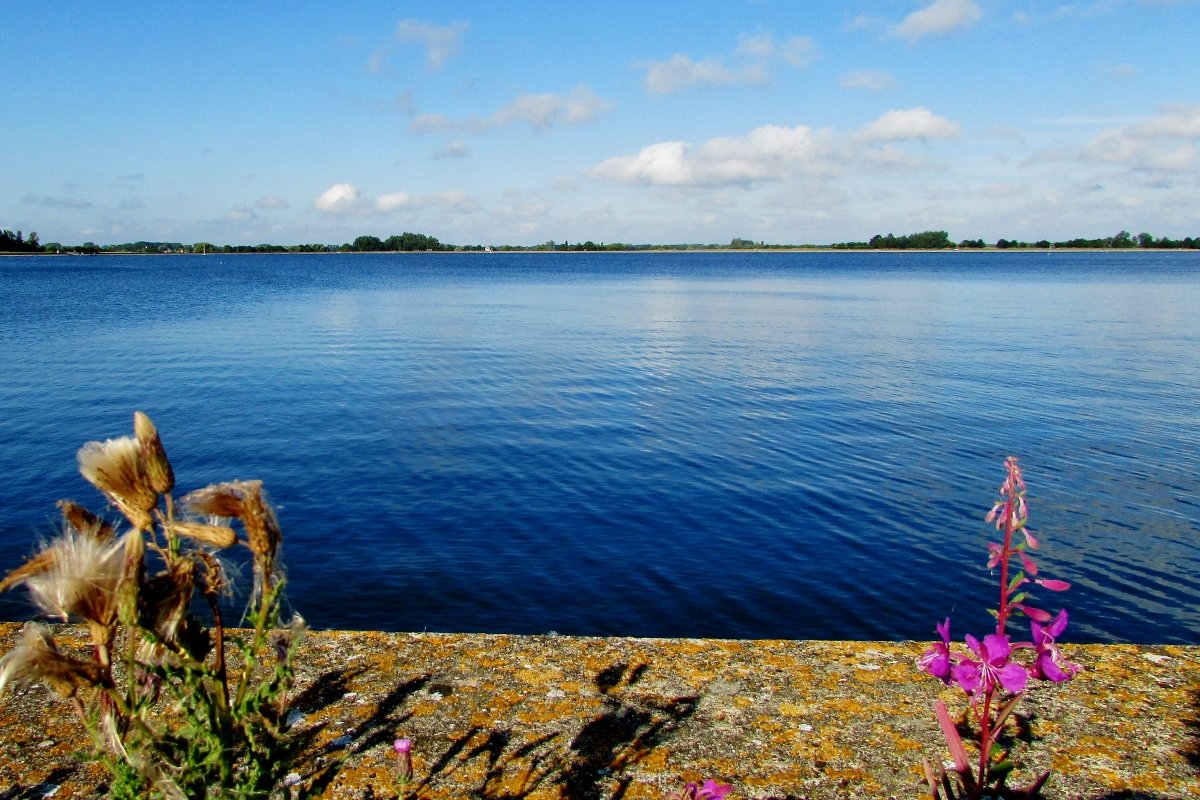
Broad Oak reservoir, near Canterbury
Broad Oak reservoir, planned north of Canterbury, is a good place to start. South East Water has owned land there since the 1970s and the idea of additional water storage in the area goes back even further. Today the project is moving through its design stages, with a planning application expected in 2028 and the company currently aiming to deliver water from the reservoir from 2035.
That alone should make us stop and think.
We are talking about infrastructure whose need has been recognised in one form or another for generations, yet which may still be almost another decade away from supplying its first glass of drinking water.
When completed, Broad Oak could store around 5.1 billion litres and provide up to 22 million litres of water a day. That sounds enormous until it is placed alongside the existing system.
South East Water supplies around 543 million litres every day to 2.3 million customers across Kent, Sussex, Surrey, Hampshire and Berkshire. Broad Oak is therefore important, but its maximum daily contribution would amount to only around four per cent of what the company currently supplies.
A reservoir is not simply an enormous rain barrel
Broad Oak will take water from the Great Stour and Little Stour when river conditions allow, store it and eventually send it through treatment before it reaches our taps. That requires pipelines, pumping, treatment works, suitable land, environmental assessments and planning permission. During prolonged dry weather the rivers and groundwater that might replenish our supplies are themselves under pressure.
There is, however, another number that deserves to sit alongside Broad Oak’s proposed 22 million litres a day. South East Water’s latest reported three-year average leakage is around 102 million litres a day.
That comparison has to be made fairly. It would be misleading to suggest that every leaking litre could simply be recovered. No water network operates without leakage, and finding and repairing faults across thousands of miles of pipes is considerably more difficult than the headline figure suggests. South East Water says it is investing heavily in reducing leakage and intends eventually to halve it.
Nevertheless, losing that amount of treated water while asking customers to conserve supplies understandably damages public confidence.
Failures found by the regulator
And there have been genuine company failures. In July 2026, Ofwat concluded an investigation into South East Water and found that it had failed in its statutory duty to maintain an efficient and economical system of water supply. A £30.5 million redress package is to be funded by the company and its shareholders rather than customers. That is not political rhetoric or public frustration; it is a finding by the regulator.
So this cannot become an article that simply defends a water company. Where failures have occurred, responsibility should follow.
But neither does blaming the water company for everything give us an honest explanation of what has happened.
Water companies exist inside a much larger system
Government establishes housing and environmental policy. Local authorities plan development. Ofwat regulates investment and customer charges. The Environment Agency determines how much water can safely be taken from rivers and groundwater. Developers build houses. Water companies then have the responsibility of supplying those homes.
Each decision can make sense when looked at from its own desk. The difficulty appears when all those decisions meet in the same landscape.
A council may be required to provide thousands of new homes. Those homes may be perfectly justified, but every person moving into them needs water from the first morning they turn on the tap. At the same time, environmental pressures may mean less water can safely be taken from rivers and aquifers. Meanwhile a reservoir intended to provide additional supply can take decades to plan, approve and construct.
That is cause and effect in the real world.
The latest national modelling makes the scale of the challenge clearer. The Government and Environment Agency estimate that by 2055 the South East could require more than two billion additional litres of public water supply each day under the most demanding scenario.
Population growth and climate change are part of that pressure, but so is the need to reduce the amount of water we take from the natural environment.
That last point is important.
We do not simply need to find more water because more people want to use it. In some places we also need to take less from rivers, wetlands and aquifers if those ecosystems are to remain healthy.
There will be no single answer
We will need reservoirs, transfers between regions, lower leakage, smarter metering, reduced consumption and potentially greater use of recycled water and desalination. South East Water itself is planning £1.9 billion of investment between 2025 and 2030 as part of that response.
But the figure raises another question: why has so much investment become urgent now?
For decades we have expanded towns, built houses and increased demand while much of the infrastructure beneath our feet has grown older. At the same time, we have asked water companies to reduce environmentally damaging abstraction, keep supplies reliable and prepare for weather patterns that are becoming less predictable.
Something eventually has to give.
This is where I think the argument becomes more interesting than simply deciding whether the water company is good or bad. There have been failures at South East Water and they should not be excused. Leakage must fall, resilience must improve and customers have every right to expect better from a monopoly providing something as fundamental as drinking water.
But responsibility does not stop at the company gates.
Water has to be part of the decision
If government wants hundreds of thousands of new homes, water has to be part of that decision. If councils allocate land for major developments, the infrastructure needed to support those communities must be considered alongside them. If environmental limits mean we must take less water from rivers, alternative supplies have to be ready before those reductions create another problem. And if major reservoirs take decades to deliver, our planning horizon needs to extend beyond the next election, regulatory period or drought.
Perhaps that is what Broad Oak really teaches us.
When somebody asks, “Why can’t they just build another reservoir?”, my answer now would be that in some places they should, and they are.
But digging the hole is the easy part of the argument.
The harder task is creating a system in which housing, water, environmental protection, regulation and long-term investment are planned together rather than waiting for one of them to fail before everybody else responds.
Broad Oak may eventually hold more than five billion litres of water. By the time it fills, the more important question is whether we will finally have learned to think further ahead than the next drought.

CLICK HERE TO DONATE TO OUR CROWDFUNDER
HELP US BECOME STRONGER SO THAT WE CAN CONTINUE TO DELIVER POWERFUL CITIZEN JOURNALISM!







