


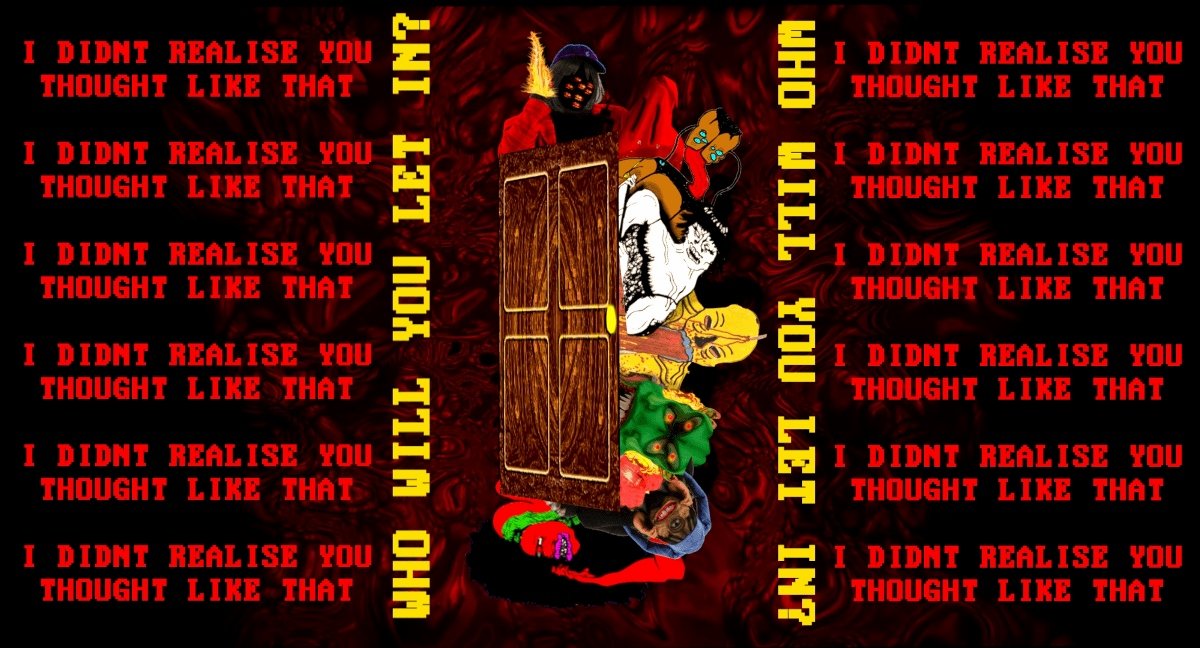
“What we’re really doing is trying to get people to talk again,” Danielle Brathwaite‑Shirley tells me. But this isn’t a quiet plea for awkward small talk or the frictionless chatter of social media feeds. It’s about messy, uncomfortable, consequential conversations. The exchanges that leave you questioning your own assumptions rather than finding comfort in them.
Their new online game, I DIDN’T REALISE YOU THOUGHT LIKE THAT, is the latest iteration of that mission. Emerging from an installation at London’s Serpentine, the project takes the familiar mechanics of games, things like choice, consequence, and replay, then exploits them to probe one of the most volatile subjects in contemporary politics: borders and who we choose to see as peers.
“I always say I’m in the business of emotions,” Brathwaite‑Shirley quietly adds. “The audience is my main medium.” Facts matter, and there’s a frankness about their ambition to provoke rather than inform. “I’m not a journalist. I’m trying to make you feel something – and trying to make you reflect on yourself.”
The door as a border
That original installation at the Serpentine confronted visitors with a physical door labelled “the border,” and required decisions around who should be allowed through it. “It was designed so that you would turn to a stranger and have a conversation. We’d spoken to psychologists about how best to do that.”
But an installation has limits. Gallery time is fragmented; visitors are pulled away to the next thing. The question became how people could stay in that moral and emotional space for longer.
“What we found out was that a lot of people wanted to spend more time with this. So, the idea of making a game version, a stand-alone version with the entire experience is the result of that”.
In its online form, the door becomes a digital border; one side a stand‑in for the nation, a neighbourhood, any private space we believe we control. One character asking to be let in needs the toilet. Another might be seeking refuge. Or might not. The player’s task is to decide who gets in, who stays out – and to live with the results.
“You kind of feel like you are in charge of something and you are responsible for what you’re seeing, and that feeling should creep in somewhere.”
The “good” person
The first time I played the game, I found myself paralysed by a need to do the right thing. Hesitation accompanied each new character. Was I being generous? Was it all performative?
Brathwaite‑Shirley isn’t surprised by the reaction. “Often what we discover when people play these games is that the first playthrough is more genuine and a second is more curious, trying to break the system.”
The first pass is about protecting the self‑image; the second indulges impulses we’d usually deny. “That’s very tied to an interactive experience, and not normally to something like a painting,” they note. A traditional artwork might prompt thoughts; a game can tempt you into acts.
Lukewarm facts and the politics of feeling
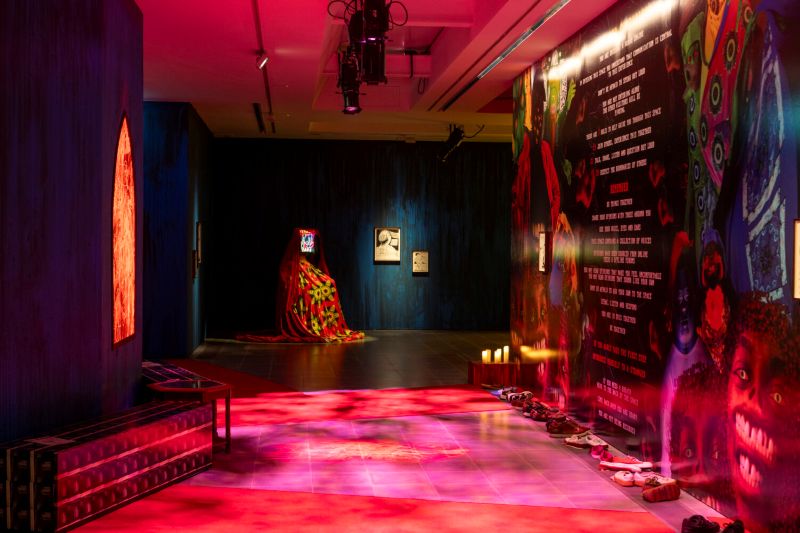
Though the game deals with borders and narratives around who deserves care, it doesn’t lecture. Brathwaite‑Shirley is wary of what they call “lukewarm facts”: the endless trading of selective data points that fail to build consensus.
“We didn’t want an antagonistic element to creep in and limit self‑questioning. It’s not really about being right. It’s just about reflecting.”
Instead, the game leans into fantasy, horror, and humour to provoke a personal reaction. Politics has increasingly become a sales pitch. Instead, this game strips out branding or rhetoric and returns to something more disarming… a story you inhabit, rather than one you consume.
Home, safety and the stories we tell ourselves
The door, in both the installation and game, forces a discussion on what “home” actually means. They point out that many of today’s debates about immigration are rarely honest about deeper anxieties. Talk of “protecting our homes” is easily weaponised, becoming a proxy for broader hostilities. “Often it’s easier to say something that people around you are going to agree with, than really tear yourself apart thinking about things on a case‑by‑case basis.”
Anyone searching for the perfect answer will be disappointed, but the willing might discover how their own decision-making is structured.
From gallery to community centre to VR chat
Brathwaite‑Shirley’s interest in communal spaces runs back to childhood. There were community centres where you might not like everyone, but you’d soon notice an absence.
“The removal of spaces where we can meet physically with no payment needed, or no goal beyond just being there, has really affected our way of being,” they say. “Even an online space with voice chat is better than a text chat. Something like VR Chat has a lot more community care than a forum, because you can hear my actual voice.”
It’s telling that in their live work, the audience often becomes part of the performance. In a series of interactive plays, participants were the characters, reshaping the narrative. “Your decisions can ruin the experience or make it even better,” they say, almost with delight. “It has been very stale in the art world. People would come, consume something, and leave. Everyone in the gallery would mean nothing. It’s nice that, in an interactive practice, one choice changes it for everyone.”
If the internet has become a place where we outsource experience to influencers and talking heads, perhaps the style of interactive art is trying to build spaces, both digital and physical, where responsibility can’t be so easily offloaded.

CLICK HERE TO DONATE TO OUR CROWDFUNDER
HELP US BECOME STRONGER SO THAT WE CAN CONTINUE TO DELIVER POWERFUL CITIZEN JOURNALISM!






