


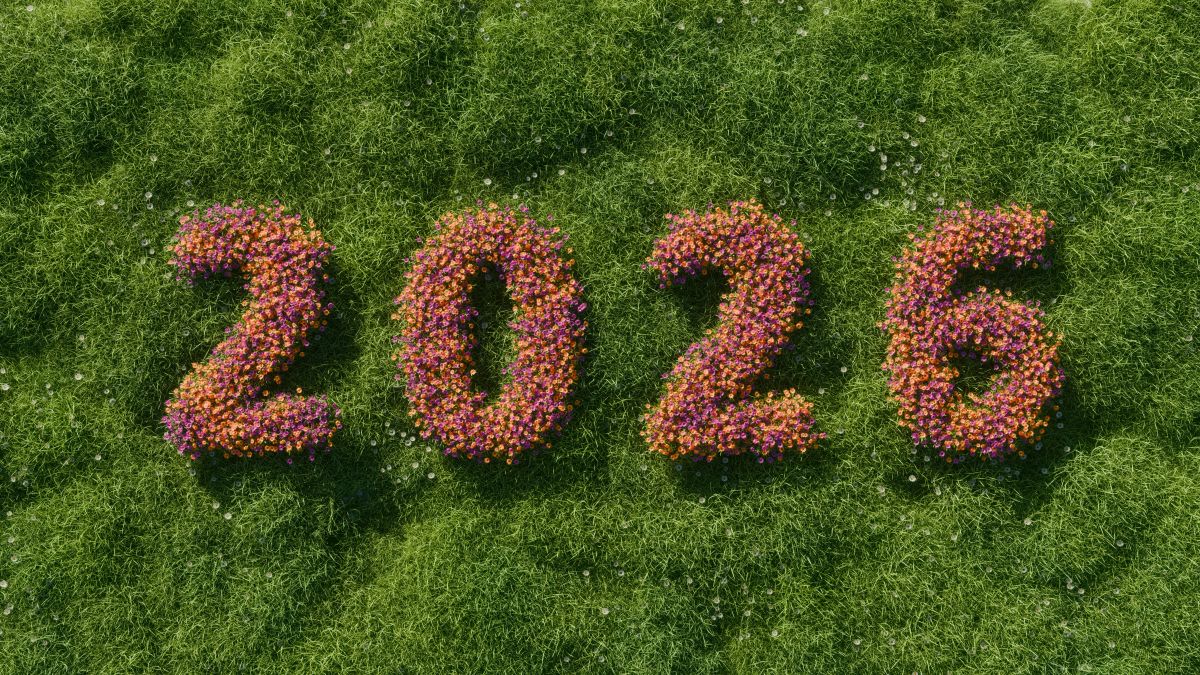
Every January, we do the same thing. We declare that this is the year everything changes. We join gyms, overhaul diets, delete apps, buy notebooks with dangerous levels of optimism and tell ourselves that, this time, we really mean it.
By mid-January, enthusiasm is wobbling. By February, many of those resolutions are quietly retired, usually with a vague sense of personal failure. We blame our lack of discipline, motivation or willpower.
But the problem isn’t character. It’s timing.
In many nature-based belief systems, the new year doesn’t begin on 1 January at all. It begins at the end of October, with a long, slow period of reflection, release, imagining and internal preparation before any real outward action begins. Interestingly, modern neuroscience and behavioural psychology suggest this rhythm may be far closer to how the human body and brain actually change.
The modern new year is a mental trick
January 1 is not a biological reset – it’s a social agreement. Behavioural scientists call dates like this “temporal landmarks” and they do give us a short-term motivational lift, known as the fresh start effect. It feels powerful. It feels clean. It feels decisive.
Unfortunately, it is mostly cognitive.
Motivation rises in the thinking part of the brain – the prefrontal cortex – which is responsible for planning, decision-making and self-control. This creates that familiar surge of clarity: Right. I’m done with the old me.
But habits don’t live there.
Habits live in the body
Most habitual behaviour is controlled by deeper brain structures such as the basal ganglia, alongside hormonal systems, reward chemistry and metabolic processes. These systems are not persuaded by motivational speeches or wall planners.
They respond to:
- Repetition
- Familiar rewards
- Chemical balance
- Perceived safety
In other words, the body doesn’t change because you’ve decided to. It changes because its chemistry has gradually adapted.
When you suddenly stop old behaviours – comfort eating, scrolling late at night, drinking, inactivity – the body still expects the same chemical rewards. Dopamine levels drop. Stress hormones rise. Hunger and fatigue signals become unreliable. Cravings increase.
This isn’t weakness. It’s biology saying ‘something is wrong, restore the familiar’.

Why two weeks is the danger zone
Many people report that resolutions collapse around the two-week mark. There’s a reason for that.
Initially, motivation can overpower discomfort. But willpower is a limited resource. It depends on sleep, blood sugar regulation, emotional resilience and stress levels. As effort continues, control shifts away from conscious decision-making and back to automatic systems – the ones running old habits.
By this point:
- The mind has moved on
- The body hasn’t caught up
- The chemistry is still living in last year
When people relapse, it often feels sudden and inexplicable. In reality, it’s the predictable moment when the body reasserts itself.
Nature-based rhythms and the art of not rushing
Nature-based traditions approach change very differently. The new cycle begins with reflection: looking back over what worked, what didn’t and what no longer serves. This isn’t indulgent navel-gazing; it mirrors what psychologists call memory reconsolidation – the process by which experiences are reviewed and updated before being stored again.
Then comes release. Letting go weakens old neural associations. Without constant reinforcement, unused pathways begin to fade. This takes time.
Winter is not for action. It is for imagination.
During this period, people are encouraged to visualise what they want to grow in the coming cycle. Neuroscience shows that mental rehearsal activates many of the same neural circuits as physical action. Athletes use it. Musicians use it. Stroke patients use it.
Imagination isn’t wishful thinking. It’s rehearsal without strain.
Teaching the body before demanding performance
By repeatedly imagining future behaviours and identities, the brain begins adjusting expectations. Dopamine pathways start to recalibrate. Emotional resistance reduces. The nervous system perceives less threat.
Crucially, nothing is being forced.
So when physical action begins later – traditionally around late winter or early spring – the body is not being dragged into change; it recognises it. The chemistry is closer to agreement.
Compare this with January resolutions, which demand immediate performance from systems that are still calibrated for last year’s coping mechanisms. It’s a bit like asking someone to sprint the moment they wake up, then being surprised when they pull something.
This isn’t about being “spiritual”
You don’t need to believe in anything mystical to see the logic here. The success of nature-based rhythms isn’t about belief – it’s about respecting biological pacing.
Modern culture prioritises speed, output and visible effort. We admire dramatic transformations and overnight success stories. But the nervous system prefers gradual change. It likes familiarity. It adapts slowly.
Nature understood this long before neuroscience caught up.
Reframing failure
When resolutions fail, we tend to personalise it. I didn’t try hard enough. I gave up. I lack discipline.
A more accurate explanation is that the body was never given time to agree.
Sustainable change requires:
- Reflection before decision
- Imagination before effort
- Repetition before identity
- Patience before results
This isn’t glamorous. It doesn’t sell many planners. But it works.
So perhaps the question isn’t why New Year’s resolutions fail, but why we keep demanding springtime behaviour from a system that is still in winter.
Nature doesn’t rush. The body doesn’t reset on command. And change, real change, happens in seasons – not on dates printed on calendars. If we worked with that rhythm instead of against it, January might stop feeling like a personal test of character and start feeling like what it really is: a quiet midpoint in a much longer process of becoming.

CLICK HERE TO DONATE TO OUR CROWDFUNDER
HELP US BECOME STRONGER SO THAT WE CAN CONTINUE TO DELIVER POWERFUL CITIZEN JOURNALISM!






