


When President Macron introduced lockdown in March, with barely 48 hours’ notice, the spring sun was hot, the boulevards of Paris overflowing. Many may have expected discord, the return of rioting gilets jaunes. But it was just a weekend of disobedience. And in the days and weeks that followed the message got across.
In France, the president and his government have the power to pass laws, as decrees, very quickly. And that is what they did. Park gates were locked, restaurants and cafes which hadn’t already closed were made to turn off their ovens. The police and gendarmerie stood by to enforce rules with on-the-spot fines. Clear and concise messages on television, radio and social media told people what they could and could not do – and why. People understood and complied.
From our perspective in France, the UK approach appeared radically different. Johnson’s ‘rules’ were more recommendation than regulation. And communication lacked French clarity.
From home, in Brighton and Hove, we have heard about crowded beaches, councils begging in vain for tourists to stay away. We’ve learnt of people refusing to wear masks, laughing at social distancing.
I’m sure some of the larger cities in France have had their share of mockers. But here in our small medieval town all has been calm and compliant. Our supermarkets were open, as were our pharmacies. Everything else was closed. The streets were deserted. Anyone you saw was wearing a mask. And so it remained through what was a very warm and sunny April and May into June and July.
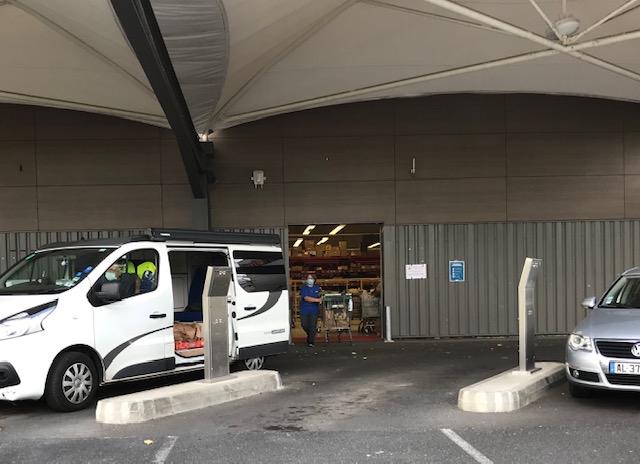
Photo credit: Jill Stevens
We had left Sussex on 20 March to be with my 94-year-old mother who lives in Loches. We heard that in France testing for health and care workers was a priority. An EU sharing scheme meant that protective clothing and specialist intensive care equipment was being shipped to hospitals across the country. Pharmacies were receiving large deliveries of official masks.
We heard that hospitals had quickly reorganised to prioritise Covid-19 cases. Infected patients from this area were being treated in nearby Tours; our local hospital was continuing to treat non virus-related illnesses. In comparison, Britain appeared to be in stasis, despite frightening news of the virus’s spread.
Our ferry crossing from Portsmouth to Caen was cancelled 48 hours before we were due to depart, so we turned to the Channel Tunnel. At a deserted terminal at Folkestone we booked in automatically without leaving the car. We were prepared for what would happen next, having visited the French government website to print the ‘attestation’ form everybody travelling in France now had to carry. Among the few valid reasons it gave for being outside your home was visiting vulnerable family members. I had typed out in French a paragraph explaining my mother’s frailty. The French Immigration official pursed his lips, seemed to be thinking quite hard, tapped his desk, read it again and then said: “OK, you can go through.”
So we joined the train, along with four other cars; a further five or so were turned back. Leaving the train at Calais we drove along roads deserted except for food delivery lorries to arrive in a ghost town.
We settled into an isolated routine: if you had a valid reason to go out on foot (exercising the dog was allowed) you could only walk within one kilometre of your home; social distancing was two metres but we rarely met anyone; and like everyone else in France we collected our free, reusable, washable masks from the pharmacy.
We felt safe and organised. While British supermarkets had weeks-long delivery times, here we had same day service: no deliveries, instead a drive to the supermarket’s warehouse, where online orders could be collected in specially constructed bays. Someone wearing mask and visor put your order in your boot. No contact. Disinfecting packages before use, or leaving shopping for two days untouched, was advised.

Photo credit: Jill Stevens
Five months on, we’re still shopping this way. But restrictions have been relaxed. We can drive more than 100km from home. We no longer have to carry papers listing our names, personal details and reason for travelling. Last month restaurants reopened, then other shops. Our town is near the Loire – we have a chateau and a typical French market – and last month tourists began to trickle in.
But this month Covid spikes are appearing across Europe. Reaction here has been swift. Masks are again obligatory in all public places and everyone everywhere is wearing them. Travel restrictions are again likely.
In our rural corner, the mood is downbeat but not despairing. Our French neighbours have added dismay at the UK’s high Covid death rate to their incredulity at Britain leaving the EU.
We are resigned to remaining here, but with the 31 December Brexit deadline looming, we recognise that the time we can stay close to my mother will be limited. We’ve been so lucky to be able to come here, away from the crowds and what from over here looks like shambolic governance in the UK.
As someone ‘at risk’ I know that if I become infected here I will be taken to a French hospital with enough respirators and where all staff have enough PPE. When I come home to Sussex, I wonder if I’ll feel that safe.





