Can a brutal system designed to profit the few and outcast the many be rocked to its core by mass acts of self and ‘other’ kindness? The suggestion is that in the radical practice of self-acceptance we find the motivational power to create the friendly and inclusive communities we need to survive.
Back in the old year, 2025, an angry voice of hatred for racism shouted at us over a megaphone as we crowded outside a refugee hostel. I thought, ‘How will the people inside tell the difference between us and the angry, refugee haters who were here earlier?’ Maybe they couldn’t because we reacted with unkindness, fear, anger, blaming and shaming.
Reach out to survive
But evolutionary anthropologists Vanessa Woods and Brian Hare tell us that we humans won out over other hominids due to natural selection of the most co-operative and tolerant. They call this ‘The survival of the friendliest’ and their research shows that the fittest to survive are not after all the strongest and most aggressive but rather those who reach out to others. It would seem we are hard wired, as historian and Reith lecturer, Rutger Bregman would have it, to be kind. So, why aren’t we universally kind? Don’t we want to survive?
Self-destructive defences
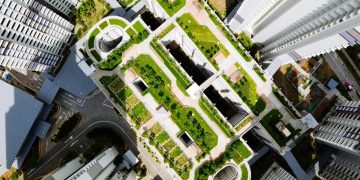
We are not, each one of us, a unified coherent self. We are made up of parts – those we accept and approve of and those characterised by fear, pain, shame and blame which we tend to disown. In our inner worlds we build defences to protect ourselves from those characteristics, exiling them beyond our ‘walls’, just as we build ever higher borders, barriers, and gates against vulnerable ‘outsiders’ in the real world.
How else do we account, psychologically, for the virulent and irrational hatred and fear of migrants, refugees and asylum seekers? It makes no sense because it does not stem from the reasonable left sided brain. It isn’t susceptible to truth nor to kindness. It is a self-destructive reaction. If we are looking for proof of this, witness the continually failing solutions to small boat channel crossings. The rational response is to provide safe routes. The fearful reaction is to demonise, criminalise, dehumanise, sink the boats and let them drown.
Self-acceptance
I don’t think it is overstating it to suggest that unless we can evolve into beings of more complete self-acceptance, we don’t have the necessary motivation to make the alliances we need to survive. Let’s remember it is a case of the survival of the friendliest. While we each contain our own unloved ‘other,’ it is always going to be hard not to mirror this in the political and social world. If we are each gated inside – our deepest fears, vulnerabilities and longings locked away, aren’t we going to continue to recreate a divided world of ‘us and ‘other’?
Compassionate witness
Without a revolution in consciousness the self-serving elites will continue to exploit our fears to divide and rule us – and what’s more, do it with our implicit co-operation.
This consciousness raising is a lifetime practice. But how do we do it and what is the practice? Whether we take our guidance from spiritual movements or from therapeutic and healing communities, the practice is the same: compassionate witness. We train ourselves to notice when we are reacting to ourselves and others with unkindness, fear, anger, blaming and shaming.
We learn that we are made up of moving parts. We accept that defences against painful parts have served us at different times in our life and we learn to recognise when they are no longer serving us but isolating us, and building walls instead of connections which could ultimately threaten our survival.
Movements for change
This practice of compassionate, mindful witness is at the heart of a growing movement for change and healing. This movement, a river into which many streams flow, is having a direct impact on the way we make our campaigns and communities. Instead of opposition politics, we are looking beyond the fear and defence, the anger and hatred, to make alliances based on understanding and tolerance of difference.
Worldwide personal growth, spiritual, art, music and activist movements are uniting personal and political action. The engaged Buddhism of Thich Nhat Hahn, the ‘Artivism’ of Celine Ali and Vasyl Tkashenko, the ‘Work That Reconnects’ network of climate activists are just a few of many examples.
‘Be the change you want to see,’ may be a well-worn phrase, but like a much-loved dress, when we put it on it makes us smile.
The ‘Freedom Drummers’ opened a recent ‘Stand Up To Racism’ rally in Hastings. How the mood shifts, how we move to the rhythm and lift our spirits. How we smile – and how different an invitation we make – “Come and join us” instead of “Stay away, we’re angry and shouting”.
The Hastings based Refugee Buddy Project cooks and eats together, makes collective art and music, stretches out the hand of friendship. Participating in inclusive community like this breaks down barriers, opens gates. We belong, both to each other and to ourselves.
A spirit of hope
So maybe a brutal system designed to profit the few and outcast the many can be rocked to its core by mass acts of self and ‘other’ kindness? It clearly seems to be happening, down here at the grassroots, a stirring of consciousness, a gathering of kindnesses. There is a move afoot, a new spirit of hope, no longer naïve but strategic. Solidarity is not only symbolic but practical. And it is practice, personal and political. It is movement.
And we can all join in.
CLICK HERE TO DONATE TO OUR CROWDFUNDER
HELP US BECOME STRONGER SO THAT WE CAN CONTINUE TO DELIVER POWERFUL CITIZEN JOURNALISM!