



I was first invited to join my school’s Model United Nations (MUN) team in October 2023.
I was initially reluctant to accept the offer: at 17 years old, I already felt somewhat experienced in student debating and public speaking. I knew that those were integral elements of MUN and didn’t feel that I needed another opportunity to hone skills already developed. I rejected the offer.
If the teacher in charge of MUN at my school had accepted my rejection, this story would’ve ended right here. Thankfully, he asked me to reconsider. I did and concluded that there was no real downside to giving it the benefit of the doubt. So, I changed my mind and accepted the invitation.
Little did I know then that what lay ahead of me was almost two years of unforgettable memories and valuable lessons. In this article, I share some of those lessons with other young people out there, because I believe we all stand to benefit from absorbing these lessons, whether participants in MUN or not.
Model United Nations
MUN is an activity that aims to simulate the proceedings of the real-life United Nations for educational purposes. An MUN participant takes on the role of “delegate”, with the responsibility of representing a real-world country, in the same way a real UN delegate represents a country. MUN delegates conduct research on the varying problems faced today, create resolutions (in the style of real UN resolutions) aiming to tackle these problems, and write speeches to defend their own resolutions (or criticise other ones they oppose).
Every so often, MUN delegates gather at “conferences”, usually held here in the UK by schools that run MUN as an activity. These conferences mimic actual gatherings of UN committees and the General Assembly, and see MUN delegates come together to debate, discuss, amend, approve or reject resolutions. The overall aim is to help young participants develop important thinking, leadership and communication skills.
Below, I summarise how I acquired these skills and learnt precious lessons in my MUN journey.
Communication, bravery and self-confidence
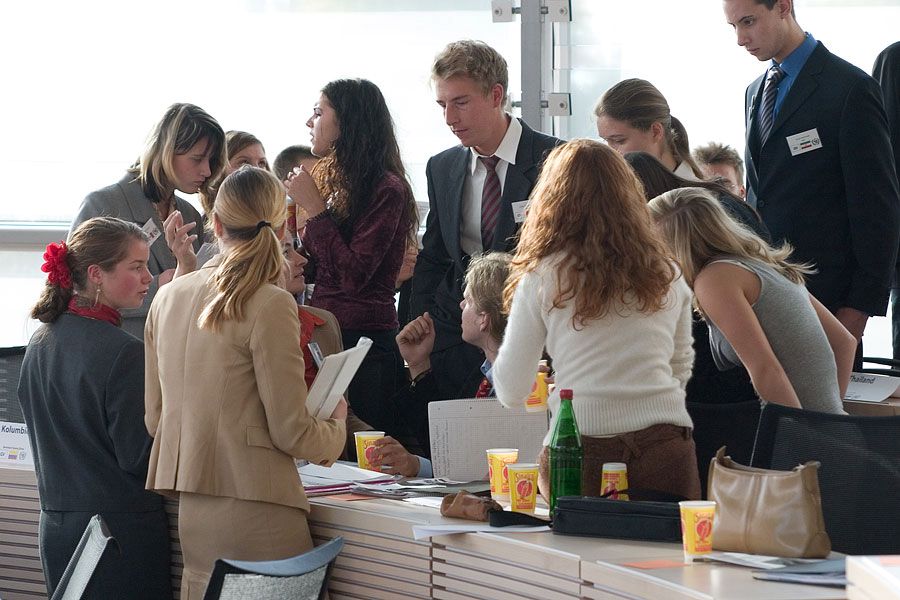
Primarily, I learnt through MUN that a good communicator must be brave. Because good communication requires an understanding of the recipient’s perspective, which may often differ from your own, you must be prepared to step out of your comfort zone and engage with opposing or differing viewpoints. At MUN conferences I often had to negotiate with other delegates who represented countries whose interests collided with those of the country I represented.
Though I didn’t succeed in getting my way every time, when I did broker satisfactory compromises, it was always because I managed to identify areas of agreement between my perspective and those of my opponents.
This doesn’t mean, however, that you should always yield when there’s a difference in opinion. Having the self-confidence to hold firm and not concede indispensable ground is a crucial skill too. Often those in charge seem to treat their supposed convictions as obstacles to their own advancement, and too-readily sweep them by the wayside. Our generation must break from that pernicious trend, and what we need in order to do so is good discernment to judge when to yield, and when to not.
A different, thoughtful style of leadership
After four months as an MUN team member I had distinguished myself as a competent debater and writer and was invited, along with a close friend, to be a student co-leader of the team. Though I always considered myself more suitable to be a “workhorse” in a team, rather than a leader, I accepted the invitation, seeing this new position as my next personal challenge.
As a student co-leader I discovered that I was much more capable of providing leadership than I’d previously thought. Traditional ideas of leadership place a heavy emphasis on being commandeering, adopting a top-down managerial approach, coming across as authoritative – perhaps even a little authoritarian. This leadership style never resonated with me, and I demonstrated little potential for it.
What I did find myself excelling at, however, was a different, more thoughtful kind of leadership, anchored on bottom-up collaborating, rather than top-down commanding. I envisioned myself as “first among equals” in the truest sense.
Throughout my time as student co-leader, I made sure to approach every member of the team with friendliness and empathy. When helping them complete tasks such as drafting a resolution or preparing a speech, I empathised with their position to give them advice that was achievable for somebody of their skill level, without being patronising or condescending. I’d end conversations by offering to help them in the future if they ever needed it.
Despite always considering myself a bit stiff and wooden personality-wise, by the end of my tenure, through my kind, approachable leadership style, I had won the genuine admiration of everyone on the team and received thanks when my replacement was announced.
When I started taking part in MUN, I didn’t consider myself a particularly charismatic speaker or someone suitable for a leadership role, because I was shackled by my own expectation that I had to mimic the voices and approaches of others I respected. Doing MUN made me a capable speaker and leader who helped bring my school’s team to heights like the prestigious Hague International Model United Nations (THIMUN) conference, and an annual national session of European Youth Parliament UK (EYPUK).
It couldn’t be more accurate, then, for me to suggest that MUN was how I found my voice, and I will forever be grateful to have been able to take part in it.

CLICK HERE TO DONATE TO OUR CROWDFUNDER
HELP US BECOME STRONGER SO THAT WE CAN CONTINUE TO DELIVER POWERFUL CITIZEN JOURNALISM!



