


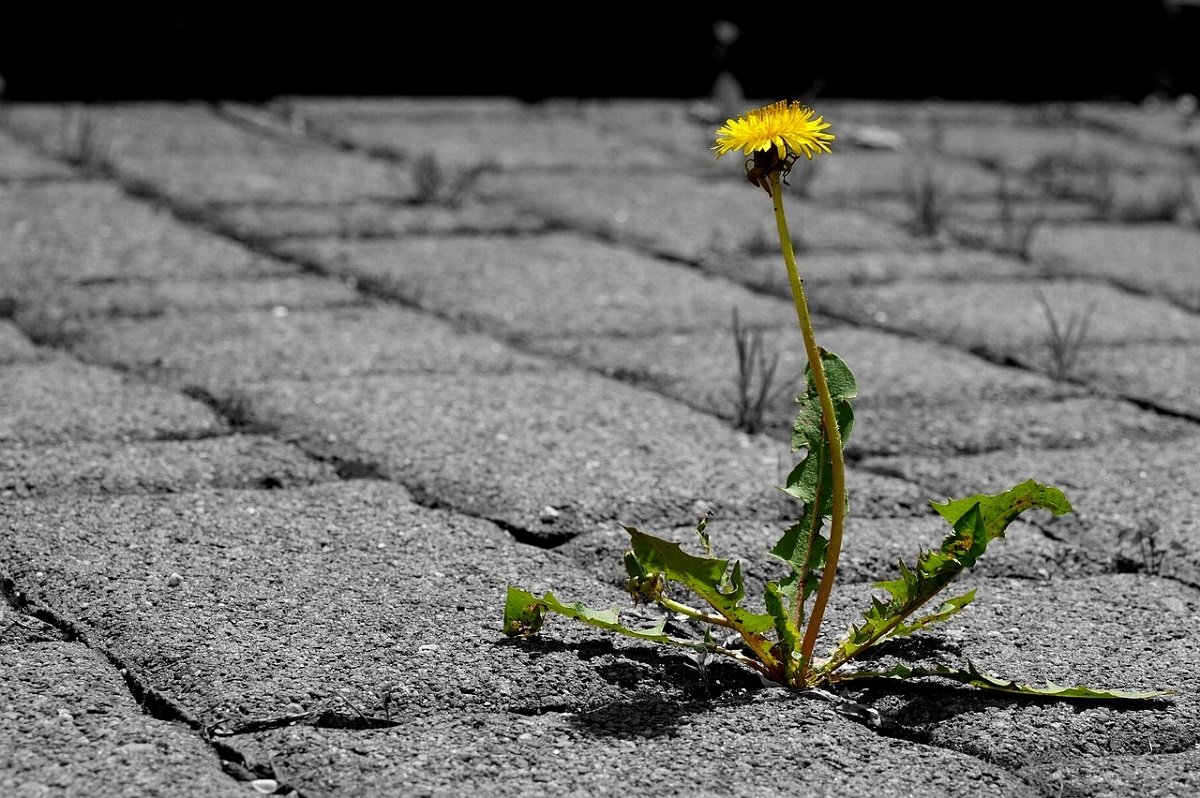
“Nothing is so uncommon as a common dandelion” say Karst Meijer and Erik van den Ham, Dutch botanists who started an international day (April 27) to celebrate this yellow flower in 2020. The pair hoped to showcase the immense diversity and fascinating ecology of dandelions, which are often maligned as noxious weeds.
Intensive farming and weeding have drastically diminished dandelions in the Dutch countryside. Insects, many of whom feed on the pollen and nectar of these plants, have been the first to suffer. Between 1990 and 2017, Dutch protected areas reported a 75% decline in flying insects which has prompted another precipitous drop in the numbers of plants that rely on insects to pollinate them.
However, hope comes from unexpected corners and dandelions are thriving in cities.
A small crack in the pavement is sufficient for a dandelion to grow a long taproot that can access water and nutrients in the soil below the concrete. But don’t be fooled – that dandelion you stepped over is withstanding extreme pressure to thrive in your neighbourhood. There’s pollution, trampling, the heat that radiates from the concrete after a hot day and artificial light from street lamps to contend with.
Having found ways to resist these pressures, dandelions grow prolifically in unfriendly cities, helping other wild species to survive as well. How do they do it?
Many people think of plants as nice-looking greens. Essential for clean air, yes, but simple organisms. A step change in research is shaking up the way scientists think about plants: they are far more complex and more like us than you might imagine. This blossoming field of science is too delightful to do it justice in one or two stories.
This article is part of a series, Plant Curious, exploring scientific studies that challenge the way you view plantlife.
King of the urban jungle
Cities are islands of heat. On average, a city like Amsterdam is 2°C warmer than its rural surroundings. On a hot summer day, it could be more than 11°C warmer. You can feel the heat when you walk a city’s streets in summer – how nice and cool does a park with trees and shade feel then?
This heat is a challenge for plants too. Fortunately for dandelions, evolution has offered a helping hand. I discovered that dandelions evolved to use urban heat to their advantage: urban dandelions grow better and faster than their rural relatives at higher temperatures by making more efficient use of photosynthesis.
Not only do urban dandelions cope better with summer heat, they can also avoid the problems other plants experience with warming winters caused by climate change.
Plants are programmed to respond to changes in temperature; when a cold snap yields to milder weather, that’s a cue for plants to start flowering. Timing is crucial, as flowering must correspond with the emergence of pollinators. Milder city winters might weaken this signal and ensure plants miss their cue to flower. I discovered that urban dandelions have finetuned this process and can start flowering even after a very short and mild winter.
Winter also brings frost. The salt sprayed on roads to keep traffic safe can stress the plants which grow on the roadside verge, but several dandelion species have, fortunately, become experts in dealing with high salt concentrations.
The exact mechanisms are yet unknown, but it looks like these dandelions can store the toxic salts and metals that are typical of roadside pollution in their leaves, without being bothered by it.
Urban dandelions even have a solution for feet and lawnmowers trampling and shredding them: growing low to the ground, so lawnmowers pass right over and feet do not cut the flowers away from the plants.
Protector of the realm
City plants cycle from eradication by concrete and asphalt to reconquest in the nooks and cracks that subsequently form. A group of artists from Sweden likened cities to disturbed gardens and said that people and plants alike are gardeners of this dynamic landscape.
The dandelion is a pioneer of this disturbed garden: the first to arrive with its windborne seeds and the best equipped to conquer the pavement with its long taproots. Once established, dandelions enable others to arrive by providing a buffet for insects in early spring.
A survey of urban meadows in Edinburgh, Leeds, Bristol and Reading in the UK revealed that dandelions were providing 90% of the nectar (carbohydrates) and 80% of the pollen (proteins) in the diets of pollinators. As a result, more than 200 species of insects (that we know of) are supported by dandelions. These are the necessary pollinators that allow other plant species to establish, such as clover, mallow, mustard and poppy.
Because dandelions can grow almost anywhere there is a sliver of soil, they provide essential refreshment stops for urban pollinators on their way between gardens and parks. Not only does the dandelion rule the streets, it also protects and supports its inhabitants. And so, the dandelion can rightly be called king of the urban jungle.
Next time you see one in your garden, think about what it does for friendly pollinating insects. Without dandelions, your garden plants would struggle to reproduce. And if all this talk about food makes you hungry, try some dandelion leaves in your salad for a tangy bite.
Don’t hate dandelions. Let them spice up your life, your street and your garden.
This article is republished from The Conversation under a Creative Commons license. Read the original article.

CLICK HERE TO DONATE TO OUR CROWDFUNDER
HELP US BECOME STRONGER SO THAT WE CAN CONTINUE TO DELIVER POWERFUL CITIZEN JOURNALISM!





