


We are in the so-called era of the strongmen. Across the world, “changing times have boosted public demand for more muscular, assertive leadership”.
Leaders like Vladimir Putin, Recep Tayyip Erdoğan, Narendra Modi, Viktor Orbán, Xi Jinping, and Donald Trump have come to represent a global trend toward illiberal governance. These figures frame themselves as defenders of tradition and national strength, often centralising power, curbing democratic institutions, and embracing militarism, surveillance, and hard borders. Complexity, pluralism, and feminism are frequently cast as threats to national unity.
Conflict and the threat of war serve these leaders well – consolidating control and suppressing dissent. As the strongmen posture and peacock with military parades and weapons tests, more moderate democracies are pressured to appear tougher. In the UK, Keir Starmer’s Strategic Defence Review pledged to make Britain “a battle-ready, armour-clad nation,” including a £15bn boost to nuclear armaments – raising concerns for global non-proliferation, despite the review’s subtitle: Making Britain Safer.
Modern warfare, traditional consequences
While warfare has evolved – from drone strikes to cyberattacks and proxy conflicts – its toll remains deeply gendered. In modern warzones like Gaza, Ukraine, Syria, and Yemen, civilian casualties frequently surpass military losses. Women and girls disproportionately suffer the indirect consequences: displacement, sexual violence, loss of livelihood, and the breakdown of healthcare and education.
They are not just collateral damage. In many conflicts, women are deliberately targeted – through rape, forced marriage, or trafficking – as part of strategic efforts to destabilise communities and assert control.
Women as fighters, leaders and rebuilders
Despite these threats, women are also active agents in conflict and peace. In recent years, women have joined armed struggles in places like Ukraine, Sudan, and northern Syria, including the Kurdish women fighters instrumental in resisting ISIS. Yet their most significant contributions often come after the fighting stops.
Women have led peace protests, humanitarian relief, and post-war reconstruction in places such as Rwanda, Liberia, and Kosovo. Globally, women’s organisations continue to campaign for peace, justice, and survivor support. Yet, from 1990 to 2022, women made up just 6% of signatories to peace agreements and only 13% of major peace negotiators – highlighting the systemic exclusion of women from formal diplomacy.
Women in Black: silent resistance to war
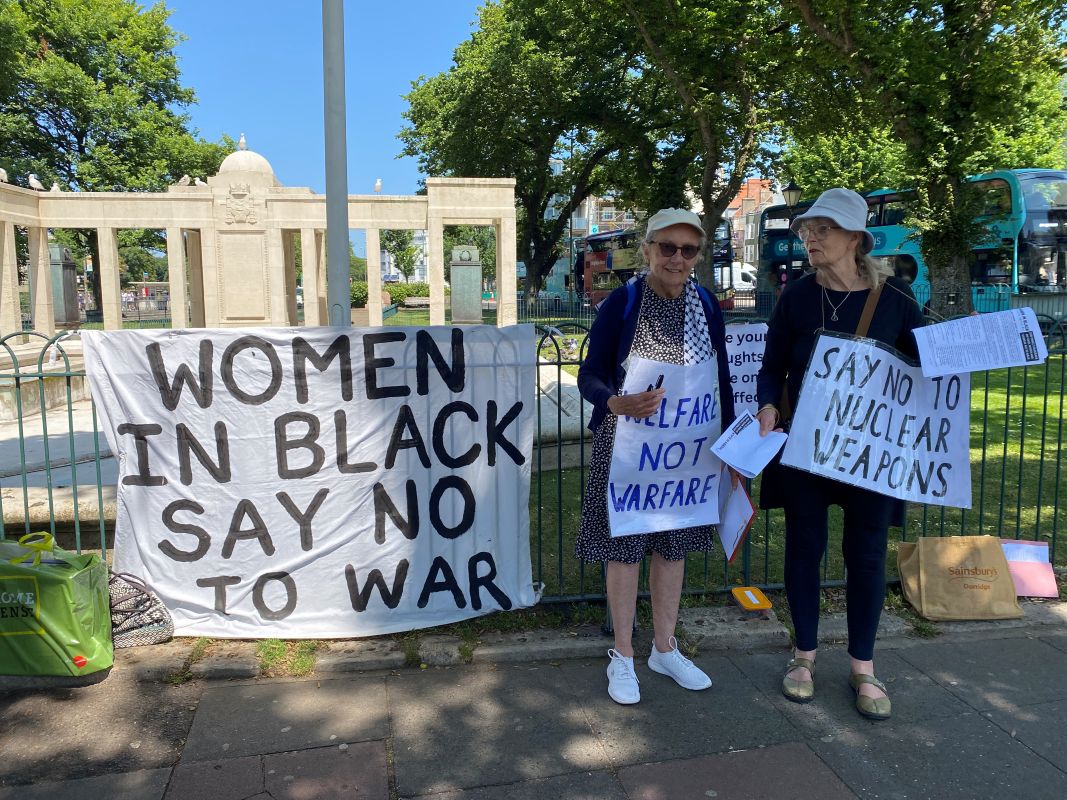
In the face of militarism, women-led resistance movements persist and grow. Women in Black (WiB), an international network opposing war, militarism, and gender-based violence, emerged in 1988 in Jerusalem during the First Intifada. Women, dressed in black as a sign of mourning, held weekly vigils at the brink of Shabbat, bearing signs that read “Stop the Occupation” in Hebrew, Arabic, and English.
This model of silent, nonviolent protest soon spread – from the U.S. and Italy to the Balkans and beyond. Today, WiB is active in over 30 countries, with each local group addressing issues specific to their context but united by a feminist belief: systems that perpetuate war also sustain domestic violence, political repression, and gender inequality.
Mourning as defiance
Against the loud bravado of strongmen, WiB’s silent presence is radical. It disrupts public space with grief and defiance, transforming mourning into political resistance. Their vigils reject the normalisation of violence, calling attention to the systems – not just the casualties – of war.
Few peace movements have demonstrated the longevity or moral clarity of Women in Black. Their power lies not in spectacle, but in the quiet insistence that war, and the structures that enable it, must be resisted – even, and especially, when doing so seems futile.
There is a WiB group which meets in Brighton every Friday, between 1 – 2 pm, at the War Memorial on the Old Steine.

CLICK HERE TO DONATE TO OUR CROWDFUNDER
HELP US BECOME STRONGER SO THAT WE CAN CONTINUE TO DELIVER POWERFUL CITIZEN JOURNALISM!






