


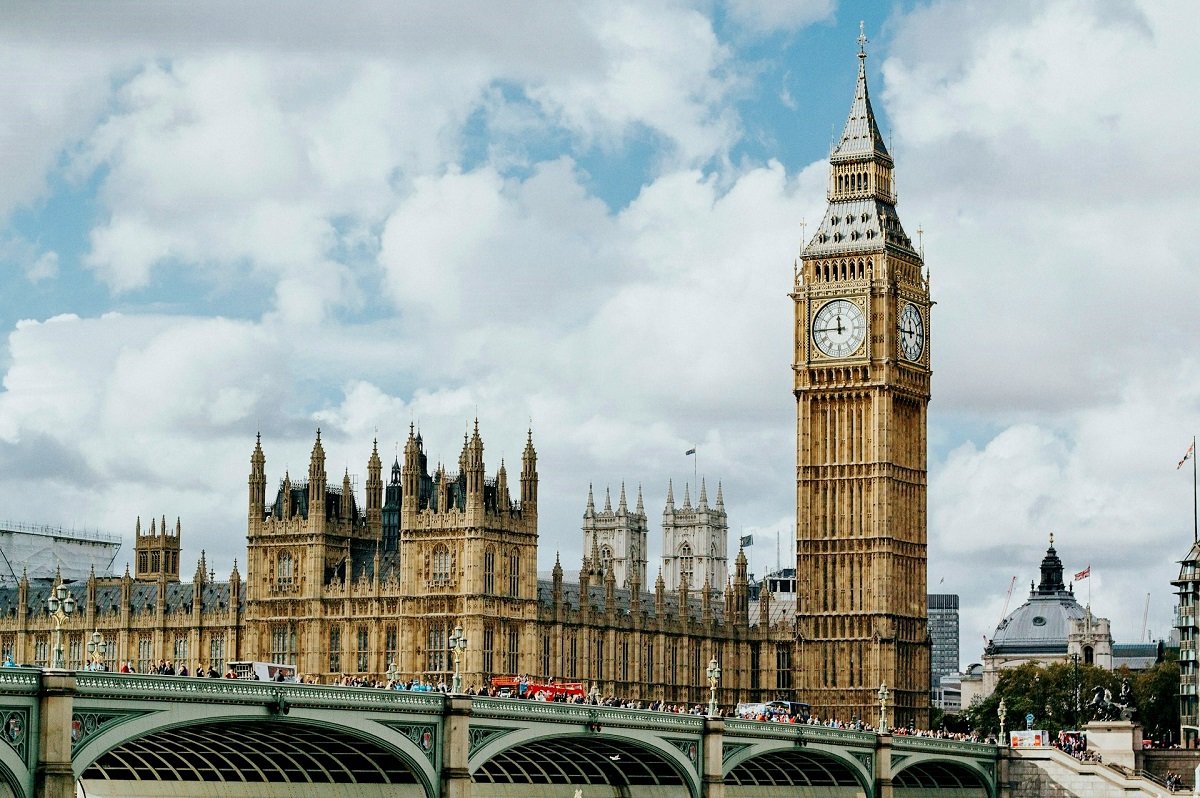
There will not be another General Election for some years, and so much has already been said about fair voting that more may only be repetition. However, widespread frustration with First Past the Post and its unfairness is not merely based on the pointlessness of voting every few years for candidates who never win – it is even more infuriating that so many voters have nobody in parliament working for their communities, their concerns, their viewpoint.
Just consider the last few years. We have had a governing party narrowly devoted to its self-interest, its ideologies and the wealth of the already wealthy. What support could be expected from a Conservative MP of the 2020s for the arts, disability issues, asylum rights, community cohesion let alone the concerns of voters for other parties or none?
As the turnout at the recent General Election showed, many many citizens feel that there is no point in voting at all as things are. How many of us have voted for decades without our votes electing anyone? This author for one.
Over the coming years, we have another party apparently intending to act for all people but, even as a “broad church”, failing to enthuse 2/3 of those who did vote enough to tick “Labour” and facing internal in-fighting to maintain that breadth of following.
Many “natural Labour” voters have left the party over its stances on Brexit, on one-sidedness over Gaza and on its willingness to sustain some of the more egregious Conservative enactments, such as the 2-child benefit cap. Where can these voters all find representation?
How do we make all votes count?
Is it not desirable that diverse or special interest views be allowed and shared in civilised debate in parliament between people chosen to represent all strands of society? Such diversity of representation is missing from the current system. If instead a voting mechanism were adopted enabling several viewpoints from each constituency to be represented in parliament (proportional to their vote share}, so many more constituents would surely be inclined to vote, knowing that someone could go in to bat for them.
Judging by the readiness of many to vote tactically in the recent General Election and by the results, there is an electorate seeking democratic representation which it cannot have in a First Past The Post system. 7% voting Green and having 4 MPs; 15% voting for Reform but ending up with 5; and over 40% of the potential electorate not voting at all are outcomes which must lead to frustration as the standpoints of millions of voters are ignored. This is democracy failing, whatever one thinks of the parties concerned.
One of the arguments against PR is that it could let into the corridors of power dozens of MPs whose views are anathema to most. Which is better, though:
- to leave people feeling unrepresented, susceptible to undemocratic rabble-rousers and right-wing media bias?
- that the governing party in a 2-party system can be held to ransom by a ruthless clique, foisting on the nation its racist and partisan ideologies; or
- for all strands of opinion to be represented in a multi-party electoral system under parliamentary scrutiny and rules?
We have suffered the first two so maybe it is time for the democratic third option.
We have to accept the risk that PR will give some populist parties more MPs
With diversity of representation, the over-looked or disgruntled in society might begin to feel represented, and have less incentive to turn to violence, spurious alternative media or populist demagogues. Take away at least part of a grievance and the pressure is released. Inclusion of more parties with different social insights will both enrich parliament and expose the more egregious, on the record.
Genuinely held views can and should still be expressed and heard where they can be argued, countered and addressed by elected Members rather than screamed by self-appointed rabble in the streets. That would be the real success of PR, not just ticks on polling days.
If parliamentary democracy is to be saved, it must evolve not only to allow all votes to count but for delegates chosen by the electorate to be allowed to represent and support their electors, the sooner the better. How long did it take for women in this country to win the right to vote; but then how much longer before their interests were the concern of the parliaments they gradually entered?
The vote is not enough: meaningful representation is the objective. Maybe providing representatives of more popular viewpoints will increase the vote, reduce feelings of dissatisfaction and deprive disrupters of their platform, in proportion, of course, to their votes. The two main parties may lose some proportion of the vote but they may gain respect by protecting democracy for the nation.

CLICK HERE TO DONATE TO OUR CROWDFUNDER
HELP US BECOME STRONGER SO THAT WE CAN CONTINUE TO DELIVER POWERFUL CITIZEN JOURNALISM!






