


“We’ve known since Florence Nightingale that clean air is essential to health. Yet 165 years later, we’ve failed to apply this lesson in many clinical settings and schools. Opening windows invites outdoor pollution in. Keeping them closed traps pollutants, allergens and germs inside.”
Did you know that Worthing ranks as having the second-highest PM2.5 level of any major UK city – equivalent to smoking around 166 cigarettes per year?
Or that indoor air is two to five times – even 100 times – more polluted air than outdoor (cleaner) air?
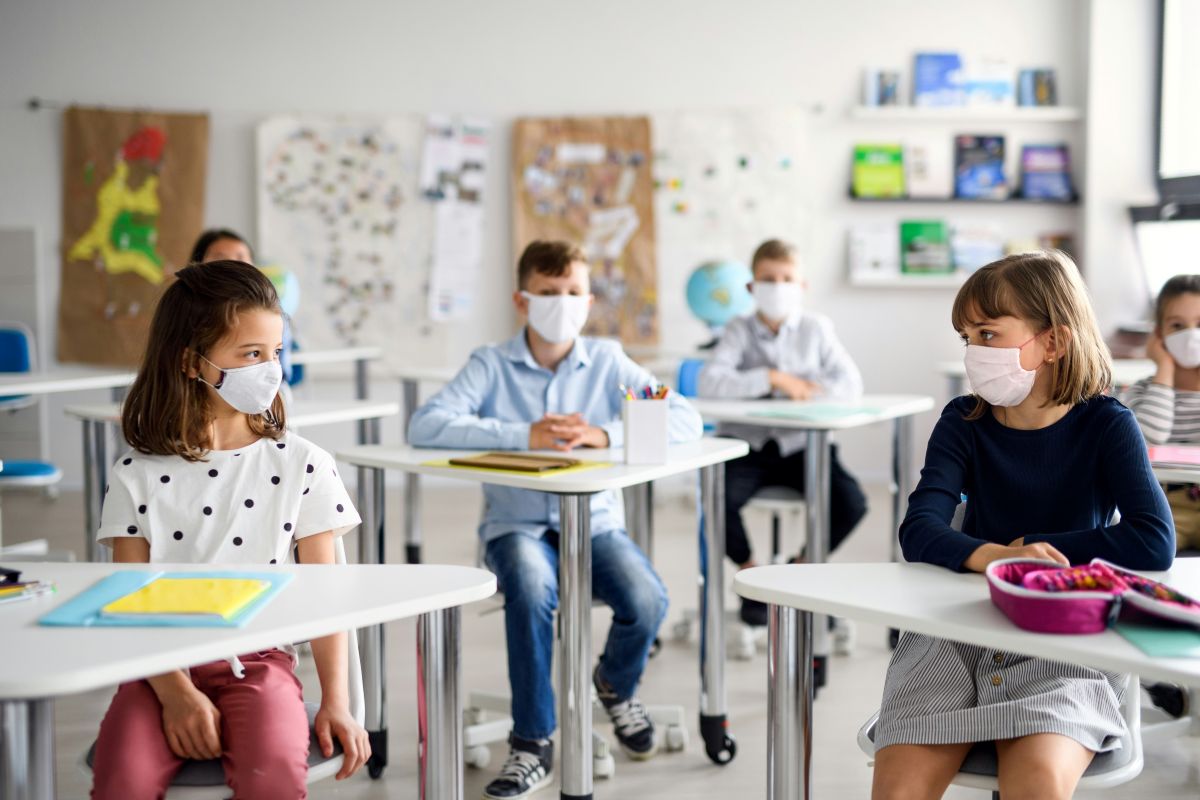
Classrooms, where children spend most of their time outside of home, often have poorer air quality than outdoors, putting children at significant risk of allergies, illness, asthma attacks, and missed school.
A journey beginning in healthcare
In December 2019, my mother-in-law was in Vietnam. A new virus was spreading and people were encouraged to wear masks. As a healthcare professional trained in respiratory care, I worried for NHS colleagues and what might be coming.
Soon headlines told of frontline staff dying. I joined a local group making scrubs, then found myself coordinating fabric and deliveries to local hospitals asking for them.
In May 2020, we lost my grandmother in a Chichester care home. Three days later, also my uncle in the same home.
At the time, my daughters were in preschool and juniors. I searched for evidence on how this new airborne virus might affect children. I found none. An article titled Children Are Canaries in a Coal Mine warned against exposing children without understanding the consequences. Specialists called for CO₂ monitors in classrooms, and that began my journey into indoor air quality.
We sewed blankets for my daughter’s school so the windows could stay open more comfortably. It wasn’t perfect, but it mattered. By September 2020, I’d connected with a group whose children were not recovering from COVID-19. First, there were seven. Then hundreds. Then thousands. I supported the organisation full-time for three years, co-writing school packs and newsletters to educate.
As more experts spoke, it became clear this novel virus was part of a larger air quality problem and to ensure children thrive, we must protect the air they breathe in school.
“We’ve known since Florence Nightingale that clean air is essential to health. Yet 165 years later, we’ve failed to apply this lesson in many clinical settings and schools. Opening windows invites outdoor pollution in. Keeping them closed traps pollutants, allergens and germs inside.”
What’s in classroom air?
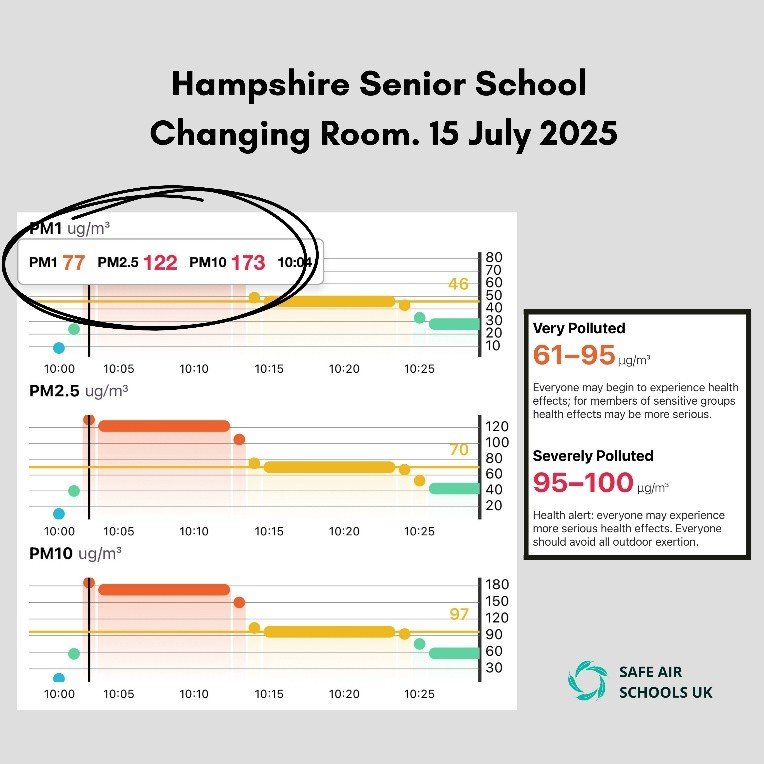
Classroom air can contain pollen, fine particulate matter, dust mite debris, mould spores, pet dander, and airborne viruses such as measles, flu, and SARS-CoV-2. It may also contain chemicals, even microscopic plastic particles.
High CO₂ is the warning sign. When many people breathe in a poorly ventilated room, CO₂ levels rise and stale air builds up along with pollutants, allergens and germs. High CO₂ is linked to reduced focus, lower test scores, and increased illness.
Poor air quality doesn’t just trigger asthma and allergies – it harms learning, wellbeing and attendance.
For two years, my daughter and I measured air quality inside her school. CO₂ levels regularly exceeded guidelines, and particulate matter often surpassed WHO limits.
In 2023, Rosamund Adoo-Kissi-Debrah CBE worked with two other experts to build a simple DIY air filter. Her daughter, Ella, was the first person in the UK to have air pollution listed as a cause of death. Their video showed how to make air purifiers using simple filters and a fan.
My daughter built one to donate to her school. After four months in class, the filters were filthy – proof of what they had trapped so children’s lungs didn’t have to.
From local action to national advocacy
Last year, I published a website to share what I’d learned. Often, people fail to connect air pollution, classroom air quality and climate. The site explains how these issues intersect and shares evidence and tools for action, like demonstrating that portable air filters can be provided for the price of a pizza per child per year.
Safe Air Schools UK is now a parent-led organisation supported by experts, working to improve air quality in schools. The principles of inclusion, equity, sustainability, and evidence-based action shape our approach. Founded in Hampshire, our initiative responds to challenges faced across the UK. We ensure classroom air is part of every important discussion. That’s why we contribute to the National Allergy Strategy Ten-Year Plan.
I had the privilege of meeting Rosamund. She is working with Mayor Sadiq Khan to bring commercial air filters into London schools. Children everywhere deserve that same protection.
Choice
Clean air in classrooms isn’t a luxury – it’s infrastructure. It’s the foundation for health, safety, learning and achievement. We have immediately available, affordable solutions. The question now is not whether we can act, but when we will.
To learn more or get involved, go to Safe Air Schools UK.

CLICK HERE TO DONATE TO OUR CROWDFUNDER
HELP US BECOME STRONGER SO THAT WE CAN CONTINUE TO DELIVER POWERFUL CITIZEN JOURNALISM!







