


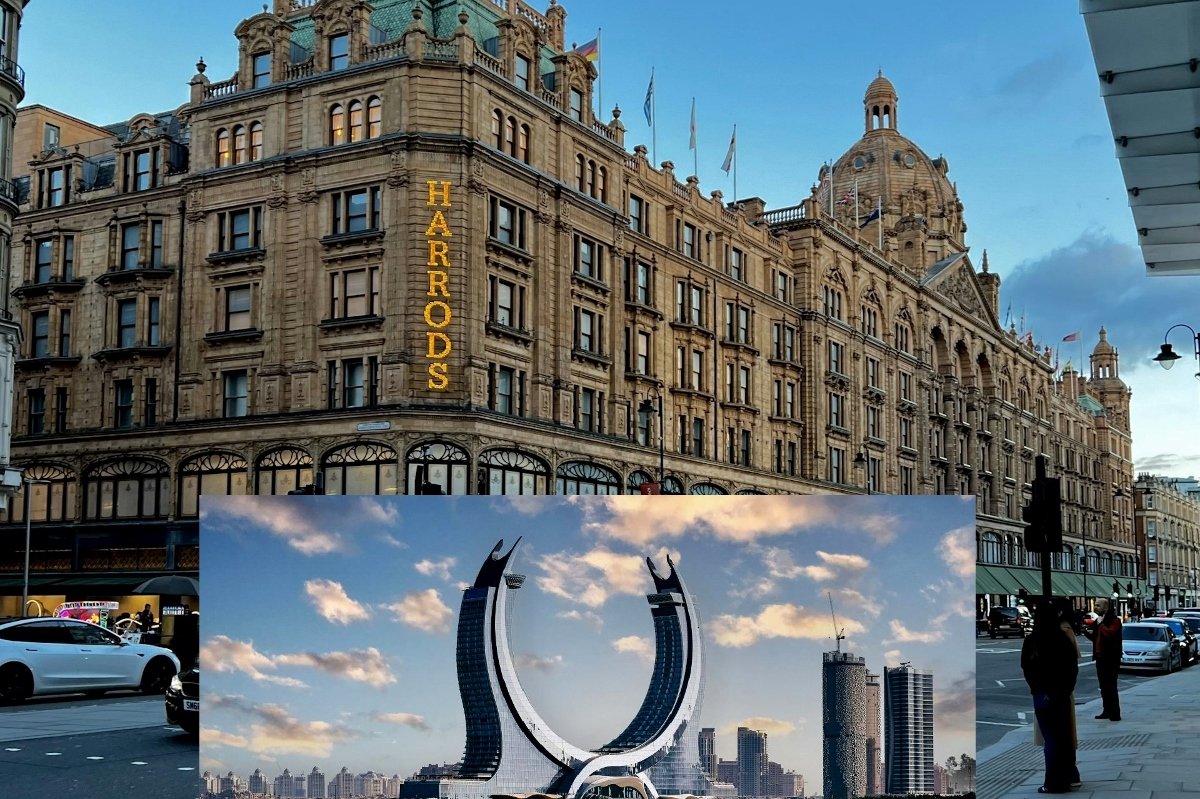
For many of the women and girls who experienced it, Harrods was not a luxury landmark. It was an environment where exploitation could be organised, normalised and protected by the structures around them. A question that has puzzled survivors for decades is how an institution of Harrods’ stature – and later its corporate owners – failed to confront the risks within its own walls.
The architecture of enablement
The exploitation could not have happened at such scale without the enablement of Harrods’ corporate architecture. Certain Harrods employees recruited victims; doctors medically tested those victims to ensure they did not pose a health risk to Al-Fayed or whichever associate they were marked for; HR and permanent PAs coordinated access to the victims (through fictitious roles, offers of accommodation or travel ‘opportunities’); and Harrods security, lawyers and doctors intimidated them into silence and managed the physical and financial fallout of the abuse.
One of the many aspects that remains unexamined is how this continuously revolving cast of women and girls were paid, bribed and then paid off without attracting scrutiny from accountants, auditors or financial institutions.
This was not a few accomplices, as the Metropolitan Police investigation appears to imply. This was an entity that was structured to process women and girls through the mechanisms of coercion and abuse, and whose reach extended to every Al-Fayed owned entity, asset and residence across the globe.
The reality is simple: no group of individuals could have acted at this scale without an institution building the conditions for it. Fayed and others had access to staff and vulnerable girls because Harrods gave them that access. They avoided scrutiny because Harrods’ hierarchy shielded them. Victims stayed silent because Harrods’ systems intimidated, dismissed, or shut them down.
When an institution creates the opportunity, controls the space, buries the complaints and protects the powerful, it becomes part of the harm. Harrods’ actions weren’t separate from the abuse – they were part of the damage done.
Survivors are clear: Harrods has a moral responsibility it has never confronted – a weight on its hands that it cannot wash away with PR statements or redress schemes. If it wants credibility, it must finally account for the harm done on its watch.
The 2010 purchase: a diligence process that overlooked the obvious
By the time Qatar Holding purchased Harrods in 2010, the store had already been the subject of extensive investigative reporting on abuse and corruption allegations, with repeated major coverage from the 1990s to 2008. Al-Fayed had also been interviewed under caution by the Met in 2008. Several employees had made internal complaints. It is against this backdrop that due diligence ought to be assessed.
Harrods changed hands, but the silence remained intact. Corporate owners inherit not only assets, but their embedded risks. Failure to conduct adequate acquisition due diligence – or to act on concerns that were identifiable – raises serious questions about institutional responsibility. If Qatar Holding identified risks and did not respond, that would represent a failure of corporate stewardship. If it did not identify them at all, that would indicate a failure of process. Either scenario leads survivors to the same question: how did the silence continue for so long?
In September 2024, Harrods issued a statement saying: “Since new information came to light in 2023 about historic allegations of sexual abuse by Al-Fayed, it has been our priority to settle claims in the quickest way possible…” Days later, Michael Ward, Harrods’ Managing Director, said he had been unaware of any “criminality or abuse”, though he acknowledged that “rumours” had “circulated publicly”. It is difficult to reconcile the breadth of historical reporting – and the seriousness with which Al-Fayed pursued legal action against those who challenged him – with the characterisation of this material as mere ’rumour’.
Survivors also note that Harrods currently holds numerous Non-Disclosure Agreements (NDAs) and records of sexual health testing said to date back decades. Whether or not management knew the full scale of these issues, much of the surrounding context was already public. Many of the documents that would have raised red flags were held in Harrods filing cabinets or IT systems. A robust due diligence process should reasonably have flagged these allegations as significant safeguarding and reputational risks.
International corporate standards, including UN Guiding Principles on Business and Human Rights (UNGP), require acquirers to identify potential human rights harms connected to an asset. This includes sexual exploitation. A buyer examining Harrods in 2010 would be expected to review historic allegations, staff complaints, legal correspondence and cultural or governance issues that might expose the business to liability. These frameworks do not require proof of wrongdoing to be present, only a credible risk.
By virtue of Qatar Holding’s status as a state-owned enterprise, the UNGPs make clear that the responsibility to respect human rights extends both to Qatar Holding and to Qatar itself as its ultimate owner. It is time for Britain to use its own regulatory powers to ensure that foreign state-owned enterprises operating on UK soil meet those standards in practice.
All things for all people, everywhere – but no truth for those harmed
In 2024, Harrods also stated that it would not enforce NDAs linked to historic abuse. While this was welcomed, it raised further questions. Survivors ask why such a statement was not issued in 2017 (when Harrods was reportedly given a right to reply to the Channel 4 documentary, Al-Fayed: Behind Closed Doors, which detailed serious new allegations of abuse linked to Harrods) or indeed in 2010, when the acquisition due diligence process should have triggered a public reassessment of the long-standing claims. If it had been, many more women could have come forward while Al-Fayed was alive. Harrods’ current owners did not create the conditions survivors describe, but they benefited from the silence that followed.
Harrods has stated that it conducted an internal review in 2024, yet it has not disclosed its findings. Survivors have received no clarity and no independent verification.
The so-called Harrods “redress” scheme is not a path to justice – it is another tool of silencing. By reducing decades of harm to the actions of Al-Fayed alone, it neatly excises the institutional conditions that enabled it. It then obliges survivors to submit the most intimate details of their exploitation to the very institution implicated in facilitating it and requires them to permit Harrods to use that information to recoup its own losses from the Fayed estate.
The architecture of that scheme speaks for itself. Through it, Harrods not only minimises its own role; it reproduces the same dynamics of dismissal and control that kept women silent for so long. And the British state has ignored this arrangement, despite its international obligations to ensure trafficking victims receive independent, adequate, state-led redress – not a process owned and shaped by the institution at the centre of the harm.
The risk remains – because the system that enabled it has not changed
As long as Britain’s legal and regulatory frameworks allow wealth to override warning signs – and enable corporations to avoid hard questions about their own environments – impunity will remain the most valuable luxury item on sale. The choice now is simple: real accountability, or another generation left with nothing but corporate denials and institutional blind spots.
When major institutions can ignore decades of warnings, the danger extends beyond one building or one individual. It becomes an example of how exploitation can take root and be silenced inside the very systems that are supposed to prevent it. Until institutions confront their own role in enabling harm, the conditions that allowed such a system to function will remain firmly in place. When corporate owners stay silent, they create safe spaces for abuse to thrive.
*Isabella is a pseudonym. The author is a Fayed/Harrods survivor and a founding member of No One Above (NOA), a survivor-led collective formed by individuals with lived experience of abuse and exploitation connected to Fayed, focused on barriers to justice and accountability in cases of abuse. www.nooneabove.org.

CLICK HERE TO DONATE TO OUR CROWDFUNDER
HELP US BECOME STRONGER SO THAT WE CAN CONTINUE TO DELIVER POWERFUL CITIZEN JOURNALISM!







