


There are rivers, and then there are chalk streams.
Most of us would struggle to define the difference. A river is a river, surely – water moving from one place to another, bending through fields, slipping under bridges, eventually meeting the sea. Yet here in Sussex, and across a handful of counties in southern England, something far rarer flows quietly beneath our notice.
A chalk stream begins not in dramatic upland torrents but in rain.
Rain falls onto the chalk hills of the South Downs and seeps down through porous rock, filtered slowly through ancient seabeds laid down millions of years ago. Months – sometimes years – later, it rises again, clear and mineral-rich, from springs at the foot of the Downs. What emerges is not simply water, but water purified by geology.
Globally, there are only around 200 true chalk streams in existence. The majority of them are here in England. Sussex holds some of these rare arteries – modest in scale, often no wider than a country lane, easily overlooked if you are driving too quickly.
They do not announce themselves. They require attention.
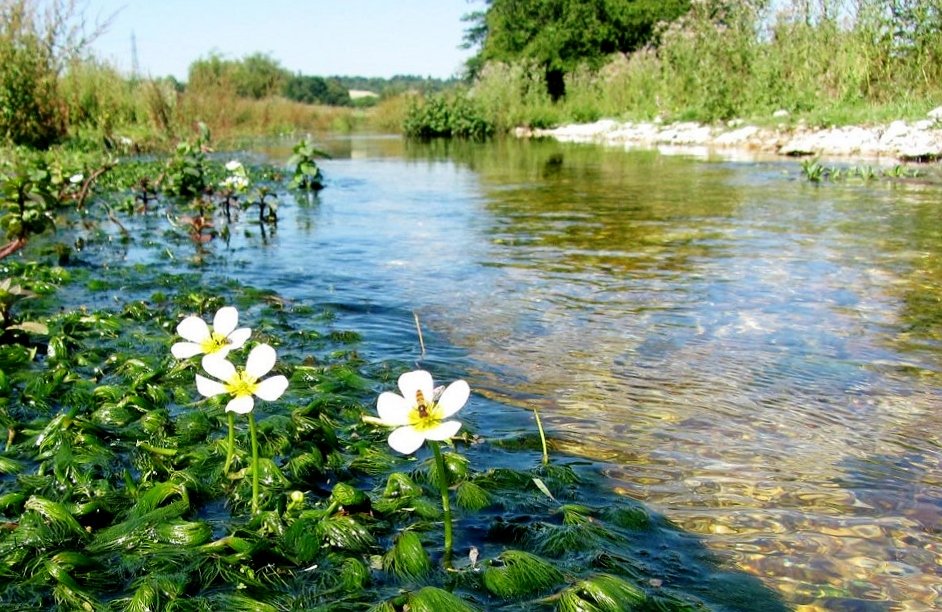
Stand beside one in early spring and you will see the difference. The water is startlingly clear, gin-like, moving over pale gravel beds. Beneath the surface, water crowfoot sways in the current like submerged lace. Brown trout hover, almost invisible until they flick away. Water voles, if you are fortunate, leave neat signatures along the banks.
A chalk stream is less a river and more a living system in exquisite balance.
Because the water rises from underground aquifers, its temperature remains remarkably stable. Cool in summer, relatively mild in winter. That stability creates ideal conditions for invertebrates – mayflies, caddisflies, freshwater shrimp – which in turn support fish, birds and mammals. Kingfishers flash electric blue along the margins. Herons stand patient and prehistoric in the shallows.
What a chalk stream provides is not simply habitat, but continuity.
It offers refuge during drought because it does not rely solely on surface rainfall. It supports biodiversity disproportionate to its size. It threads through farmland and villages, softening boundaries, nourishing soil, shaping the quiet character of the landscape.
And yet, like many of our most precious assets, it is treated as though it were ordinary.
These precious streams are vulnerable
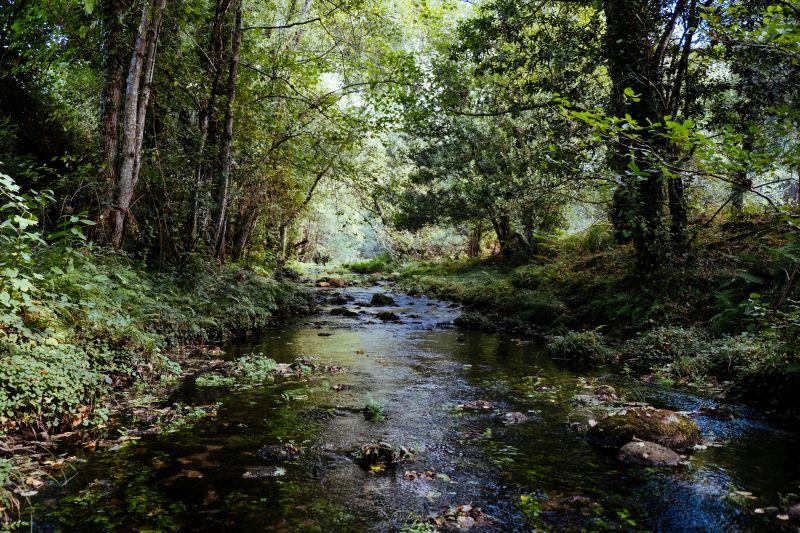
The very qualities that make chalk streams resilient also make them vulnerable. Because they depend on groundwater, heavy abstraction – water drawn for agriculture and public supply – lowers the aquifer levels that feed them. In dry years, some stretches cease to flow at all. Add to this the pressures of pollution, nutrient run-off, sewage discharge and warming temperatures, and the balance begins to tilt.
The tragedy is that their decline is not theatrical. A chalk stream does not erupt. It thins. It clouds. The water crowfoot recedes. The trout become fewer. The clarity – both literal and symbolic – fades.
If you have never known a chalk stream at its best, you might not recognise what has been lost.
There is something about clear water that speaks to us instinctively. We equate it with purity, with health, with reassurance. To watch a chalk stream is to experience a kind of visual stillness even as the water moves. You can see the bottom. You can trace the current. Nothing is concealed.
Perhaps that is why they matter beyond ecology. They offer a rare transparency in a world that often feels opaque.
When a chalk stream deteriorates, we lose more than species. We lose that encounter with clarity. We lose a particular sound – the soft, constant conversation of water over gravel. We lose the cooling breath of it on a hot July afternoon. We lose, incrementally, the intricate relationships between insect and fish, fish and bird, bird and bank.
And we lose something less tangible too: our sense of custodianship.
It is easy to care about rainforests or coral reefs precisely because they are distant and dramatic. Chalk streams are neither. They slip behind hedgerows, beside footpaths, under railway bridges. They are local, specific, understated. They ask for affection rather than awe.
Early March is a good time to visit one. The banks are not yet crowded with summer growth. The structure is visible – gravel beds, low winter light, the first signs of green returning. You begin to understand how delicately assembled the whole thing is.
The hopeful part of this story is that chalk streams are not beyond repair.
The damage can be undone
Where abstraction has been reduced, flows have recovered. Where pollution has been addressed, invertebrate life has returned. Farmers working with conservation groups have restored banks, replanted margins, allowed natural vegetation to filter run-off before it reaches the water. The transformation is not instant, but it is real.
A chalk stream, given half a chance, remembers how to be itself. The question is whether we are prepared to recognise its rarity while it still runs clear.
In Sussex, we speak often of landscape – the curve of the Downs, the sweep of the coast. Yet the most precious elements are sometimes the least conspicuous. A narrow ribbon of transparent water winding through pasture does not photograph as dramatically as a cliff at sunset. But its value is arguably greater, precisely because it is irreplaceable.
If the world holds only a few hundred examples of something, and most of them are here, then responsibility becomes personal.
The next time you cross a small bridge and glance down at water so clear you can count the stones, pause. Consider the time it took for rain to travel through chalk and emerge at that point. Consider the web of life suspended in that current. Consider how easily clarity can be lost, and how slowly it returns.
Chalk streams do not demand attention – but they deserve it.
And in giving it, we might rediscover a form of environmental care that is not driven by alarm, but by appreciation – a quiet determination to ensure that the rarest rivers we have are not allowed to slip, unnoticed, into memory.

CLICK HERE TO DONATE TO OUR CROWDFUNDER
HELP US BECOME STRONGER SO THAT WE CAN CONTINUE TO DELIVER POWERFUL CITIZEN JOURNALISM!






