


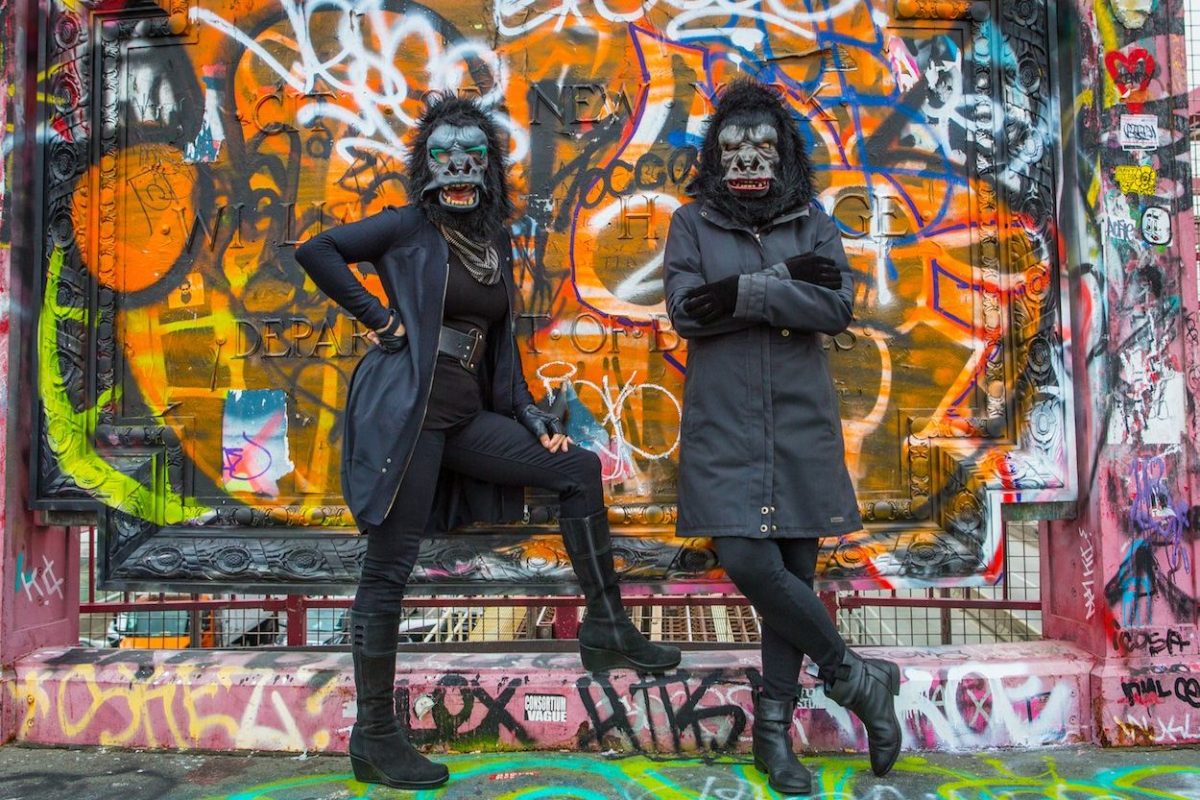
Infamous posters by the feminist collective Guerrilla Girls in the 1980s and innovative texts produced by Virginia Woolf’s printing press in the 1920s are on show at Charleston in Firle.
But what have these disparate-sounding exhibitions got in common? Actually, quite a lot.
Virginia Woolf and the Hogarth Press
A little-known aspect of Virginia Woolf’s creative work was her role in developing the Hogarth Press, which she and her husband Leonard founded in 1917. It started as an experiment, after they bought a small hand-press which they set up on their dining table in London. It was a way of publishing their own work and that of other new writers, especially women.

The Woolfs had to learn how to set type – a painstaking process – operate the press and bind the books by hand. Their first publication was Two Stories, one by Virginia and the other by Leonard, with woodcuts by Dora Carrington.
From the start, they encouraged emerging artists and artist friends like Roger Fry and Duncan Grant to create the book covers, and the results of their early publications are shown in this fascinating exhibition.
Experimental, hand-made works of art
Two rooms in the gallery at Charleston are filled with original copies of the innovative books of fiction and poetry, hand-made and published by the Woolfs. These include the first British publication of T.S. Eliot’s The Waste Land (1923), with which he was delighted.
Each work was unique and, in the early days, printing errors were sometimes made. A copy of Katherine Mansfield’s short story Prelude, published in 1918, is displayed open to show some mistakes – titled The Prelude on one page and just Prelude on the next.
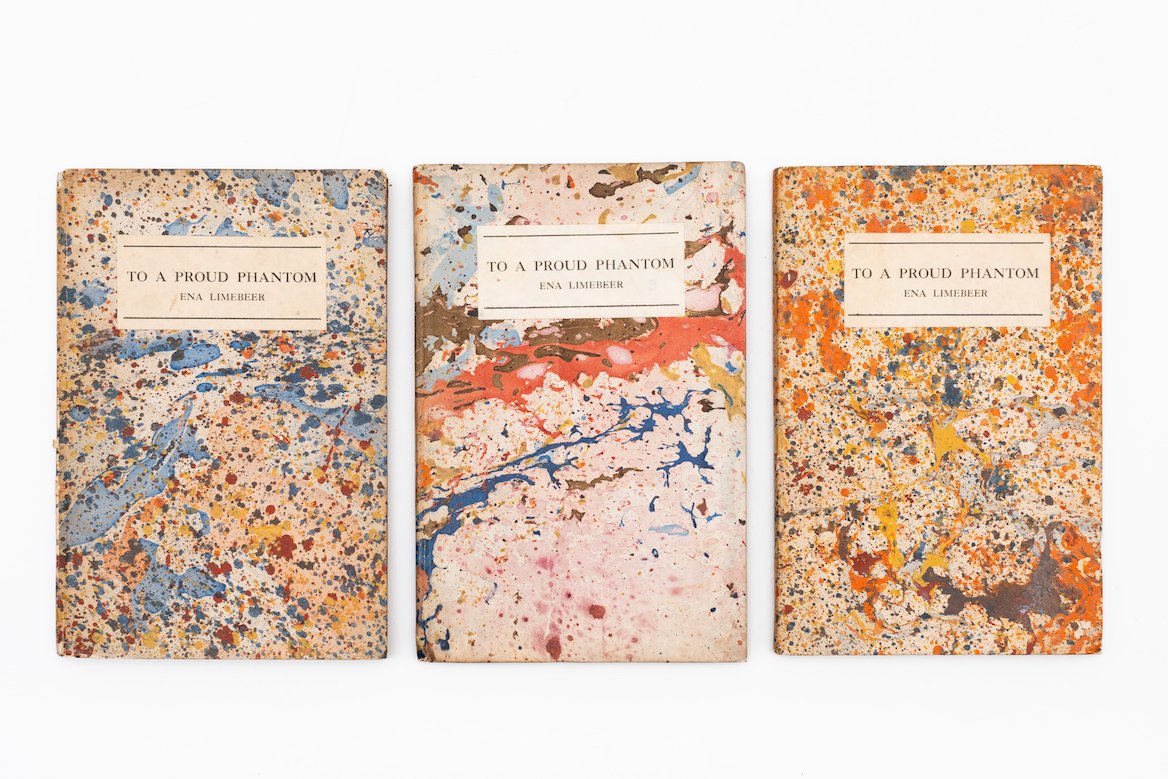
Different, hand-decorated covers were sometimes used on the same edition of a book. Copies of Ena Limebeer’s poetry To a Proud Phantom on display have beautiful marbled covers, all different (see image above). This uniqueness is a hallmark of Hogarth’s early publications, highlighting the time it took to produce each book.
Foregrounding women’s voices
Virginia Woolf is well-known for drawing attention to the difficulties faced by women writers in finding time and space to write, in seminal work such as A Room of One’s Own (1929).
Setting up the Hogarth Press enabled her to champion a range of women’s voices, whose books are included in the exhibition, such as poets Dorothy Wellesley and Ruth Manning-Sanders. Two of Hogarth’s published writers, Laura Riding and Nancy Cunard, were inspired to found their own presses later.
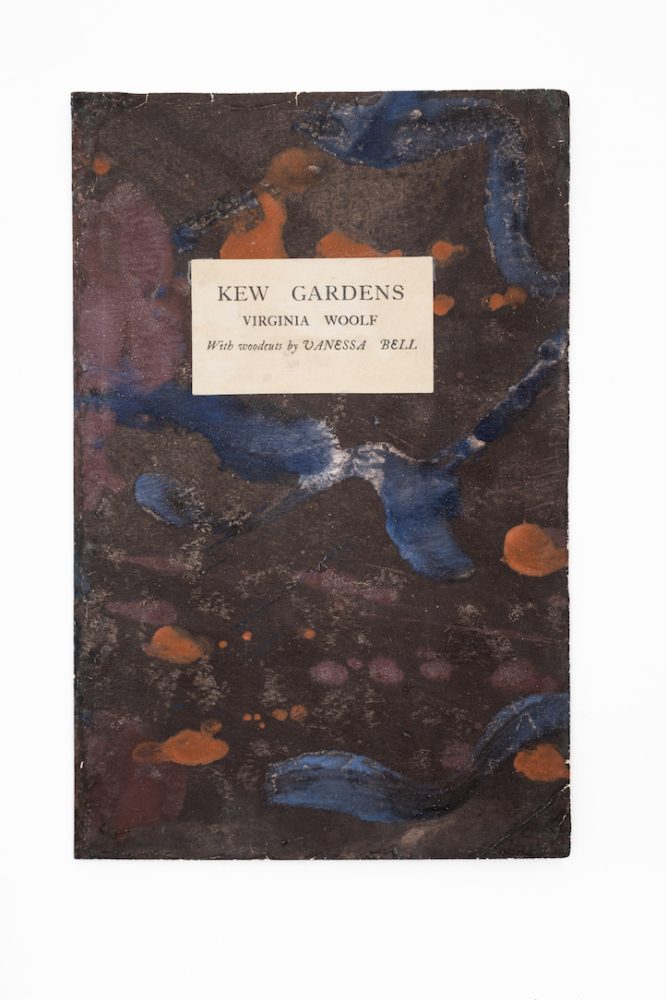
The press also freed Virginia Woolf herself from external editorial involvement. She wrote in her diary: “I’m the only woman in England free to write what I like.” Copies of her stories and novels published by Hogarth Press are shown here, with wonderful covers by her sister, artist Vanessa Bell.
Literary originality and artistic experimentation combined to make the Hogarth Press an important and ground-breaking enterprise.
Guerrilla Girls – challenging the male art world
Over 60 years after Virginia Woolf’s pioneering publishing venture and support of new women writers, provocative posters and installations by a group of anonymous feminist activists were making a big impression.
Formed in New York in 1985, the Guerrilla Girls formed to challenge the predominantly male art world, in response to an exhibition at the Museum of Modern Art which only contained work by 13 women out of 165 artists.
Known for their ‘guerrilla’ tactics, such as picketing exhibitions and hanging street posters, the women adopted the names of deceased women artists such as Frida Kahlo and Käthe Kollwitz, and wore gorilla masks to hide their identities: “Mainly, we wanted the focus to be on the issues, not on our personalities or our own work.”
Highlighting sexist power structures
Some of the group’s most iconic posters are displayed on the Charleston gallery walls. Through striking images, with bold print and challenging headlines, they highlight the lack of women artists in leading art galleries and exhibitions, and target the hypocrisy of the art elite.
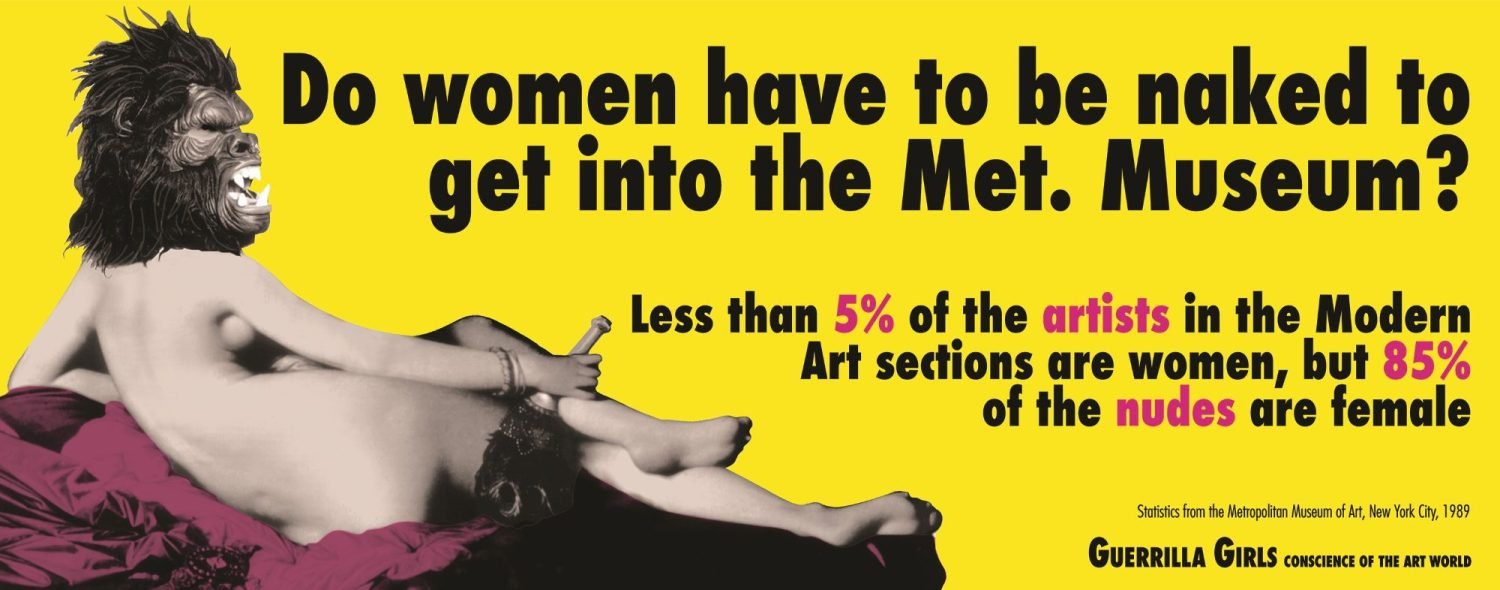
Perhaps their best-known work, Do women have to be naked to get into the Met. Museum? (1989), showing a nude woman with a gorilla head (see image above), takes up the whole of one wall, including the shocking statistic about women artists’ under-representation in top galleries, compared to their numerous nude depictions.
The posters often use data in a humorous or unexpected way to make a point about inequality, such as Bus Companies are More Enlightened than NYC Art Galleries (1989). I particularly liked The Advantages of Being a Woman Artist (1988) which takes a satirical but hard-hitting approach to inequalities in the art world.
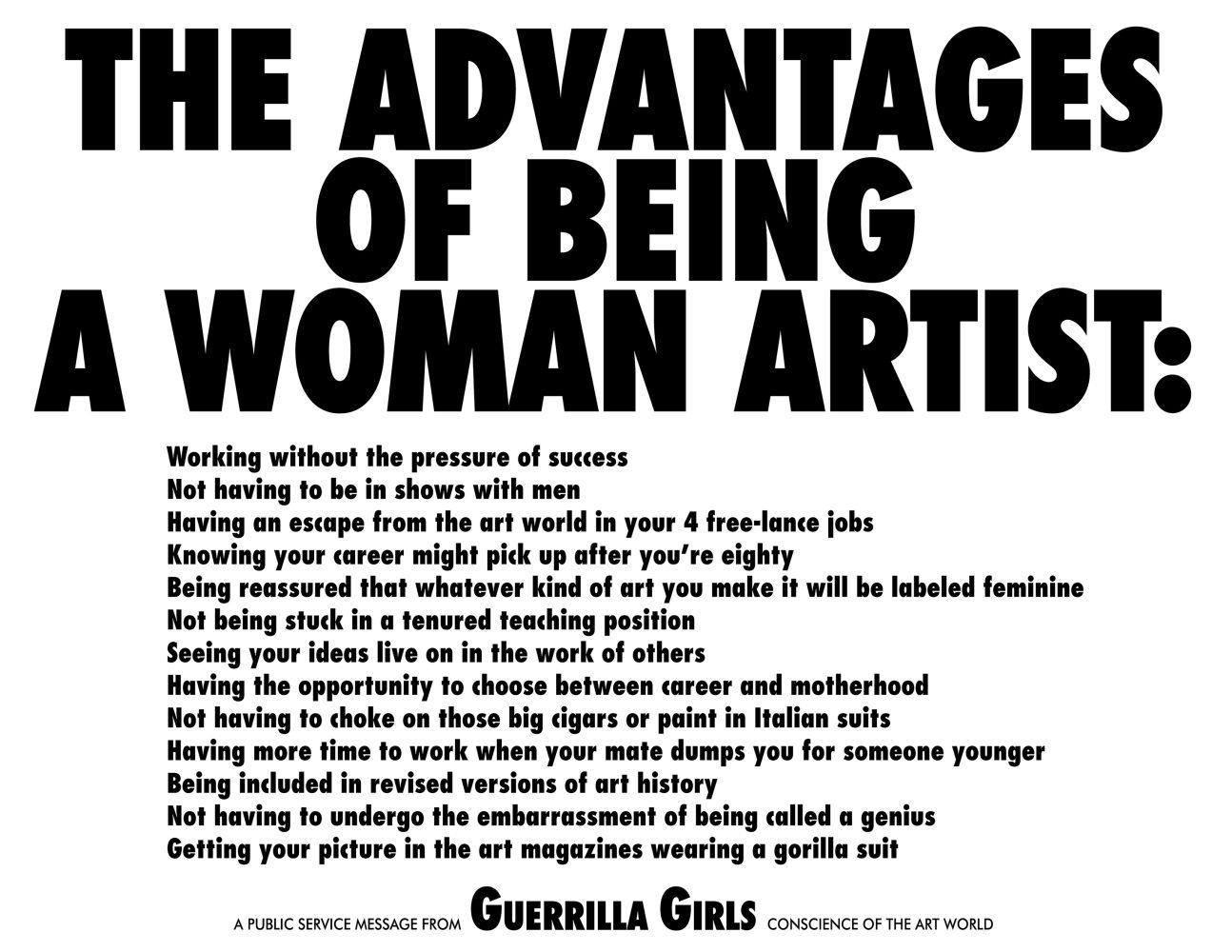
The issues that Guerrilla Girls highlight, including reproductive rights as well as gender discrimination, are still relevant today, and their use of visual tools is highly pertinent in a media age.
Innovation and creative collaboration
These two exhibitions represent examples of innovative printing, compelling combinations of text and visual images, and collaborative endeavour. The Hogarth Press and Guerrilla Girls both challenged traditional hierarchies in the arts and foregrounded women writers and artists. An exciting and thought-provoking combination.
Virginia Woolf and the Hogarth Press and Guerrilla Girls are showing at Charleston in Firle until 6 September 2026. The Sussex art shuttle bus runs from Charleston in Lewes to Firle between Friday-Sundays.

CLICK HERE TO DONATE TO OUR CROWDFUNDER
HELP US BECOME STRONGER SO THAT WE CAN CONTINUE TO DELIVER POWERFUL CITIZEN JOURNALISM!






