


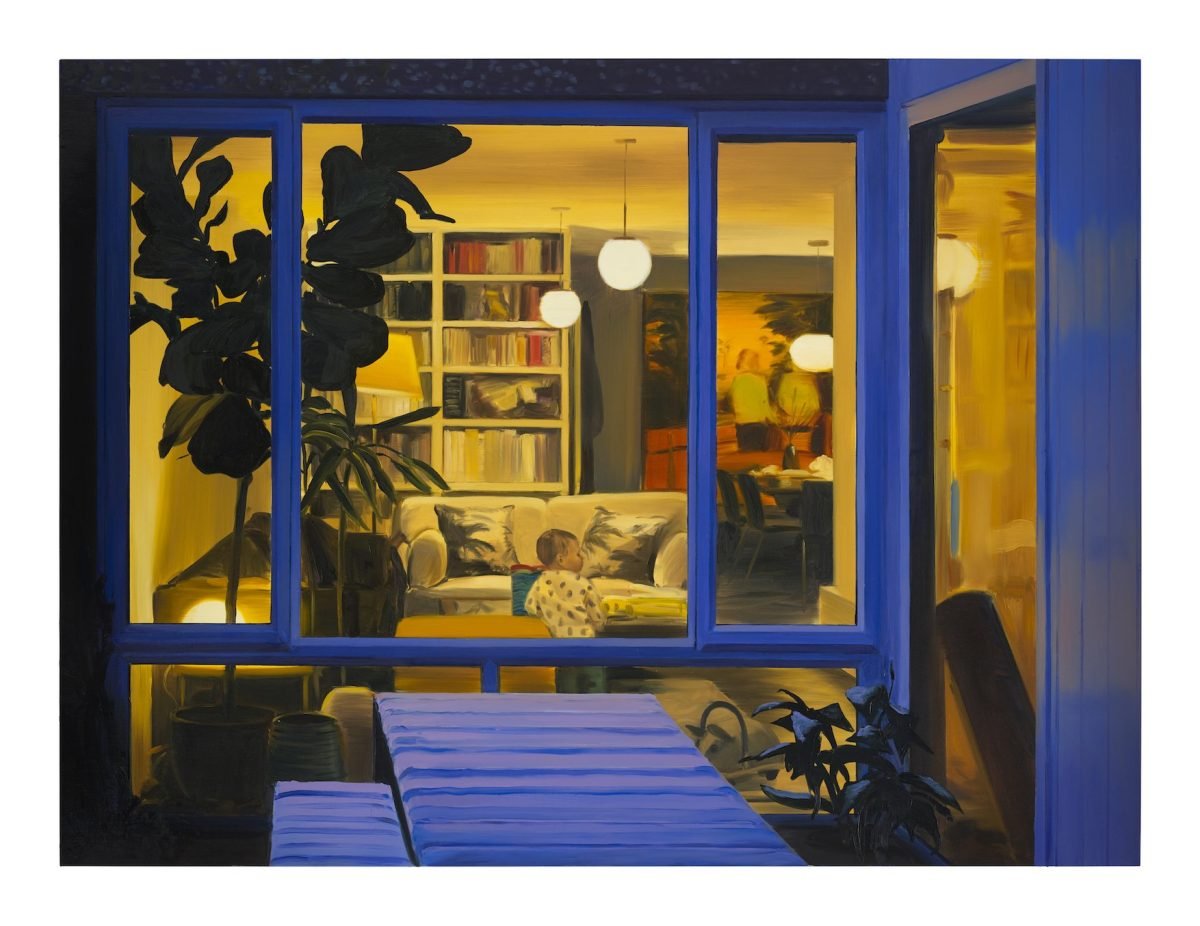
On a sunny Saturday, Pallant House in Chichester opened its doors to the community to enjoy the artwork and take part in creative workshops.
People poured into the gallery to explore the exhibitions, listen to expert art guides and try their hand at some drawing. It was lovely to see so many children taking part in the activities, with the help of art packs and ‘ways of looking’ bags. The café was packed all day and Eynsham Morris dancers entertained the crowds in the sunshine.
A fascinating tour
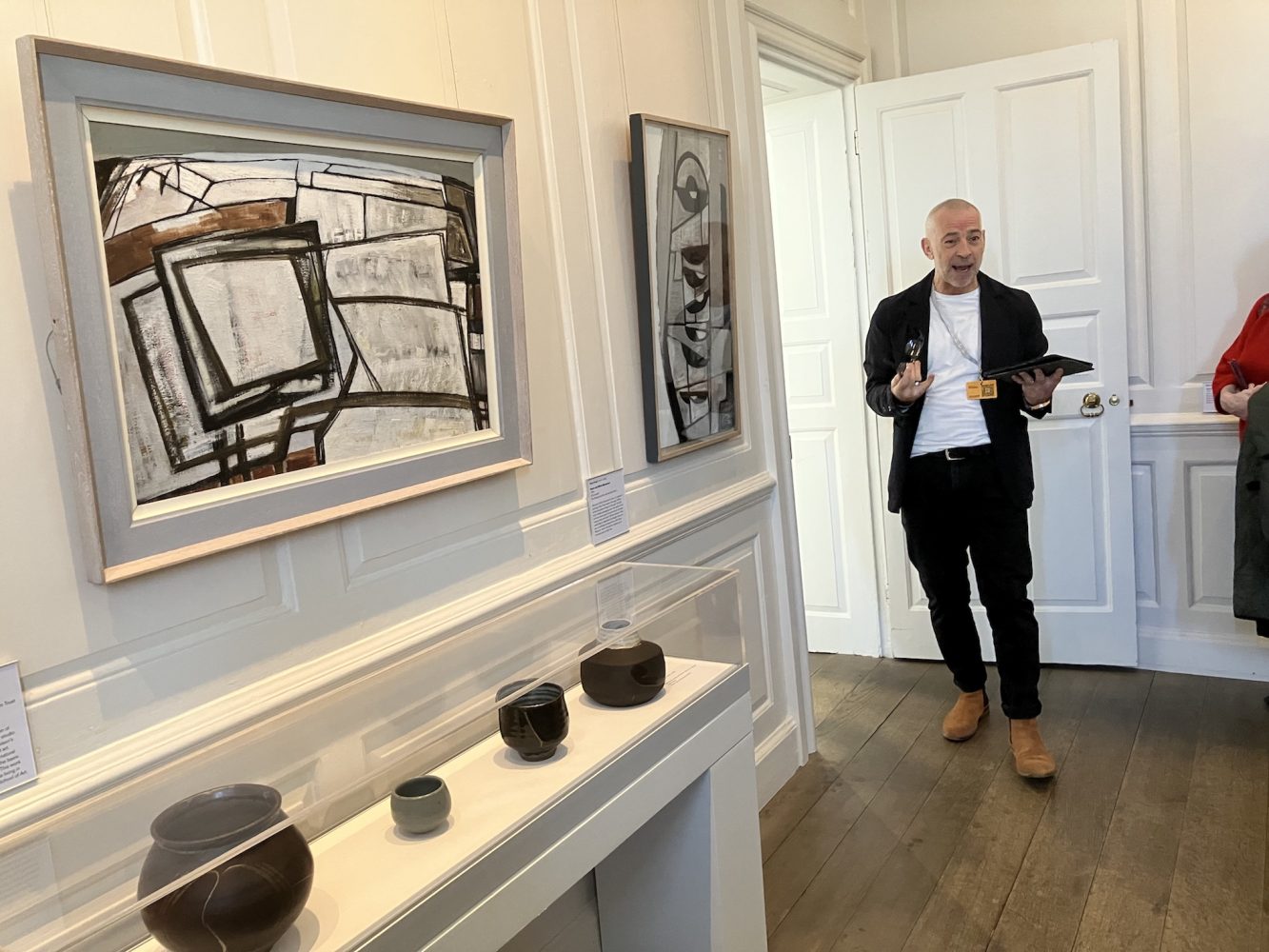
My friend and I arrived just in time to join a popular tour of the permanent exhibition, led by Brighton artist Martin Brown. Housed in the original part of the gallery, a beautiful 18th century townhouse, is a wonderful collection of modern British art, including works by Graham Sutherland, John Piper, Ben Nicholson, Barbara Hepworth and many others.
Martin was an enthusiastic and knowledgeable guide. He focused on two paintings in each room, giving us a short history of abstract and modernist art in Britain, as well as some information about each artist. I particularly enjoyed the way he elucidated aspects of the compositions. For instance, Terry Frost’s Black and White Movement (seen next to Martin in the photo) looked like a series of shapes and lines until Martin explained that they represented boats moored at St Ives, bobbing in the moonlit sea.
Powerful images of motherhood – Caroline Walker
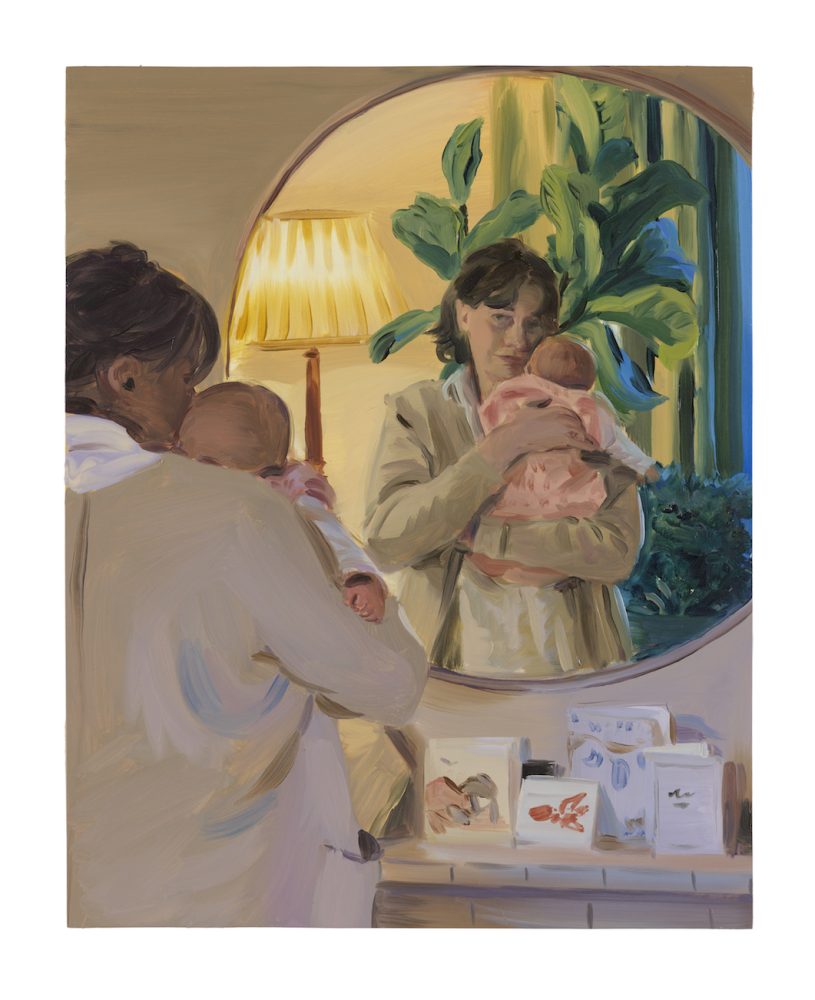
The tour also included Mothering, Scottish artist Caroline Walker’s powerful and moving paintings of motherhood. Martin drew our attention to the way her paintings transform everyday aspects of childcare into striking, almost theatrical scenes, especially through the use of light. For instance, Me and Laurie, Six Weeks Old (2024) (see above) is a tender self-portrait of the artist holding her second child, reflected in a mirror with the soft light of a lamp behind. The huge Friday Cleaning, Little Bugs (2024), set in her daughter’s nursery, is almost like a nativity scene, with the light focusing on a group of young children gathered round a table in an otherwise dark canvas.
Daphne (see cover image) is part of a series of paintings created in 2021 during the Covid-19 pandemic. It shows the artist’s young daughter Daphne through the window of their home. The window frames the domestic scene, with lamps highlighting a cosy sitting room. Having a child changed Walker’s relationship to her local area and her art: “I’d opened this door to making my own life a subject for painting.”
As well as documenting her own experience of early motherhood, Caroline Walker also did a series of striking paintings of her daughter’s nursery and the maternity ward at University College London hospital, where she had a residency. These move the concept of ‘mothering’ from the highly personal to the wider sphere of (largely low-paid) childcare and maternity services. A wonderful collection.
William Nicholson – an overdue retrospective
The modern gallery space is showing the first major exhibition of paintings by William Nicholson (1872-1949) in over 20 years. Perhaps best known for his illustrations of The Velveteen Rabbit, Nicholson was a hugely versatile artist, whose work included still lifes, landscapes, portraits and prints.
Taking up a whole wall is the striking series of hand-painted woodcuts, An Alphabet (1898), with vivid characters representing each letter. Representing a cross-section of Victorian society, albeit stereotyped to the modern eye – e.g. G for Gentleman, R for Robber – they are highly skilful and were celebrated at the time. Nicholson’s style varied enormously, depending on the subject matter. His still lifes – for instance, The Silver Casket and Red Leather Box (1920) – are detailed, luminous studies of light, shade and colour.
In contrast, some of the landscapes are delicately shaded and verging towards the abstract. Nicholson said that an artist’s role was “to communicate what in the natural is irresistible”. I particularly liked the studies of the Sussex coastline, where he bought The Grange in Rottingdean in 1909, such as Cliffs at Rottingdean (1910).
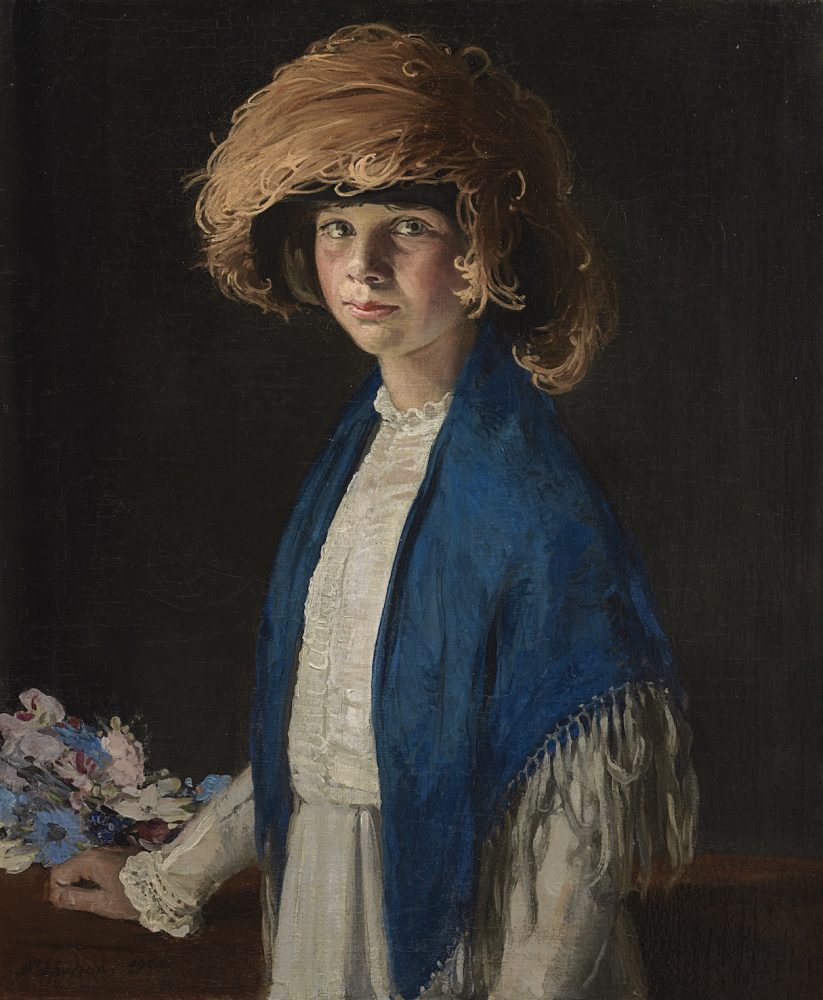
My favourites though were some of the portraits of family and friends. The painting of Nancy in a Feather Hat (see image above), shows Nicholson’s daughter in a magnificent ostrich feather hat, one of many theatrical props and garments he kept to dress up his sitters. In contrast, the unfinished portrait of his son, Ben Nicholson as a Child of Six or Seven Years (1901) – later famous as an abstract artist – is a rather wistful study.
The most striking portrait is of the artist Diana Low (1933), with whom Nicholson had a short affair. Her beauty and composure shine out of the canvas. I sat and looked at this for quite a while.
Workshops and music – something for everyone
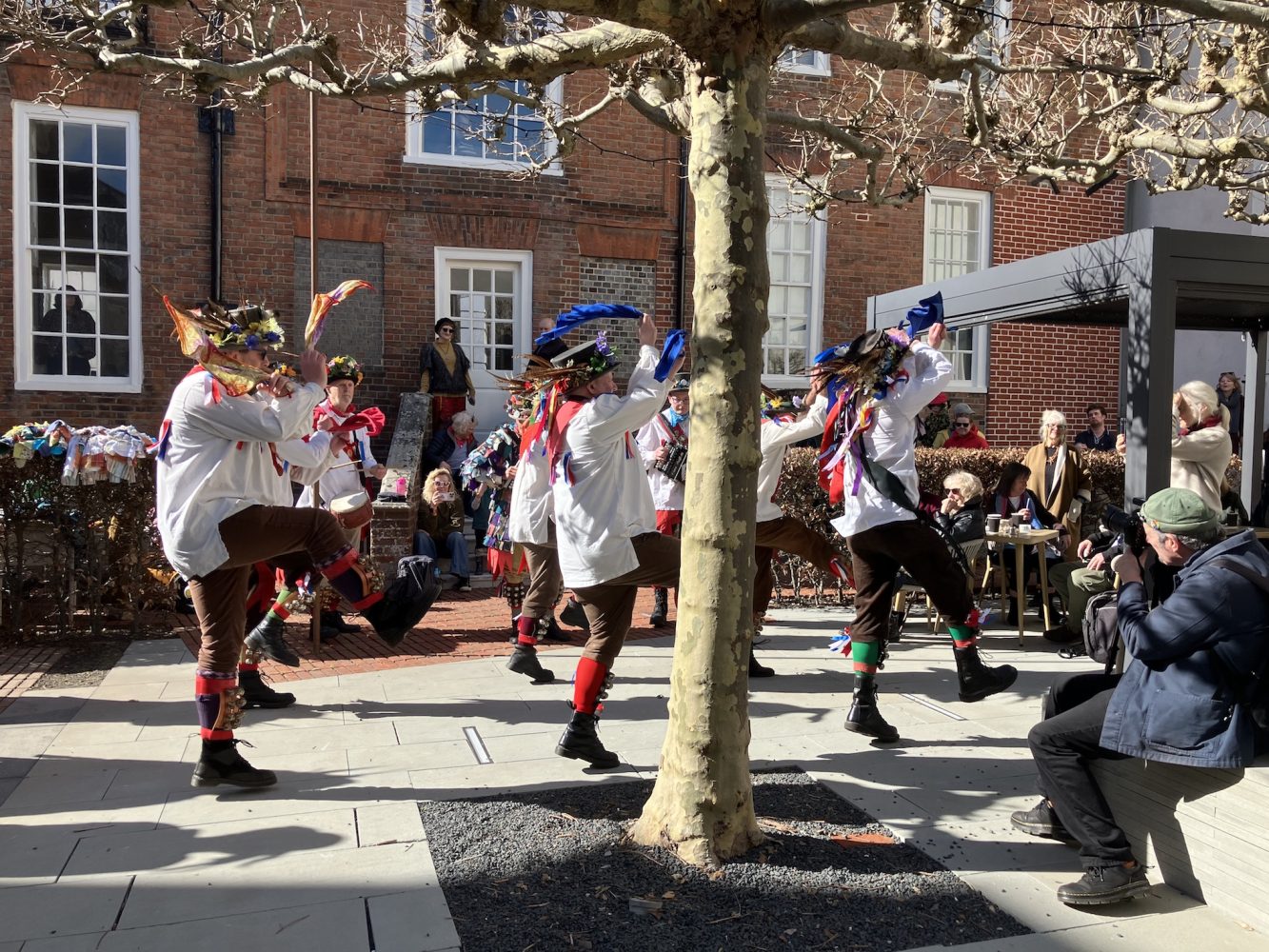
Pallant House was a hive of activity throughout the day, with children and adults taking part in the various art workshops, both in the exhibition and studio spaces. There was time to relax with delicious food and drinks in the garden, accompanied by traditional folk singing and lively Morris dancing. The warm weather was a bonus and the whole event a great success.
Caroline Walker’s Mothering is on at Pallant House Gallery until 26 April 2026. The William Nicholson exhibition runs until 10 May 2026.

CLICK HERE TO DONATE TO OUR CROWDFUNDER
HELP US BECOME STRONGER SO THAT WE CAN CONTINUE TO DELIVER POWERFUL CITIZEN JOURNALISM!







