


A defining moment in my childhood was discovering the work of stadium expert Simon Inglis. His The Football Grounds of Europe, published in 1990, captured the fading grandeur of many stadiums that had previously sat hidden behind the Iron Curtain. It inspired me to attend games in as many European grounds as was financially and logistically possible and sparked a lasting desire, over 35 years, to learn more about European football and its teams.
One venue that stood out in Inglis’s book was Juliska, home of Dukla Prague. He describes its unique setting high above the city and its spartan, almost forbidding character. On my two previous visits to Prague, Dukla had been away, so the chance to finally visit was one I was impatient to realise, especially as this time they were due to host the reserve side of fellow Prague outfit Slavia in the second division.
Dukla have had an intriguing history since the Velvet Revolution and the fall of Communism. As the official army sports club, formed in 1948, they enjoyed state backing and considerable success. They were regulars in European competition, won the league 12 times and added eight cups. Yet their links to the Communist authorities meant their fan base was never especially large, and after the fall of the Iron Curtain the club went bust, merged with provincial Příbram and left the capital.
A reminder of former glories
The current incarnation is a new one, rebuilt from local amateur club Dukla Dejvice before finally returning to the old stadium and adopting the colours and supporters of the former giants. Their cult status in the UK was famously reinforced by Half Man Half Biscuit’s eccentric song about the longing for a Dukla Prague away kit.
On this hot Friday evening, the number 8 tram wound its way over the Vltava and passed the tourists heading towards the castle, but it was hardly brimming with football fever. The only colours on display were those of perennial title winners Sparta, whose stadium sits on Letná Hill en route. The montages of trophies and famous players pasted across its stands must have been a reminder of former glories to the handful of Dukla fans who boarded there.
Supporting the maroon and yellow
Arriving at Nádraží Podbaba, with the area still as quiet as a non-league ground an hour before kick-off, I followed a steep route through a pleasant neighbourhood and passedt the imposing Stalinist bulk of the Grand Hotel towards the stadium. There is a statue to Dukla and Czechoslovakia star Josef Masopust, but confusingly it marks the entrance to the athletics venue; reaching the football section requires more climbing before the ground opens out onto the turnstiles. I had bought an online ticket for 290 koruna, around £10, although tickets are easy to come by on the day, even when the hosts are in the topflight.
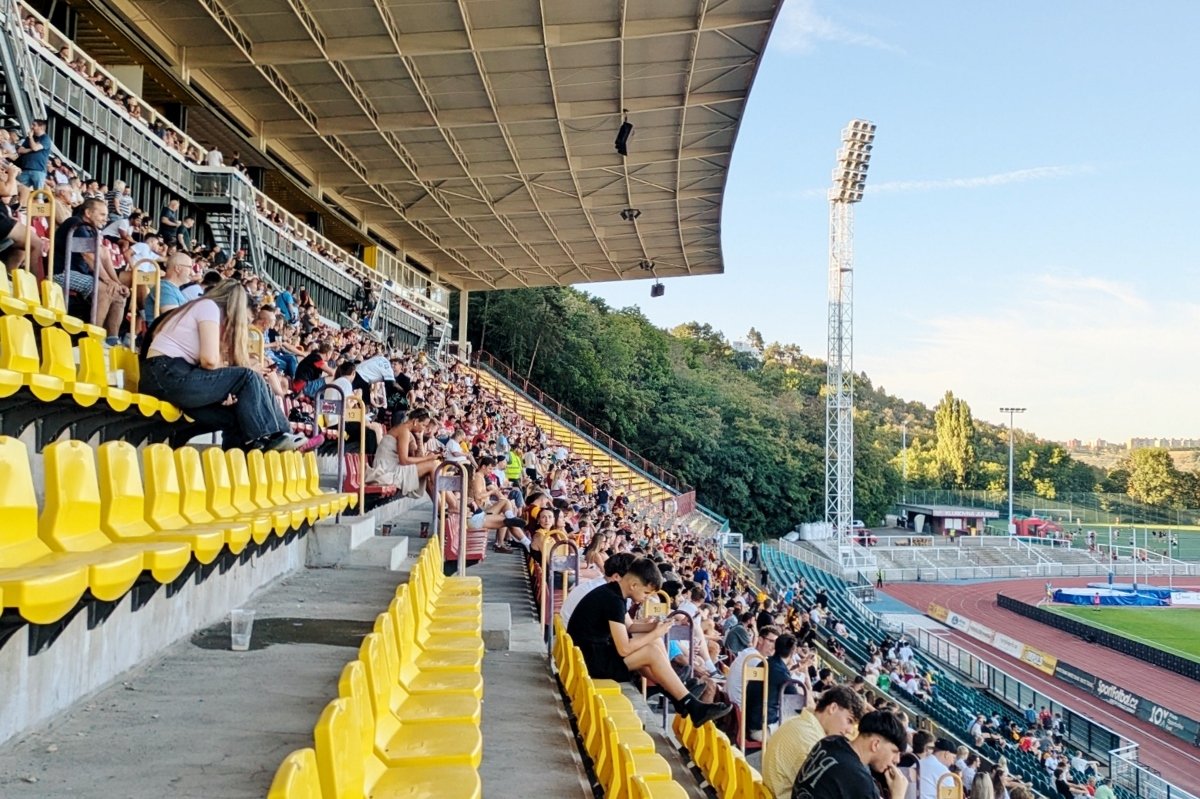
The oddness of the stadium layout is apparent straight away. You pass the sausage stalls and souvenir huts (I didn’t buy an away kit, sadly) before finding yourself at the very top of the enormous, seated stand, carved into the side of the hill.
A concourse with further food and beer outlets provides space for standing, and many patrons in the team’s distinctive maroon and yellow colours chose to watch from there throughout the game. Looking down onto the athletics track, you can see shallow terraces around it, unused on this occasion apart from a sprinkling of media staff and members. Newer green seats sit trackside, presumably used mainly for athletics meetings. The army retain control of the stadium and the wider sporting club, although not the football one these days.
The pre-match atmosphere was lively, with locals supporting the visitors mingling happily with football tourists and the home faithful. The vast stand can hold around 4,500 people, so tonight’s attendance of 2,145 left plenty of space to sit where I wanted.
The team implodes
The game itself began with a bang as Dukla scored inside three minutes, prompting a burst of noise from their fairly harmless-looking Ultra section before the match settled into a scrappy affair, not helped by the less-than-perfect pitch. The sweeping views over the city from the heights of the grandstand made it hard at times to focus on the football, though Dukla were comfortably on top against a very young-looking Slavia side.
Moving down the stand for a closer view in the second half, I was rewarded with a Slavia equaliser and then half an hour of end-to-end action, with both sides missing chances. Just when a draw seemed inevitable, Dukla imploded, conceding two injury-time goals that were celebrated wildly by the Slavia players and bench.
So, a disappointing result for the hosts, but overall the stadium and setting were everything I could have hoped for: beautiful views, distinctive architecture, the classic Dukla colours and a real sense of privilege at having watched one of Central Europe’s cult teams in action.
As a weekend football destination, and for anyone seeking an alternative to the glossier, more corporate world of the English game, Juliska is a must. There is great beer, few queues, a friendly atmosphere and, as a bonus, you will get your daily steps in simply by reaching the place.

CLICK HERE TO DONATE TO OUR CROWDFUNDER
HELP US BECOME STRONGER SO THAT WE CAN CONTINUE TO DELIVER POWERFUL CITIZEN JOURNALISM!




