



Are you listening to the news? Record winds here last week and Los Angeles on fire. Now we hear this last January was the hottest on record, by a long way.
In October a group of the world’s senior climate scientists, looking into the abyss of “irreversible climate disaster”, called (again) for drastic and urgent carbon reductions: “If action in line with 2°C were to start in 2024 then global emissions would need to be reduced by an average of 4% every year until 2035.”
We are not at panic stations quite yet but people want to know what they can do. What can we as citizens do?
The food system accounts for over 30% of our emissions (how we grow, transport, process, cook, and consume food and how we waste it). There are obvious areas in this complex chain where savings can be made.
This article will explore opportunities in the hospitality sector. Later we will look at healthier diets and reduced food waste.
We need to reduce emissions
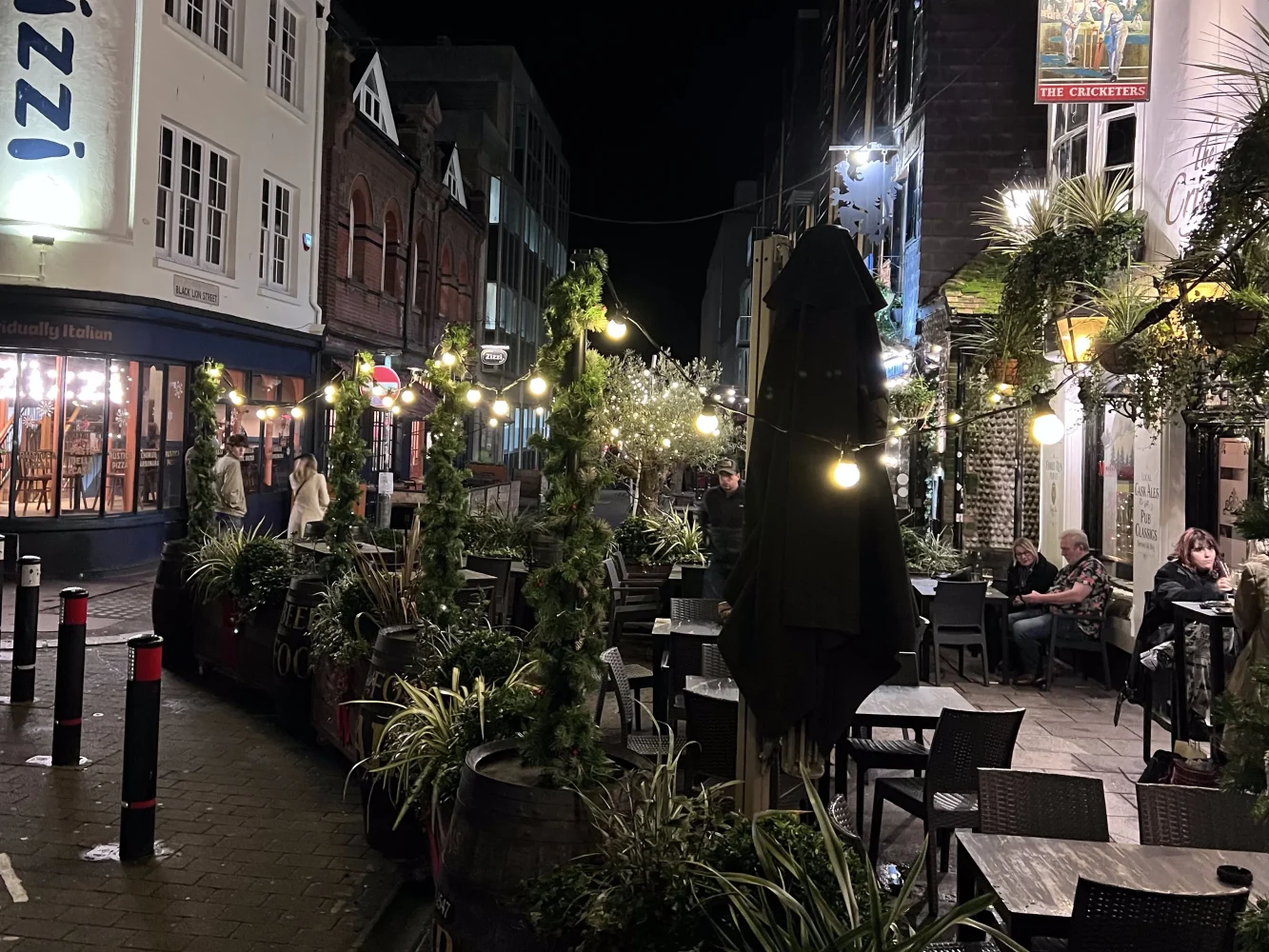
The website at Brighton’s new think tank, Climate:Change, tells us there are at least 1,000 restaurants, coffee shops, pop-ups, mobile units, takeaways and unlicensed establishments in Brighton. We don’t know how much of the food consumed in Brighton occurs within our vibrant food service industry but the figure is some 14% in London, and we could probably assume a similar share here, not least given that Brighton averages 11 million visitors in a year.
Sussex Bylines recently reported that local restaurants exhibit different levels of engagement with the ‘sustainability’ agenda, so it was encouraging to attend a new initiative promoting the Sustainable Restaurant Guide. This is a substantial endeavour created by a partnership including the marketing platform Restaurants Brighton, the University of Brighton, and the Brighton and Hove Food Partnership.
It issues badges across three categories: Sustainability Explorer, Sustainability Leader, and Sustainability Champion. A restaurant will improve its rating according to the degree of engagement it makes in five key ‘sustainability’ areas: water usage; energy and gas supply; menu and food waste; waste reduction, materials and chemicals; social sustainability.
Restaurants raising their game

Some 30 local venues were represented at a recent sustainability workshop and together they shared their very different stories. Redroaster talked about how it had slashed plastic waste by switching to bag-in-box systems for milk. Nostos had improved energy efficiency by switching from ice machines to freezers and Lost in the Lanes had improved staff retention and well-being with more flexible personnel scheduling.
This was a serious day with participants asked to think critically. There was discussion, for example, about using terms like ‘eco-friendly’, essentially a meaningless term and a low bar in the current context. The organisers clearly appreciated that times are brutal for restaurants but had no doubt as to the impact on consumers of what they called the sustainability journey.
Ivanka Majic from Restaurants Brighton said:“The response from local restaurants has been really positive. It’s inspiring to see their commitment to making sustainable changes, which we know requires real effort.”
39 eateries have so far completed the sustainability checklist. Check them out here, they cover every taste.
And what of the carbon impacts?
These efforts are of course not going to bridge the emissions gap for Brighton restaurants alone and, when faced with the sheer enormity of the emission cuts necessary, even some of these early adopters are daunted.
“How can we cut our emissions by 90%?” one participant asked. His restaurant was in a rural area and everything connected with the business is driven in or out: all the materials, the staff, much of the waste and all the customers. His scoring against the sustainability criteria was immediately handicapped.
How could he hope to get a gold star? And it’s obvious that in this environment nobody wants the bronze.
Carbon footprinting is not explicitly listed under the scheme but some participants are wrestling with this and making real progress. At the University of Sussex, the cafés on campus show graded carbon footprints by menu item.
These are rated A to E with ‘A’ rating indicating a “very low” carbon rating, while an ‘E’ indicates a “very high” carbon intensity. This covers all emissions from the farm through processing, packaging, transport, and on to waste disposal.
The menu also tells us that choosing the ‘A’ label is the equivalent of charging your phone 24 times while choosing an ‘E’ label item is akin to charging your phone 747 times. This is surely powerful and helpful information.
The scheme needs support
Some participants at the workshop wondered whether there couldn’t be a more supportive environment to help those restaurants trying to improve their practice. Could not the regulatory authorities, principally the council, provide some encouragement, perhaps use its carrot and stick powers? Might this not include incentives: discounts, training, and even some small, targeted subsidies?
The bottom line is that the risk-taking restaurants need a reward for their efforts and the costs they incur. In surveys, the public say they are supportive of moves towards sustainability but this support may be fragile.
A key question remains: how can the restaurant-going clientele be persuaded to pay a little more to outlets trying to improve their practice?
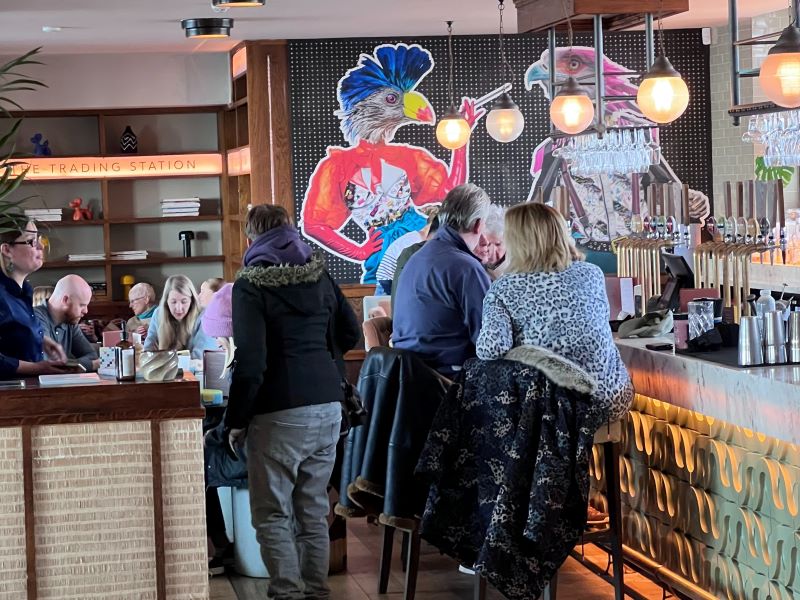
In this context, it’s interesting to know that customers are more likely to choose the vegetarian option when it’s the default. They choose what they are offered. And, if you put the vegetarian option as the first item on the menu, selection of that item goes up measurably.
We also know from piloting in Scotland that if restaurants provide an easy doggie bag service, waste will be reduced. What if small moves like these were supported by discounts on the license fee or the council tax, or even made mandatory? The cost would be minimal, the publicity for the restaurant, and indeed the town, would be impactful and there would be a noticeable effect.
Then, what about peer group pressure? Spreading the word among customers? Surely this could have some effect. If Brighton and Hove wants to be the ‘progressive beacon’ people often claim it is, we, the citizens, could go further: could discerning customers start to think about actively choosing places that are participating in the scheme? Some people might even consider only going to places that are demonstrably on the sustainability journey.
What if I was to suggest that Sussex Bylines readers actively support the restaurants participating in the scheme? Go and check them out. Show some appreciation. Let a local place know that you are interested and that you are responding to their efforts.
As a first step I am going to start a regular column where I visit restaurants that are somewhere on the sustainability journey, with a badge at one of the three levels. It will give them a bit of publicity and I can tell you what the place is like, and share the challenges they face in real time.
Watch this space.

CLICK HERE TO DONATE TO OUR CROWDFUNDER
HELP US BECOME STRONGER SO THAT WE CAN CONTINUE TO DELIVER POWERFUL CITIZEN JOURNALISM!







