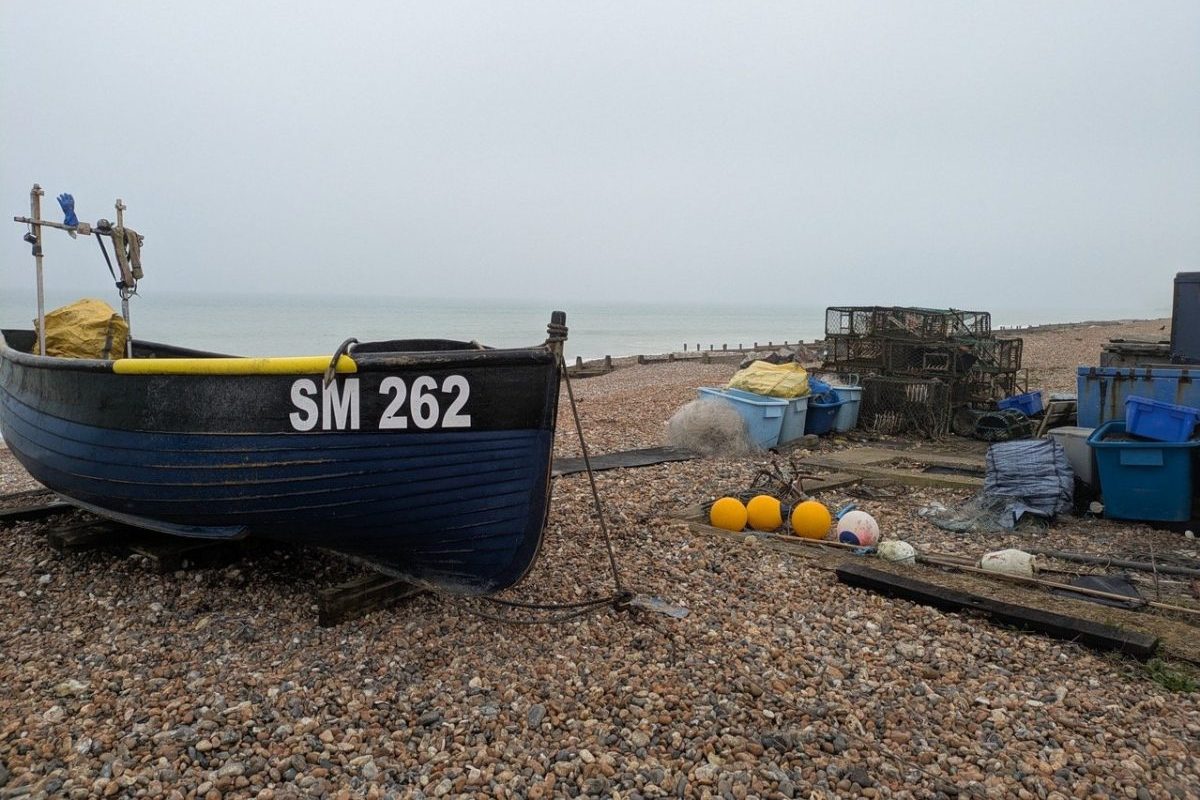
A rare rain‑free Sunday tempted me back to the Sussex coast to complete a section of the coastal walk that I’d missed. With much of the countryside still waterlogged after months of persistent wet weather, the promise of firm coastal paths was especially appealing. I’d previously walked from Rottingdean to Brighton, then continued on to Shoreham‑by‑Sea; last summer I covered Worthing to Littlehampton. That left one obvious gap to close.
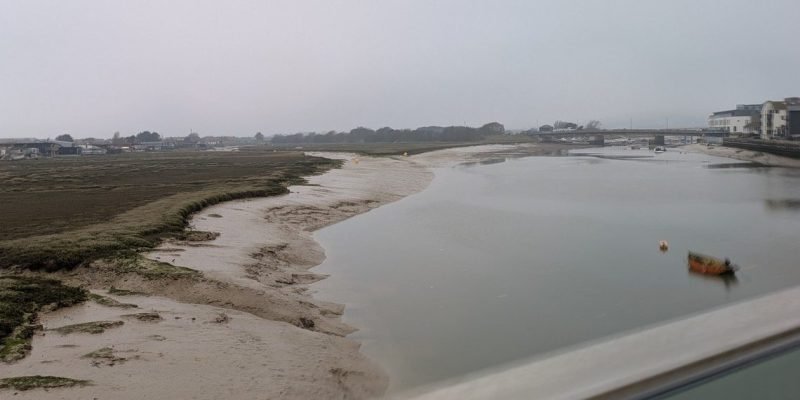
Leaving Shoreham station, I wandered through the charming village‑like streets of Old Shoreham, complete with a picturesque 12th‑century Grade I-listed church and former fishermen’s cottages now reborn as cafés and cosy pubs. Crossing the main road and the modern swing bridge – with views towards the open sea and the River Arun – I briefly headed inland before joining the English Coast Path.
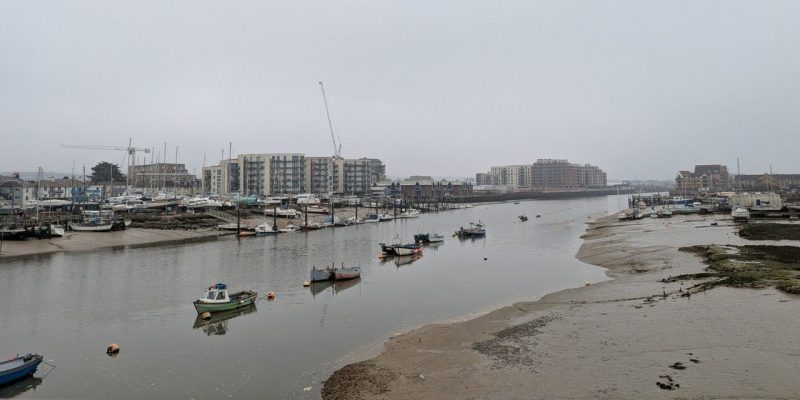
I made a short detour to explore the inlet, passing new waterside flats and small private harbours. The contrast between modern developments and relics of Shoreham’s industrial maritime past reminded me of walking through London’s Docklands. A mile later, after passing a small beach and the local sailing club, I reached the end of the inlet and Shoreham Fort.
Shoreham Fort
This grim Victorian redoubt, strategically positioned to defend the town, remained in use until the end of the First World War. Though closed on my visit, substantial remains survive – the gun platforms, walls, defensive ditch and brick caponiers (for firing rifles). A moving memorial trench commemorates the soldiers who trained here before being sent to the Western Front. The whole site is maintained by volunteers.
From here, the route continues along the busy shingle beach. A boardwalk offers easier progress, though it does become something of a bottleneck, especially with excitable dogs and the occasional trapped cyclist attempting to weave through strolling families.
When the boardwalk ends, the path stretches along a long, straight concrete walkway towards Lancing. To the right lies a bleak man-made estuary (home to a bird sanctuary) while the sea remains partly hidden behind a concrete barrier. Eventually the landscape opens up near beach huts, mobile saunas, and a park, before presenting a choice: a scenic but strenuous march across the pebbles, or an easier but noisier route alongside the coastal road.
The beach or the road?
I opted for the beach, accepting the tougher footing for the reward of uninterrupted sea views as Worthing emerged on the horizon. Apart from the occasional beachcomber, huddled anglers, and ever‑present dogs, this was the quietest, most peaceful stretch of the day. Eventually, the familiar signs of a seaside town reappeared as I approached Worthing, with its mini art galleries and cultural spaces illustrating its gentrification in the last few years.
Past the pier and theatre, and through a charming area of flint‑fronted cottages, I completed the walk at Worthing station – around eight miles in total. It may not be the most dramatic or wild section of the coastal path, but Shoreham Fort is well worth visiting, and overall, the route makes for a pleasant, straightforward outing – especially if you avoid the endless pebbles.

CLICK HERE TO DONATE TO OUR CROWDFUNDER
HELP US BECOME STRONGER SO THAT WE CAN CONTINUE TO DELIVER POWERFUL CITIZEN JOURNALISM!