


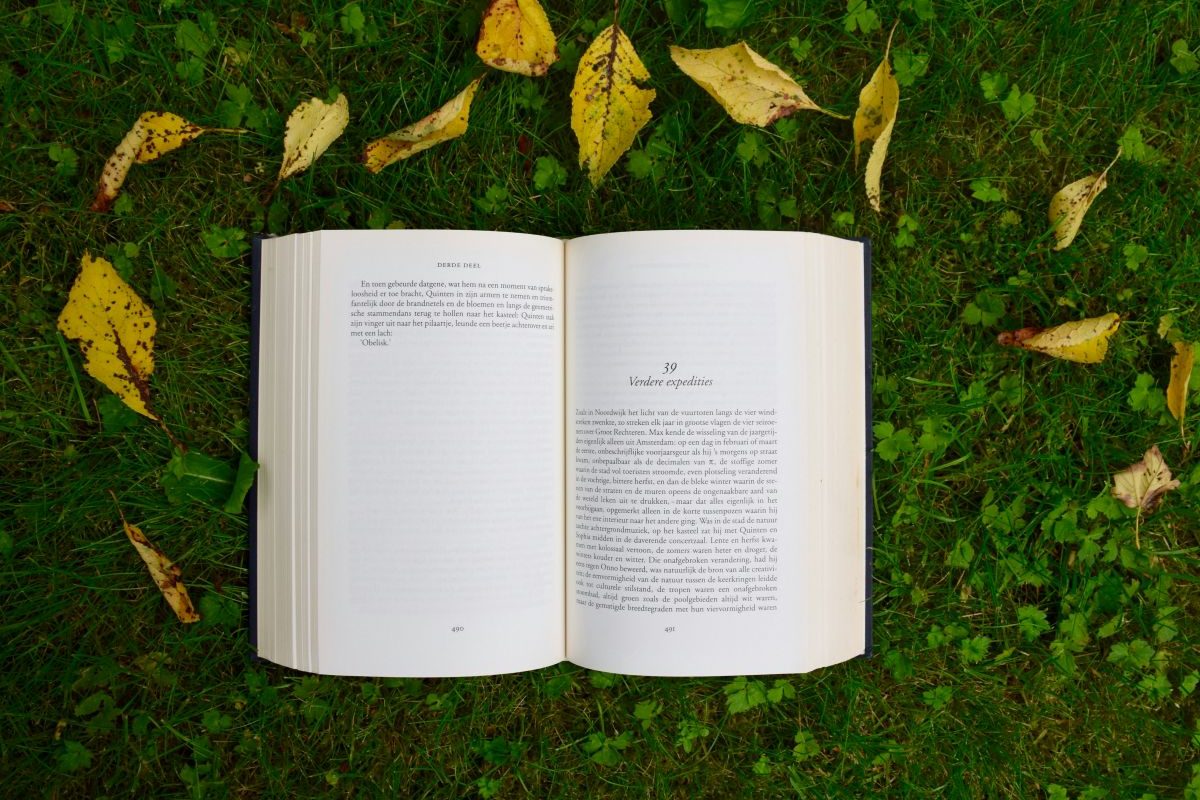
I am writing two books now, and during that process I found myself considering something I hadn’t really expected to be thinking about. It wasn’t what should go into them, because I have spent countless hours considering that, nor was it whether anybody might eventually read them. It was something much more ordinary. What format should these books take when they are finished?
One is aimed largely at young adults, and, for that book, an electronic version feels natural. The generation it is intended for already carries much of its world on a screen, and if the purpose of the book is to pass experience and knowledge from one generation to another, those words don’t need sheets of paper wrapped around them. They need to be accessible, affordable and somewhere the reader is comfortable finding them.
The other is a children’s book, though, and with that one I feel completely differently. I want that book to be held. I can imagine small fingers turning the pages and stopping over the illustrations, a parent or grandparent sitting beside a bed reading it aloud, the book becoming battered around the edges. There is something rather lovely about a children’s book that carries the evidence of having been loved.
It was while thinking about this that a slightly uncomfortable question appeared. Much of that children’s story is about helping young people notice the natural world. If one day thousands of copies are printed to share that knowledge, what will sharing it ask of the natural world itself? I picked up one of the books beside me and, for a moment, stopped seeing the story and looked instead at the paper between my fingers. Somewhere behind those pages was a tree.
It’s so obvious that we hardly notice it
We don’t pick up a novel and see a forest, any more than we sit at a wooden table and imagine the tree it once was or look into an old building and picture the woodland that became its beams. Familiarity makes these things invisible, yet once I began thinking about it, I found it difficult to stop. Trees have given us houses, ships, furniture, fuel, paper, while living trees continue storing carbon, protecting soils, cooling landscapes and providing habitat for an extraordinary web of other lives.
None of this makes using timber inherently wrong. Wood is a renewable material when forests are responsibly managed and ecosystems protected. Paper can be recycled, a timber building can stand for centuries, and a book can last generations. What interested me wasn’t whether books were environmentally good or bad, but why I had barely considered their environmental cost at all – they are so familiar that their footprint has largely disappeared from our imagination.
At the same time, we have become increasingly aware of the environmental footprint of something much newer: artificial intelligence. There are legitimate reasons for that concern. AI doesn’t exist in some weightless digital realm detached from the Earth. Behind the screen are data centres filled with processors, servers and cooling systems all requiring materials and energy to operate.
According to the International Energy Agency, data centres consumed about 485 terawatt-hours of electricity worldwide in 2025, around 1.5 per cent of global electricity demand, and that figure is projected to reach roughly 950 terawatt-hours by 2030. AI is an important part of that growth, although data centres also support the enormous range of other digital services that have become woven into everyday life.
Water belongs in the conversation too
Some data centres use water directly for cooling, while producing the electricity they consume can have its own water requirements. Research attempting to calculate AI’s water footprint has produced some striking numbers, but it has also shown why simple claims about how much water an individual AI question “uses” need treating carefully. The answer changes with the model, hardware, location, weather, cooling system and electricity source. The environmental cost is real, but the precision sometimes suggested by a headline is not.
Holding that book made me wonder why we don’t bring the same curiosity to everything else around us. Keep an electronic reader for years and read hundreds of books on it and the manufacturing footprint is spread across all those books. Barely use it before replacing it and the calculation changes. Buy a printed book, read it once and discard it and its resources have served one person, while the same book placed in a library, lent among friends or handed through several generations becomes something quite different.
Suddenly my original question no longer seemed to be paper against pixels. It was about how we use things.
That thought followed me around. The phone in my pocket required minerals to be extracted somewhere. The glass in the window required raw materials and heat. My clothes required fibres, water, energy, manufacturing, while food carries its own history of soil, rainfall, sunlight, machinery and labour. Even the electricity arriving through the wall was generated somewhere. Modern life has become remarkably good at separating the thing we consume from the story of how it reached us.
Perhaps “the cloud” is one of the finest examples of this. The name makes our digital world sound wonderfully light and ethereal, as though our documents somehow float above the physical world. Yet the cloud is firmly attached to the ground. It is concrete, steel, copper, silicon, water and electricity.
But technology can help remove demands elsewhere, which is why these questions rarely provide the satisfying simplicity of declaring something good or bad. A digital document needs no paper. An electronic reader can carry an entire library. A video call might replace a journey, while artificial intelligence is already improving energy systems and accelerating scientific research.
The IEA itself describes both sides of this relationship: AI is increasing demand for electricity while improving the efficiency of energy systems. None of that gives technology a free pass – it simply means that environmental accounting becomes more complicated once we look at the whole journey rather than the part in front of us.
What interests me most is our tendency to notice the environmental footprint of whatever is newest while accepting the footprint of familiar things almost without seeing it. It is easy to point towards a distant data centre because it feels enormous and industrial, yet harder to look around our own homes and recognise the thousands of small environmental decisions accumulated over a lifetime: the phone replaced while the old one still worked, clothes hardly worn, furniture changed because fashions moved on, food thrown away or unnecessary journeys.
None of those choices makes somebody environmentally irresponsible. Taken together, though, they reveal something about our relationship with consumption. There has never been a human civilisation without an environmental footprint. Our ancestors shaped stone, felled trees, burned wood and charcoal, cultivated land and smelted metals. Later generations built printing presses, factories, railways and power stations, and ours has added semiconductor plants, fibre-optic networks and data centres. The technology changes, but our dependence upon the Earth does not.
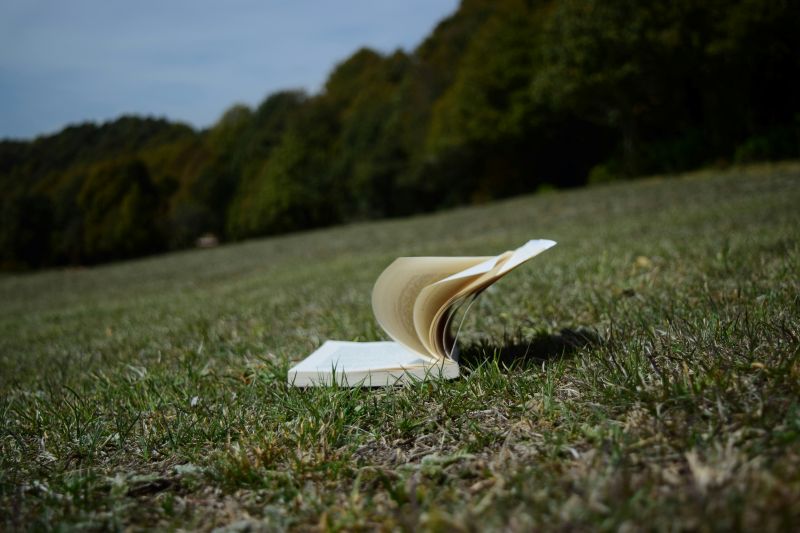
Which brings me back to my two books. If that children’s book becomes paper, I would like that paper to come from responsible sources and the book itself to be made well enough to survive being read again and again. More than anything, I would like it to be worth keeping, worth lending and worth passing from one pair of small hands to another.
Perhaps environmental responsibility is about learning to value what we use. A tree becoming a book is not necessarily a tragedy if the forest is responsibly managed and that book goes on to enrich lives for decades. Electricity isn’t automatically wasted either if what is created has genuine value. The question is how often do we produce things that mean almost nothing to us and that we quickly discard?
Everything begins somewhere. Behind the book is a tree, behind the screen are minerals and electricity, behind our food are soil and water, and behind almost every object surrounding us is some part of the Earth transformed for human use. We cannot live without taking something from the world around us; no living creature does. But we can notice what we take, waste less of it, keep things longer, share more and repair what can be repaired.
I began with a fairly simple question about two books: paper or pixels? Somewhere along the way it became a much larger question about the way we live, because perhaps the challenge isn’t to find something that costs the Earth nothing.
Perhaps it is to understand what things cost and then decide whether we value them enough to make that cost worthwhile.

CLICK HERE TO DONATE TO OUR CROWDFUNDER
HELP US BECOME STRONGER SO THAT WE CAN CONTINUE TO DELIVER POWERFUL CITIZEN JOURNALISM!





