


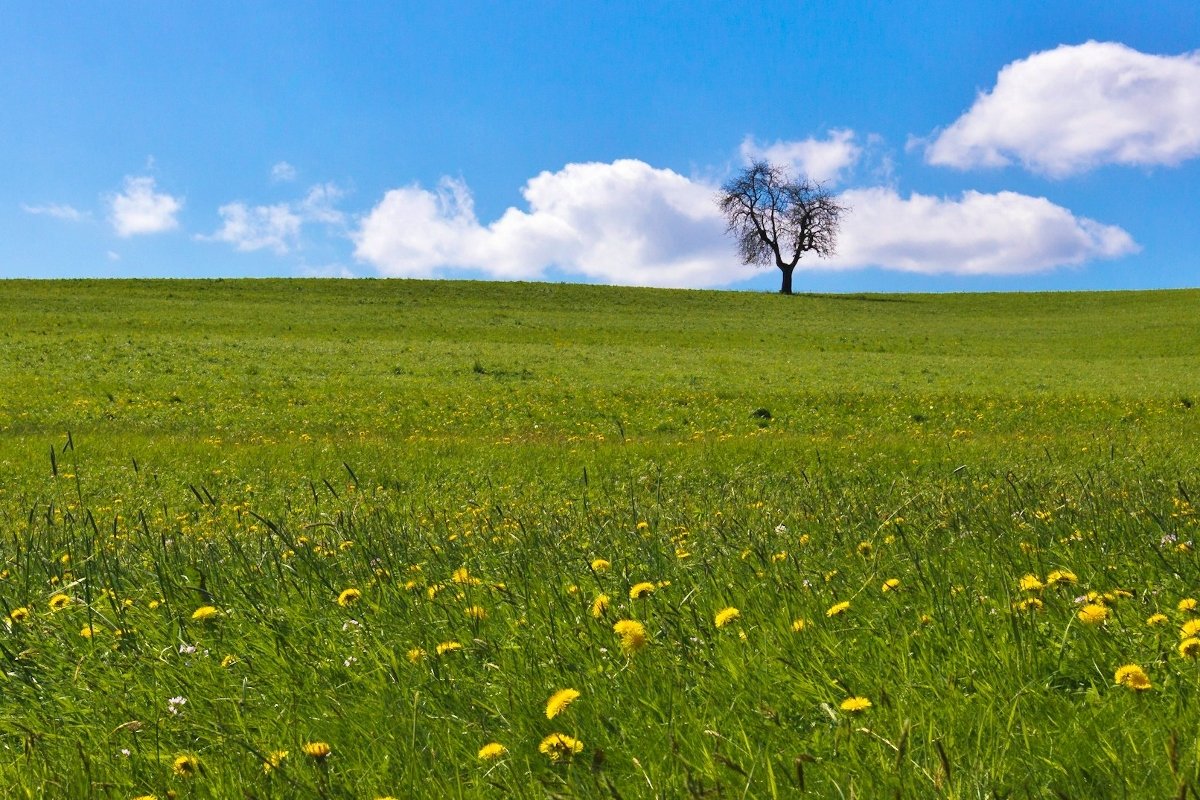
There’s a stretch of land I pass often in Sussex – not remarkable, not named, the sort of place you wouldn’t think to point out. A field sloping slightly away from the road, bordered by a hedge that’s been cut back too hard in places and left to soften in others. There’s a layby just beyond it. Cars pull in and out throughout the day. People stop, but not for long.
Engines tick as they cool. Doors open, close. Someone checks a phone. Someone takes a photograph of the view – because it is a view, though difficult to say exactly of what. Then they leave again. The whole encounter rarely lasts more than a few minutes, as if the place itself can be taken in at a glance.
It gives the impression, quietly but persistently, that nothing much is happening there.
And yet this is the peculiar idea that seems to be gathering force across the countryside: that land which does not obviously produce, house, or generate is somehow waiting. Waiting to be filled. Waiting for purpose. Waiting, in a sense, to begin.
You can hear it in the language that circles planning discussions, though rarely spoken plainly. Land is described as “underused,” “low value,” “available.” Even protected stretches are re-examined through this lens, their worth measured against what they might yet become. Housing, energy, infrastructure – each arrives with its own urgency, its own logic. And beneath it all, a quiet assumption settles in: that if a place is not visibly busy, it may as well be described as empty.
But stand in that Sussex field a little longer – long enough that the passing traffic thins, long enough that the first restlessness begins to ease – and something else starts to come into view.
Not all at once. Not in a way that announces itself.
Quiet activity
The hedge is not still. It holds a kind of contained movement: insects working the edges, birds slipping in and out, the slow negotiation between growth and restraint where it has been cut and where it has not. The field shifts with the light, taking on depth where a moment before there seemed to be none. Even the verge – so often dismissed as the least of places – carries a quiet density of life.
Nothing here performs. There is no spectacle. But neither is there absence.
The difficulty, perhaps, is not that the countryside is empty, but that we have become poorly attuned to what fullness looks like when it isn’t arranged around us.
We arrive already occupied – mentally, if not physically. The habit of constant engagement follows us out of towns and into open space. A walk becomes something to complete. A view becomes something to capture. Even rest carries a faint sense of purpose, as if it must account for itself.
To simply sit, without improving the moment or turning it into something else, has become unexpectedly hard.
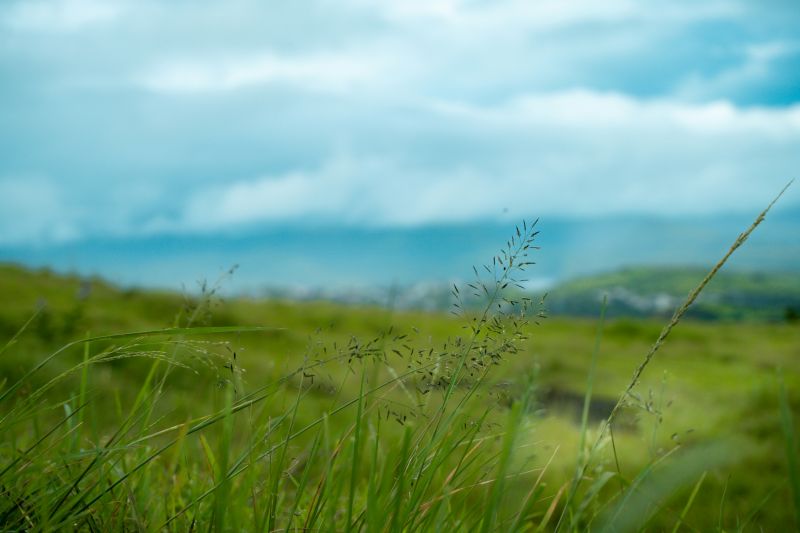
And yet, when it does happen – even briefly – we recognise it at once.
A loosening, a slight drop in the shoulders. The mind, which a moment before was moving ahead of itself, begins to settle back into where the body already is. It’s not dramatic, often it passes almost unnoticed, but we feel it all the same.
Something in us responds when the land is allowed to reach us. We don’t always stay long enough to understand it, but we leave changed by it nonetheless.
This is the quiet contradiction at the heart of it. We speak, increasingly, as though land must justify itself – must produce, house, generate – yet we ourselves are restored most reliably by places that are doing none of those things in any obvious way – a field, a stretch of hedge, a verge left alone.
From a modern perspective, this kind of land is easily overlooked. When value is measured in output, anything that does not yield in clear terms begins to look like potential instead – something that could, or should, become something else. The quiet field becomes a future site; the unbuilt space begins to feel incomplete.
It is an efficient way of seeing. It is also a narrowing one.
Because much of what sustains both the land and ourselves happens outside that frame entirely. Soil holding water, plants sustaining insects, margins offering refuge. None of it hurried or organised for immediate display.
To recognise this requires a different kind of attention – one that does not immediately convert what it sees into use.
Be still, watch and listen
Older ways of understanding land tended to begin from this point, whether spoken or not. A place was not empty simply because it was quiet. Value was not dependent on visibility. Relationship came first.
You can still feel traces of that approach, if you stand long enough in the right place. Not as something distant or esoteric, but as a shift in proportion. The sense that the land does not need to be completed by us. That it does not begin when we arrive.
In Sussex, this tension sits close to the surface. The countryside here is both cherished and pressed upon, protected and negotiated over. It carries its beauty lightly, without insisting on it, which may be why it is so easily overlooked in practical terms. A field like the one by the layby does not argue for itself.
It simply continues.
Perhaps that is what makes it vulnerable to being seen as empty. Not because it lacks life, but because it waits, if anything, it does not compete for attention in the way we have come to expect. It does not interrupt us. It does not demand to be noticed.
The question, then, is not only what we choose to build or preserve, but how we arrive at those decisions in the first place. Whether we are still capable of recognising a kind of fullness that does not announce itself. Whether we can tolerate a landscape that does not immediately explain its value.
Or whether, faced with quiet, we will continue to call it absence.
The field remains where it is, just beyond the layby. Cars still come and go. The hedge thickens in places, thins in others. Nothing much appears to happen.
Unless you stay and notice.

CLICK HERE TO DONATE TO OUR CROWDFUNDER
HELP US BECOME STRONGER SO THAT WE CAN CONTINUE TO DELIVER POWERFUL CITIZEN JOURNALISM!






