Tourism has long been vital to Sussex. Without the masses of rail-borne holidaymakers of the Edwardian age, there would have been no boarding houses, no Butlins, no Brighton! From Bognor to Hastings would still be fishing villages. Tourism matters to the world.
In the ‘60s, Spain’s liberalisation of access to new resorts in the Costa Brava helped take it from being a poor, isolated fascist state to the pilot for airborne package holidays upon which so much of its economy has since depended. Where would Greece, the Maldives, Bali or Florida be without tourism?
Tourism has been having a bad press recently. Its heavy demand for fossil fuels makes it the enemy of Net Zero while new digital services have led to housing crises in popular destinations. Who would have thought that local authorities in places dependent on tourist revenues would be putting up the shutters to more business? All over the world, places most attractive to visitors are struggling with their very success.
Locals are being priced out
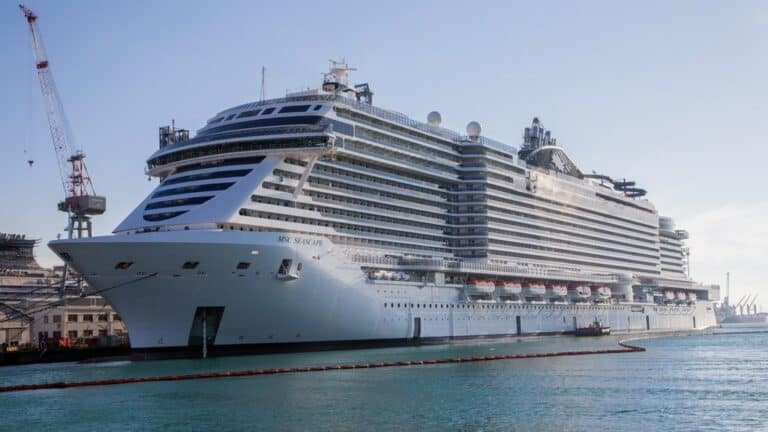
Quite apart from the sheer, inappropriate volume of crowds and queues in tiny beauty spots like Sussex’s own Birling Gap or the multiple guided groups disgorging from vast cruise ships for rapid and vapid rubber-necking in bucket-list cities, there are bigger issues at play.
Demand for accommodation in towns and cities famed for their beauty and cultural assets exceeds capacity, leading to such inflation in housing costs that local residents are priced out of living in their own home communities.
Airbnb, which started as offering opportunistic incremental income from spare rooms has morphed into conversions, commercialisation and inflation for what would otherwise have been homes for local residents.
Thousands in tourism magnets like Venice, Barcelona and Lanzarote have taken to the streets demanding action by local authorities, which, increasingly, is being taken. Licensing of rentals, variable taxation of second homes and entry prices have been instigated in some of the most stretched places.
Travel at odds with emissions reduction targets

To come to these destinations millions of people must travel. Whether this be by road, air or cruise ship, the fossil fuel usage by this enormous traffic is greatly at odds with the global drive for carbon emissions reduction, essential for the continuing existence of them all, never mind their prosperity.
The drive for economic growth has so far over-ruled the sorts of measure needed to reduce such emissions but for how long can this continue if global warming is to be constrained? The internet has introduced the beauties of the world to increasing numbers, who respond by swelling the numbers of tourists. Europe’s attractions which used to be the stamping ground primarily for other Europeans have now become bucket-list items for people from all over the world.
The frustrations of tourists with the crowds and queues have apparently now triggered new destination countries to attract more visitors and travellers to try them but this may simply spread the contagion. There must be a price to this, to the planet at least. Tourism may be economically and culturally valuable but it is neither green nor sustainable.
What about other values too: cultural; spiritual; familial? Without the development of package holidays, how many people would never have seen the Eiffel Tower, the Colosseum, the Parthenon, the Valley of the Kings, a taverna, even the blue of the Mediterranean? The joy of sunshine makes access to places where it can be nearly guaranteed more than just a luxury but fulfilling a human need.
Without affordable mass tourism as championed by Freddie Laker, Stelios and their like, these benefits would have continued to be the privileged preserve of a few wealthy Grand Tourists. Yes, some tourist developments have been tacky and invasive of host communities but surely their very popularity is evidence of their value to participants.
Affordable travel a social revolution

Affordable travel was one of the most levelling, educational and life-enhancing innovations of the 20th century, a social revolution ranking alongside the internet and free healthcare. Thousands of young Brits have interrailed their way across Europe in search of new experiences which have opened their eyes and lives to other cultures, languages, art, work and food, equipping them for later life. Millions have come to enjoy leisure travel as a staple or even a right.
The opportunity to travel should not be taken away. Losing Freedom of Movement for current and next generations of UK citizens was already a gratuitous deprivation. The pressures of tourism arising in part from its popularity should not be allowed to further erode access to travel.
Protectionism and border controls put in place to obstruct migration may constrain out-of-control mass tourism but somehow we have to protect the benefits to humanity of intermingling with other peoples, cultures and places; and with the planet itself. Maybe rationing by one means or another will become essential.
If this is the case, let it be the young who retain these rights above all, so that it can enrich their later lives and understanding of the world.
Without it, we will end up like America – isolated, isolationist and poorer in so many ways.

CLICK HERE TO DONATE TO OUR CROWDFUNDER
HELP US BECOME STRONGER SO THAT WE CAN CONTINUE TO DELIVER POWERFUL CITIZEN JOURNALISM!