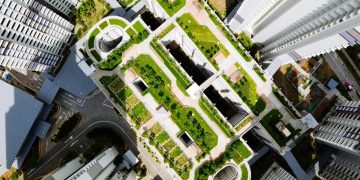
A housing development next to Knepp Rewilding project would destroy local wildlife areas and a nature recovery network in the making.
Don’t it always seem to go
Joni Mitchell ‘Big Yellow Taxi’ − 1973
That you don’t know what you’ve got till it’s gone
They paved paradise, put up a parking lot
Fifty years on from Joni Mitchell’s song about taking nature for granted, the Knepp rewilding project has demonstrated that the natural world we thought had been ploughed under by intensive farming can return, given the right conditions.
The Knepp estate is an outstanding example of the ability of nature to recover when land is allowed to rewild. Once severely degraded arable land, Knepp is being considered for designation as a National Nature Reserve after just under 20 years of rewilding. It is home to many threatened species, including turtle doves and nightingales, and the first white storks to nest in Britain since 1416 have chosen Knepp as their home. Six pairs have built nests there in 2021, four more than last year.

Build, build, build
Yet this return to nature is under threat. Developers are promoting a plan to build 3,500 houses on the Buck Barn greenfield site next to Knepp. If built, this would cut off a planned wildlife corridor linking other nature areas with the Knepp project, including the nearby St. Leonard’s Forest and Ashdown Forest in East Sussex.

Once the bricks are in and concrete laid, the chance for wildlife to connect over larger areas and for natural systems to be restored will be gone: paradise will have been paved over.
Not only wildlife will suffer from the bulldozers, bricks, tarmac and concrete paving. The sheer weight of roads and buildings on Buck Barn’s rare ghyll woodland and floodplain habitat will exacerbate flooding downstream.
Consequently, the land will switch from being a significant carbon sink to a carbon emitter, precisely what the government is arguing against in its forthcoming Environment Bill as it prepares to host COP26 in November, the world’s most important climate change conference.
Having cake and eating it?
The government’s 25 Year Environment Plan praises Knepp as a great example of nature restoration, and the same document also pledges support for a network of nature recovery areas across the country, including Knepp and its neighbouring nature areas. Yet at the same time, another branch of government is crying “Build, build, build” and setting enormous annual new housing targets across the south-east, backed by the threat of taking over planning controls from local councils who don’t meet their targets.
Horsham District Council reflects this contradiction: on the one hand it is working with local environmental groups on plans for a nature recovery area linked to Knepp, while considering approval of a huge housing development at the site now known as Buck Barn, which would split the nature recovery area in two.
Opposition builds
The Knepp project is now calling for public support to oppose the plans, which are currently under consideration by Horsham District Council. Over 30 leading UK environmental organisations and scientists – including the RSPB, National Trust and WWF – have written an open letter to the government to oppose the development, asking that they honour their pledge to ensure environmental recovery and build the right houses in the right places.
According to Isabella Tree, co-founder of Knepp Wildland and author of the acclaimed book Wilding, “Building this new town at Buck Barn would cut off a key wildlife corridor and reduce the Knepp Estate to a wildlife island in a sea of housing. Horsham District Council should commit to the aims in its ‘Wilder Horsham District’ plan and take this site out of the local housing plan.”
Celia Emmott, Green Party candidate for Horsham County Council, said: “The proposed Buck Barn site has no public transport links to support 3,500 houses. The vastly increased car pollution from up to 9,000 extra daily car journeys on local roads will impact air quality for humans as well as habitats and wildlife and contribute to climate change. It must be stopped.”
There are signs the pressure is effective. Local campaign group Save West Grinstead reports on its Facebook page: “Buck Barn is top of the agenda, with discussions on the development taking place at the highest levels in the council and with government ministers. Now is the time to keep the pressure going from members of the public.”
The fate of Knepp hangs in the balance. It is a warning signal for other planned developments across Sussex and the south-east which may well threaten other local nature protection sites and our natural environment.
Campaign now

There is still time to take action to urge the decision-makers in Horsham District Council, and the prime minister himself, to say NO to housing development at Buck Barn. Visit Save West Grinstead Action Group and take just 30 seconds to send a message to the relevant people.
Finally, spread the word about this chance to save our recovering natural paradise in Sussex while there is still time, and remind others that “you don’t know what you’ve got till it’s gone”.